

Finding ways to stay sharp can feel overwhelming as early memory changes bring new challenges for many Texas seniors. Interest in natural support is rising as families look for gentle options that do not interfere with daily routines. Premium Lion’s Mane supplements offer hope with bioactive compounds that promote nerve growth and protect brain health, giving seniors a practical tool to support memory and overall cognitive wellness.
Table of Contents
- What Is Lions Mane Mushroom?
- How Alzheimer’s Disease Impacts the Brain
- Bioactive Compounds in Lions Mane Extracts
- Clinical Research on Lions Mane and Alzheimer’s
- Choosing High-Quality Lions Mane Supplements
- Risks, Limitations, and Safety Considerations
Key Takeaways
| Point | Details |
|---|---|
| Lion’s Mane Mushroom Benefits | Lion’s Mane supports nerve health and cognitive function through bioactive compounds like Hericenones and Erinacines. It holds promise as a natural supplement but requires further research for conclusive evidence. |
| Alzheimer’s Disease Mechanisms | Alzheimer’s leads to progressive brain cell degeneration, affecting communication and overall cognitive function. Understanding these mechanisms is crucial for developing effective interventions. |
| Quality Supplements Matter | When selecting Lion’s Mane supplements, prioritize those using fruiting body extracts, third-party testing, and clear ingredient labeling to ensure potency and safety. |
| Safety Considerations | Individuals should consult healthcare professionals regarding potential risks and interactions, especially if they have existing health conditions or are on medications. |
What Is Lions Mane Mushroom?
Lion’s Mane Mushroom, scientifically known as Hericium erinaceus, is a fascinating edible fungus with extraordinary cognitive potential. Its distinctive cascading white spines resemble a lion’s magnificent mane, giving this remarkable mushroom its memorable name. Native to North America, Europe, and Asia, this unique mushroom has been a cornerstone of traditional medicine for centuries.
The mushroom’s remarkable properties stem from its complex biochemical composition. Neurotrophic compounds support nerve health through several key bioactive elements:
- Hericenones: Found in the fruiting body
- Erinacines: Extracted from mushroom mycelia
- Polysaccharides: Beta-glucans with immunostimulating properties
- Antioxidant compounds: Protect cellular structures
Traditional Asian medicinal practices have long recognized Lion’s Mane as a powerful natural supplement. Modern scientific research is now validating what traditional healers have known for generations: this mushroom offers significant potential for supporting brain health and cognitive function.
Neurological Benefits include potential support for:
- Nerve growth factor synthesis
- Cognitive performance enhancement
- Neuroplasticity support
- Potential protection against neurodegeneration
While promising, researchers emphasize that more comprehensive human clinical trials are needed to fully understand Lion’s Mane’s complete range of neurological benefits. Current evidence suggests it represents an exciting frontier in natural cognitive support.
Pro tip: When exploring Lion’s Mane supplements, prioritize products using fruiting body extracts for maximum potential cognitive benefits.
How Alzheimer’s Disease Impacts the Brain
Alzheimer’s disease represents a devastating neurological condition that progressively undermines brain function, causing profound changes in cognitive capabilities. This complex disorder goes far beyond simple memory loss, fundamentally altering how brain cells communicate, function, and maintain their essential cellular identity.
Brain Cell Disruption occurs through multiple intricate mechanisms. Molecular changes erode cellular gene expression, creating a cascading effect of neurological dysfunction. The primary areas of impact include:
- Hippocampus (memory center)
- Cerebral cortex (thinking and reasoning)
- Neuronal communication pathways
- Synaptic connection networks
The progression of Alzheimer’s can be understood through several critical stages of brain deterioration. As the disease advances, brain cells gradually lose their ability to maintain normal functions, leading to a systematic breakdown of cognitive processes.
Key Neurological Changes involve:
- Accumulation of abnormal protein deposits
- Disruption of neural communication
- Gradual reduction in brain cell population
- Impairment of critical signaling mechanisms
Alzheimer’s doesn’t just erase memories – it fundamentally rewrites how the brain processes and stores information.
Research demonstrates that the disease’s impact extends beyond simple neuronal loss. The underlying molecular mechanisms involve complex epigenetic changes that gradually undermine the brain’s fundamental operational systems.

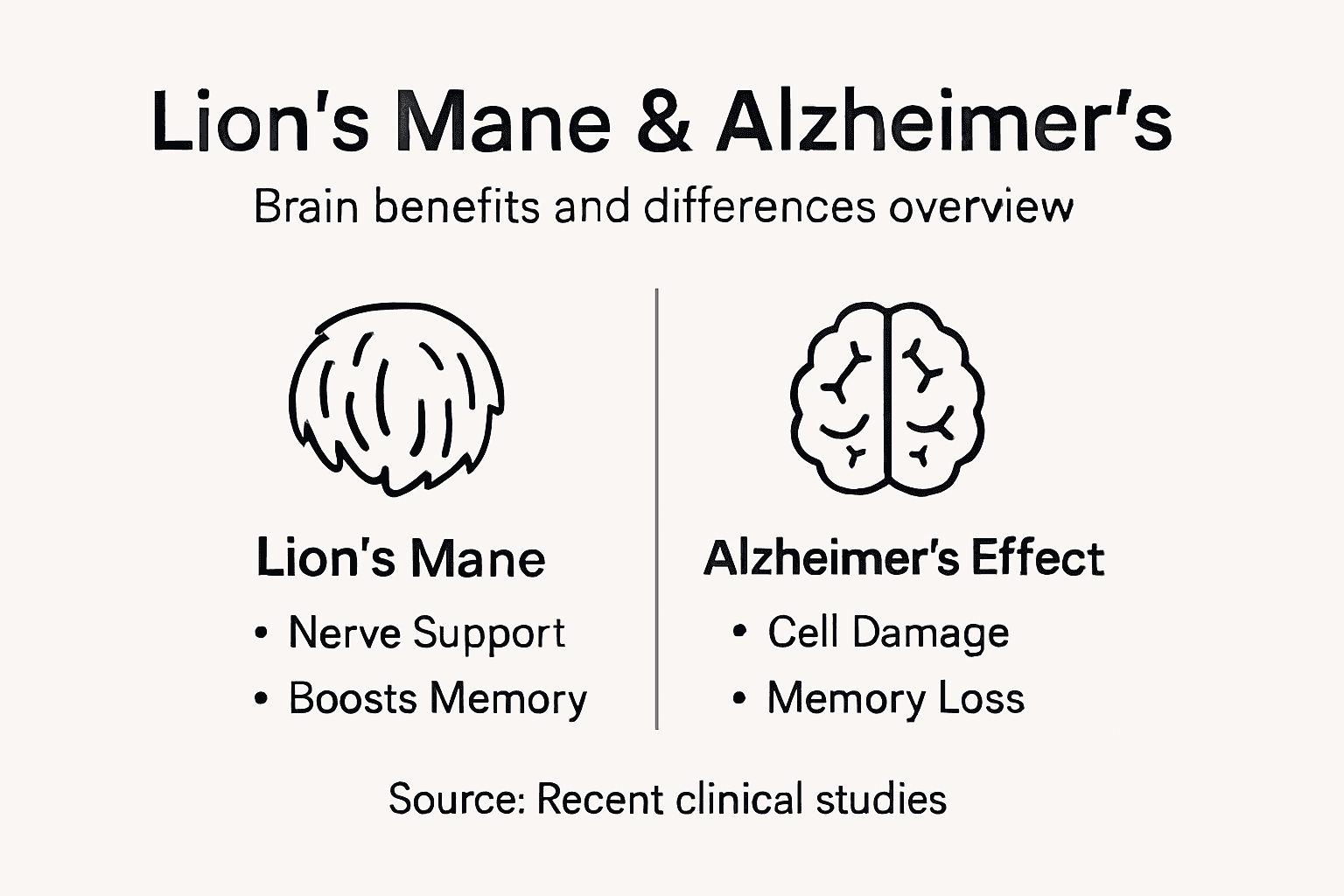
Here’s a summary of the differences between Lion’s Mane mushroom and Alzheimer’s-impacted brain cells:
| Aspect | Lion’s Mane Mushroom | Alzheimer’s-Impacted Brain |
|---|---|---|
| Key Function | Supports nerve health | Progressive neuronal loss |
| Cellular Impact | Enhances growth factors | Impairs gene expression |
| Neuroprotective Role | Promotes neuroplasticity | Destabilizes connections |
| Research Focus | Natural supplement efficacy | Disease mechanism identification |
This table helps clarify how Lion’s Mane’s properties contrast with the cellular disruptions caused by Alzheimer’s.
Pro tip: Early detection and comprehensive neurological assessments can provide critical insights into potential cognitive decline and intervention strategies.
Bioactive Compounds in Lions Mane Extracts
Lion’s Mane mushroom contains a fascinating array of bioactive compounds that make it a powerful natural supplement for cognitive health. Specialized compounds promote nerve growth through multiple sophisticated mechanisms that support brain function and neurological resilience.
The primary bioactive compounds can be categorized into several key groups:
- Erinacines: Extracted from mushroom mycelia
- Hericenones: Derived from fruiting bodies
- Beta-glucan Polysaccharides: Providing immunostimulatory effects
- Antioxidant Compounds: Protecting cellular structures
Each of these compounds plays a unique role in supporting neurological health. Erinacines and hericenones are particularly notable for their ability to stimulate nerve growth factor (NGF) production, which is critical for maintaining and repairing neuronal networks.
Mechanism of Action for these bioactive compounds includes:
- Stimulating nerve growth factor synthesis
- Reducing neuroinflammation
- Supporting mitochondrial function
- Protecting against oxidative stress
The synergistic effect of Lion’s Mane compounds creates a powerful natural approach to supporting cognitive health and neurological resilience.
Research suggests that these bioactive compounds work together to provide comprehensive neurological support, potentially offering hope for individuals experiencing cognitive decline or seeking proactive brain health strategies.
Pro tip: Select Lion’s Mane supplements that specify the extraction method and focus on full-spectrum fruiting body extracts for maximum potential benefits.
Clinical Research on Lions Mane and Alzheimer’s
Clinical research into Lion’s Mane mushroom reveals promising, yet preliminary insights for Alzheimer’s disease support. Clinical trials demonstrate cognitive processing benefits, highlighting the potential of this natural supplement in addressing neurological challenges.
The current research landscape encompasses multiple investigation categories:
- Preclinical Studies: Animal model investigations
- Small Human Trials: Mild cognitive impairment research
- Neuroprotection Mechanisms: Neurological function evaluation
- Safety and Efficacy Assessments: Long-term impact studies
Key findings from existing research suggest nuanced potential for cognitive support. Neurological Mechanisms observed include:
- Stimulating nerve growth factor production
- Reducing neuroinflammation
- Crossing the blood-brain barrier
- Protecting neural network integrity
While promising, current research emphasizes the need for larger, more comprehensive clinical trials to definitively establish Lion’s Mane’s therapeutic potential.
Small randomized controlled trials have shown mixed but intriguing results. Some studies indicate improved daily living activities for Alzheimer’s patients, though significant cognitive function improvements remain inconsistent. Preclinical research continues to reveal fascinating neuroprotective properties, particularly regarding inflammation reduction and amyloid accumulation prevention.
Pro tip: Consult healthcare professionals and review the most recent clinical research when considering Lion’s Mane as a potential cognitive support supplement.
Choosing High-Quality Lions Mane Supplements
Selecting a premium Lion’s Mane supplement requires careful consideration of multiple critical factors. Supplement quality depends on extraction standards, making informed choices essential for potential cognitive benefits.
Key criteria for evaluating Lion’s Mane supplements include:
- Extraction Source: Fruiting body vs. mycelia composition
- Bioactive Concentration: Hericenones and erinacines levels
- Third-Party Testing: Purity and potency verification
- Manufacturing Transparency: Clear production methods
Supplement Quality Indicators:
- Standardized extraction ratios
- Detailed ingredient labeling
- Absence of unnecessary fillers
- Documented production processes
Not all Lion’s Mane supplements are created equal – the devil is in the details of extraction and production.
Consumers should prioritize supplements that provide comprehensive information about their manufacturing process, including the specific extraction techniques used to preserve critical bioactive compounds. The most effective supplements typically combine fruiting body and mycelia extracts to maximize potential neurological support.
Additionally, look for certifications from reputable third-party testing organizations that verify the supplement’s purity, potency, and absence of contaminants. This extra layer of scrutiny ensures you’re getting a high-quality product that meets rigorous scientific standards.
Here’s a quick reference guide for evaluating Lion’s Mane supplements:
| Criteria | Why It Matters | What to Look For |
|---|---|---|
| Extraction Source | Determines bioactive content | Fruiting body plus mycelia |
| Third-Party Testing | Ensures safety and purity | Published test results |
| Ingredient Labeling | Clarifies composition | Detailed, transparent info |
| Certification | Verifies quality standards | Reputable lab certification |
Use this guide to choose supplements that maximize cognitive benefit and safety.
Pro tip: Always request and review a supplement’s certificate of analysis before making a purchase to ensure maximum quality and effectiveness.
Risks, Limitations, and Safety Considerations
Navigating the safety landscape of Lion’s Mane supplements requires a nuanced understanding of potential risks and individual health considerations. Clinical studies suggest overall safety profile, but caution and informed decision-making remain crucial.
Potential side effects and limitations include:
- Gastrointestinal Sensitivity: Mild digestive discomfort
- Allergic Reactions: Rare but possible in sensitive individuals
- Drug Interactions: Limited research on medication compatibility
- Long-Term Use: Insufficient data on extended consumption
Specific Risk Considerations:
- Risk of anaphylaxis in mushroom-allergic individuals
- Potential interactions with blood-thinning medications
- Minimal but possible liver function complications
- Variability in individual immune responses
Not every supplement works the same for everyone – individual health contexts matter tremendously.
Individuals with pre-existing health conditions, particularly those involving liver function or immune system sensitivities, should consult healthcare professionals before integrating Lion’s Mane into their wellness routine. The current research suggests a favorable safety profile, but comprehensive long-term studies remain limited.
Medical supervision becomes especially critical when combining Lion’s Mane with other treatments or for individuals with complex health backgrounds. Monitoring for any unexpected reactions and maintaining open communication with healthcare providers is essential.
Pro tip: Start with low doses and gradually increase while carefully tracking your body’s response to new supplements.
Discover Natural Support with Cortex Flow for Cognitive Health
The article highlights how Lion’s Mane Mushroom supports nerve health and cognitive function, especially in the context of Alzheimer’s disease and neurological decline. If you are concerned about maintaining neuroplasticity and enhancing nerve growth factor synthesis, choosing a supplement with a high-quality fruiting body extract is critical. The challenge is finding a trusted source that offers potent and pure Lion’s Mane that maximizes these bioactive compounds like hericenones and erinacines.
That is why Cortex Flow offers the world’s most potent Lion’s Mane extract capsules made from 100% fruiting bodies grown right here in the United States. With a powerful 36 to 1 freeze-dried extract ratio, Cortex Flow is designed to support your brain’s natural resilience and cognitive vitality for daily life.

Take control of your neurological health now by choosing a supplement trusted for purity and strength. Experience the benefits backed by research on nerve growth factor and neuroprotection by visiting our product page. Learn more about why fruiting body extracts matter for cognitive support and carefully crafted quality standards. Don’t wait — give your brain the natural edge it deserves today with Cortex Flow.
Frequently Asked Questions
What are the cognitive benefits of Lion’s Mane mushroom?
Lion’s Mane mushroom may support cognitive health by promoting nerve growth factor synthesis, enhancing cognitive performance, supporting neuroplasticity, and potentially offering protection against neurodegeneration.
How does Lion’s Mane compare to the effects of Alzheimer’s on the brain?
Lion’s Mane supports nerve health and neuroplasticity, while Alzheimer’s disease leads to progressive neuronal loss and impairs gene expression, disrupting normal brain functions and communication pathways.
What bioactive compounds are found in Lion’s Mane mushroom?
Lion’s Mane contains several key bioactive compounds, including erinacines and hericenones, which stimulate nerve growth factor production, beta-glucan polysaccharides for immune support, and antioxidant compounds for cellular protection.
Are there any risks associated with taking Lion’s Mane supplements?
While Lion’s Mane supplements are generally regarded as safe, potential risks include mild gastrointestinal discomfort, allergic reactions in sensitive individuals, and possible interactions with certain medications. Consultation with a healthcare professional is recommended before starting supplementation.
Recommended
- Natural Supplements for Attention—Lion’s Mane Impact – Cortex Supplements
- Lion’s Mane and Neurogenesis – Cognitive Benefits Explained – Cortex Supplements
- Lion’s Mane Trends 2026: Smarter Brain Support Moves Mainstream – Cortex Supplements
- Lion’s Mane Fruiting Body: Cognitive Benefits Demystified – Cortex Supplements
