

Finding natural ways to support focus and mental clarity can feel like a constant search for professionals managing busy careers and ADHD in Texas and California. The growing interest in lion’s mane mushroom stems from more than old world folklore—its distinctive appearance and history across Japanese and Chinese traditions make it stand out. This introduction unpacks the roots, names, and key compounds of lion’s mane mushroom so you can confidently assess whether its research-backed properties align with your cognitive health goals.
Table of Contents
- Lion’s Mane Mushroom: Terminology And Origins
- Active Compounds Linked To Cognitive Benefits
- Extraction Ratios, Fruiting Bodies, And Potency
- Understanding Supplement Labels And Claims
- Key Safety, Dosage, And Common Misconceptions
Key Takeaways
| Point | Details |
|---|---|
| Cultural Significance | Lion’s Mane Mushroom, known as yamabushitake in Japan and hóutóugū in China, reflects its valued status across different cultures. |
| Active Compounds | Hericenones and erinacines are the key active compounds that promote cognitive function and support the growth of neural connections. |
| Fruiting Body vs. Mycelium | Choose supplements made from fruiting bodies for higher potency; mycelium products may contain fillers and fewer bioactive compounds. |
| Safety and Dosage | Lion’s Mane is generally safe with few side effects; effective dosage ranges from 500 mg to 3 grams daily for cognitive benefits. |
Lion’s Mane Mushroom: Terminology and Origins
Lion’s mane has traveled across continents and languages, accumulating different names that tell the story of how cultures have valued this mushroom. Understanding where these names come from helps you grasp what makes this fungus so distinctive.
The scientific name is Hericium erinaceus, which comes from Latin roots meaning “hedgehog.” That name makes perfect sense when you see the mushroom’s cascading, spiky appearance.
Different regions developed their own names based on what they saw:
- Japan calls it yamabushitake (meaning “mountain priest mushroom”)
- China knows it as hóutóugū, literally “monkey-head mushroom”
- English speakers use the straightforward lion’s mane for its shaggy, maned appearance
The hedgehog-like structure of the fruiting body reflects centuries of observation by people who encountered this mushroom in forests.
Originally native to North America and Eurasia, lion’s mane grows on hardwoods during late summer and autumn when moisture and temperature create ideal conditions. You’ll find it in forests across temperate regions where oak, maple, and other hardwoods flourish.
Traditional medicine practitioners in Asia have used lion’s mane for centuries, particularly in Japan and China where it earned respect as both food and remedy. This long history shaped modern interest in its potential cognitive benefits.
Here’s a quick comparison of lion’s mane mushroom naming conventions across cultures:
| Region/Culture | Common Name | Meaning/Origin |
|---|---|---|
| Japan | Yamabushitake | Mountain priest mushroom |
| China | Hóutóugū | Monkey-head mushroom |
| Western (English) | Lion’s Mane | Shaggy, maned appearance |
| Scientific | Hericium erinaceus | Hedgehog-like structure |
The mushroom’s multiple names across cultures reflect its widespread recognition as something special—not just another forest fungus, but something worth naming and remembering.
Today, when you hear “lion’s mane,” people are usually referring to the entire fruiting body (the visible mushroom you see growing), not just mycelium or substrate. This distinction matters because fruiting body extracts contain different compounds than mycelium-based products.
For professionals managing focus and cognitive demands—especially those juggling ADHD management alongside career pressures in Texas and California—knowing these basics helps you evaluate what you’re actually getting. The terminology isn’t just academic language; it tells you whether you’re working with whole fruiting bodies or something else entirely.
Pro tip: When comparing lion’s mane products, verify whether they’re made from fruiting bodies (the mushroom cap itself) rather than mycelium grown on grain, as this impacts the compound profile and potency.
Active Compounds Linked to Cognitive Benefits
Lion’s mane doesn’t work magic through some mysterious property. Its cognitive effects come from specific compounds that your brain can actually use. Understanding these compounds helps you see why this mushroom gets serious attention from researchers.

The primary active players are hericenones and erinacines, two compounds found naturally in lion’s mane fruiting bodies. These aren’t random molecules—they’ve been specifically linked to how your brain builds new neural connections.
Hericenones work primarily in the fruiting body itself. Erinacines concentrate in the mycelium. For maximum cognitive impact, you want both working together, which is why complete fruiting body extracts support cognitive function more effectively than mycelium-only products.
Beyond those two, lion’s mane contains bioactive compounds that create a supporting network:
- Polysaccharides provide antioxidant and anti-inflammatory support
- Beta-glucans activate immune responses that protect brain tissue
- Phenolic compounds fight oxidative stress at the cellular level
Here’s where it gets relevant for your focus challenges: these compounds appear to stimulate nerve growth factor (NGF) production. NGF is essentially your brain’s fertilizer—it helps neurons grow, connect, and communicate more effectively.
Think of it this way. When you’re managing ADHD or fighting afternoon brain fog, your neurons aren’t firing optimally. NGF stimulation helps restore that efficiency by strengthening the pathways responsible for attention and working memory.
The compounds in lion’s mane work by addressing inflammation and oxidative stress—the silent contributors to cognitive decline—rather than forcing artificial stimulation like caffeine does.
Research shows that hericenones and erinacines promote neuroprotection through anti-inflammatory mechanisms, which is critical for professionals facing constant mental demands. Your brain dealing with chronic stress experiences inflammation that compounds over time.
Animal studies report improved memory retention and reduced anxiety when subjects received these compounds. Human research is still catching up, but the preliminary findings point toward real cognitive benefits when compounds reach therapeutic levels.
This is why extract potency matters. A standard supplement might contain some of these compounds, but a 36:1 concentrated extract delivers compounds at levels comparable to research studies. You’re not guessing whether you’re getting enough—you’re getting a meaningful dose.
Pro tip: Look for products made from fruiting body extracts specifically, as these contain both hericenones and erinacines in their natural ratio, rather than mycelium-only supplements that miss critical compounds.
Extraction Ratios, Fruiting Bodies, and Potency
When you’re comparing lion’s mane supplements, you’ll see numbers like “36:1” thrown around. This ratio isn’t marketing hype—it’s the actual measure of how concentrated your supplement is. Understanding what it means could be the difference between getting results and wasting money.
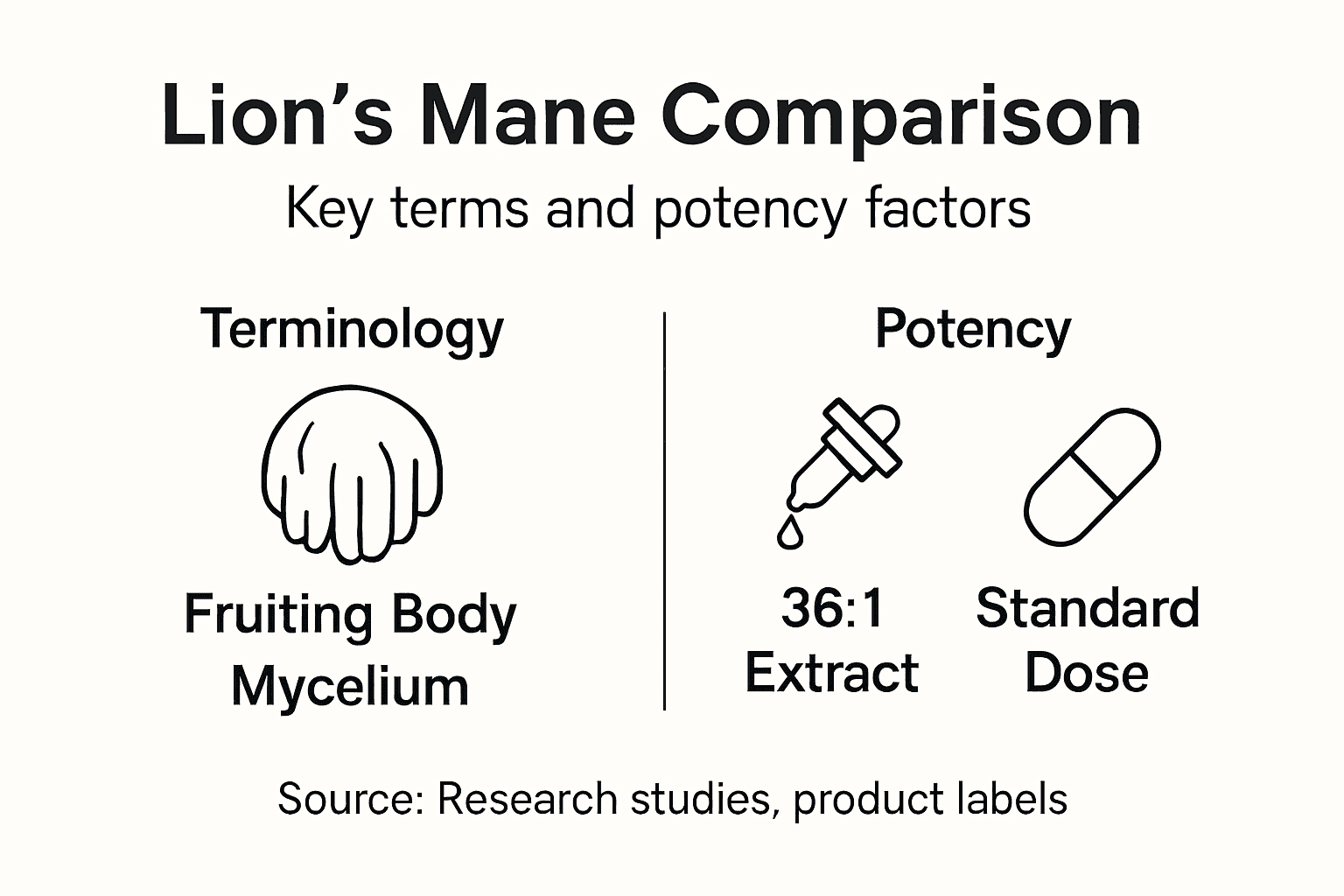
An extraction ratio describes how much raw material was used to create the final product. A 36:1 ratio means 36 pounds of lion’s mane fruiting bodies were processed down to create 1 pound of extract. Higher ratios equal higher concentration of active compounds.
The source material matters enormously. You have two options:
- Fruiting body extracts come from the actual mushroom cap you’d recognize
- Mycelium extracts come from the root-like network that grows the mushroom
Fruiting bodies contain substantially higher levels of polysaccharides and bioactive compounds compared to mycelium. When you see a product labeled as fruiting body extract, you’re getting the concentrated version of what made lion’s mane famous in traditional medicine.
Mycelium-based products have a hidden problem: they’re often grown on grain substrates. The final product contains fillers and lower concentrations of active compounds. You might think you’re getting a bargain, but you’re paying for grain powder more than lion’s mane.
Extraction ratios directly influence supplement potency and the concentration of active compounds, which means accurate labeling becomes critical when evaluating quality. A 10:1 fruiting body extract will outperform a 20:1 mycelium extract every time.
For professionals in Texas and California managing focus and cognitive demands, this distinction hits harder. Your brain doesn’t benefit from fillers—it needs the actual bioactive compounds at meaningful doses.
A 36:1 fruiting body extract delivers compound concentrations comparable to research studies, not just enough to say “contains lion’s mane” on the label.
When you read supplement labels, look for these indicators of quality:
- Source explicitly states “fruiting body extract”
- Ratio is 15:1 or higher (ideally 30:1 or greater)
- Label specifies the extraction method (freeze-dried is gold standard)
- No mention of grain fillers or mycelium on grain
Understanding extraction ratios and source material helps you assess supplement efficacy and make informed choices about what enters your body. Potency isn’t just a number—it’s whether you’ll actually feel the cognitive benefits within weeks or months.
This is why we freeze-dry fruiting bodies at a 36:1 ratio here in Texas. You’re getting maximum compound concentration without the fillers that dilute effectiveness.
Pro tip: Compare extraction ratios AND source material together—a 36:1 fruiting body extract will consistently outperform lower ratios made from mycelium, so don’t just chase the highest number without checking what it’s extracted from.
This summary highlights key differences between fruiting body and mycelium-based lion’s mane supplements:
| Attribute | Fruiting Body Extract | Mycelium-Based Product |
|---|---|---|
| Active Compounds | High polysaccharides, hericenones, erinacines | Lower concentration, fewer critical compounds |
| Source Material | Mushroom cap | Root-like network on grain |
| Extraction Ratio | Often 15:1 or higher | Typically lower, but includes grain fillers |
| Supplement Potency | Matches research studies | Usually weaker, less bioactive |
Understanding Supplement Labels and Claims
Supplements are not regulated like medications, which means labels can claim almost anything without proving it works. As someone managing cognitive health and focus, you need to know how to separate legitimate products from marketing fluff.
Start by reading what’s actually on the label. A quality lion’s mane supplement should clearly state extraction ratio, source material, and compound standardization. If these details are missing or vague, that’s your first red flag.
Extraction ratio tells you concentration. Source material reveals whether you’re getting fruiting body or mycelium. Standardization indicates the percentage of active compounds like erinacines guaranteed in each capsule.
Many companies make vague claims like “supports cognitive function” without backing them up. Claims about mood, cognition, and stress relief require validation through rigorous research to avoid misinformation. Look for brands that cite actual studies or clinical evidence, not just general statements.
Here are the red flags to watch for:
- Claims that seem exaggerated (“cures brain fog overnight”)
- Missing extraction ratio or source information
- Proprietary blends hiding ingredient amounts
- Zero mention of research or clinical backing
- Prices suspiciously lower than competitors
Transparency matters. Supplement labels highlighting extraction ratios, source material, and standardization of active compounds build consumer trust and indicate manufacturer confidence in their product.
Real companies disclose where mushrooms are grown, how they’re extracted, and what the final product contains. They’re honest about limitations too. No legitimate supplement works for everyone or produces instant results.
A product’s willingness to show its work—extraction methods, sourcing, compound concentration—signals that the manufacturer believes in what they’re selling.
When comparing options, look beyond marketing language. Check for third-party testing verification, which means an independent lab confirmed the label matches what’s actually inside. This separates professionals who take their formulations seriously from those cutting corners.
For supplements marketed to professionals managing focus and cognitive demands, dosage becomes critical. A single capsule should deliver meaningful active compounds—not so little that you’d need to take ten daily.
Dose transparency is non-negotiable. If a label lists ingredients but hides quantities behind “proprietary blend,” you have no way to evaluate whether you’re getting therapeutic levels.
Pro tip: Screenshot or photograph supplement labels before buying, then research the extraction ratio, source material, and any cited studies at home—don’t rely on marketing claims at the point of purchase.
Key Safety, Dosage, and Common Misconceptions
Lion’s mane is remarkably safe compared to many supplements and pharmaceuticals. Most people tolerate it without issues, but a few important considerations exist depending on your health situation.
Safety for most people is solid. Lion’s mane is generally considered safe with few reported adverse effects. Mild side effects like nausea or digestive discomfort occasionally appear, but they’re rare and typically temporary.
However, specific populations need caution:
- If you take blood thinners or have bleeding disorders, check with your doctor first
- Pregnant or breastfeeding individuals should consult healthcare providers
- Those with mushroom allergies should avoid lion’s mane entirely
- People on immunosuppressant medications need medical clearance
Dosage matters for results. Studies showing cognitive benefits typically used 500 mg to 3 grams daily. Most quality supplements provide 1 to 2 grams per serving, which aligns with research ranges.
Taking more than recommended won’t speed up results. Your brain needs time to build new neural connections—this happens over weeks and months, not days. A 30-day trial minimum is reasonable before deciding whether lion’s mane works for you.
Now, the misconceptions. The biggest one? Treating lion’s mane as a cure-all that replaces sleep, exercise, or stress management. It’s not. Lion’s mane is a complement to healthy habits, not a substitute.
Lion’s mane supports cognitive function when your brain is already getting basics right—sleep, nutrition, movement—not when those fundamentals are neglected.
Another common myth: all lion’s mane supplements are equal. They’re absolutely not. Fruiting body extracts outperform mycelium-on-grain products significantly. A cheap supplement might contain mushroom, but not the concentrated compounds delivering results.
People also expect overnight transformation. Realistic expectations are critical. You might notice sharper focus within 3 to 4 weeks with consistent use. Memory improvements typically emerge later. This isn’t instant gratification—it’s genuine neurological support.
One more misconception: that you need a prescription or medical monitoring. You don’t. Lion’s mane is food-grade and doesn’t require doctor supervision for most people. Still, transparency with your healthcare provider is smart, especially if you’re on medications.
Pro tip: Start with the dosage recommended on your supplement label and maintain it consistently for at least 30 days before evaluating results—inconsistent dosing or jumping between products prevents you from discovering what actually works for your cognitive needs.
Unlock Your Brain’s Potential with Pure Lion’s Mane Power
Struggling to maintain focus and mental clarity while juggling demanding work and life requires more than guesswork about supplements. This article highlights the importance of lion’s mane fruiting body extracts and the critical role of a 36:1 extraction ratio to deliver the active compounds your brain truly needs like hericenones and erinacines. If you want trustworthy, potent cognitive support designed for professionals managing ADHD and pressure in states like Texas and California, choosing the right formula is essential.
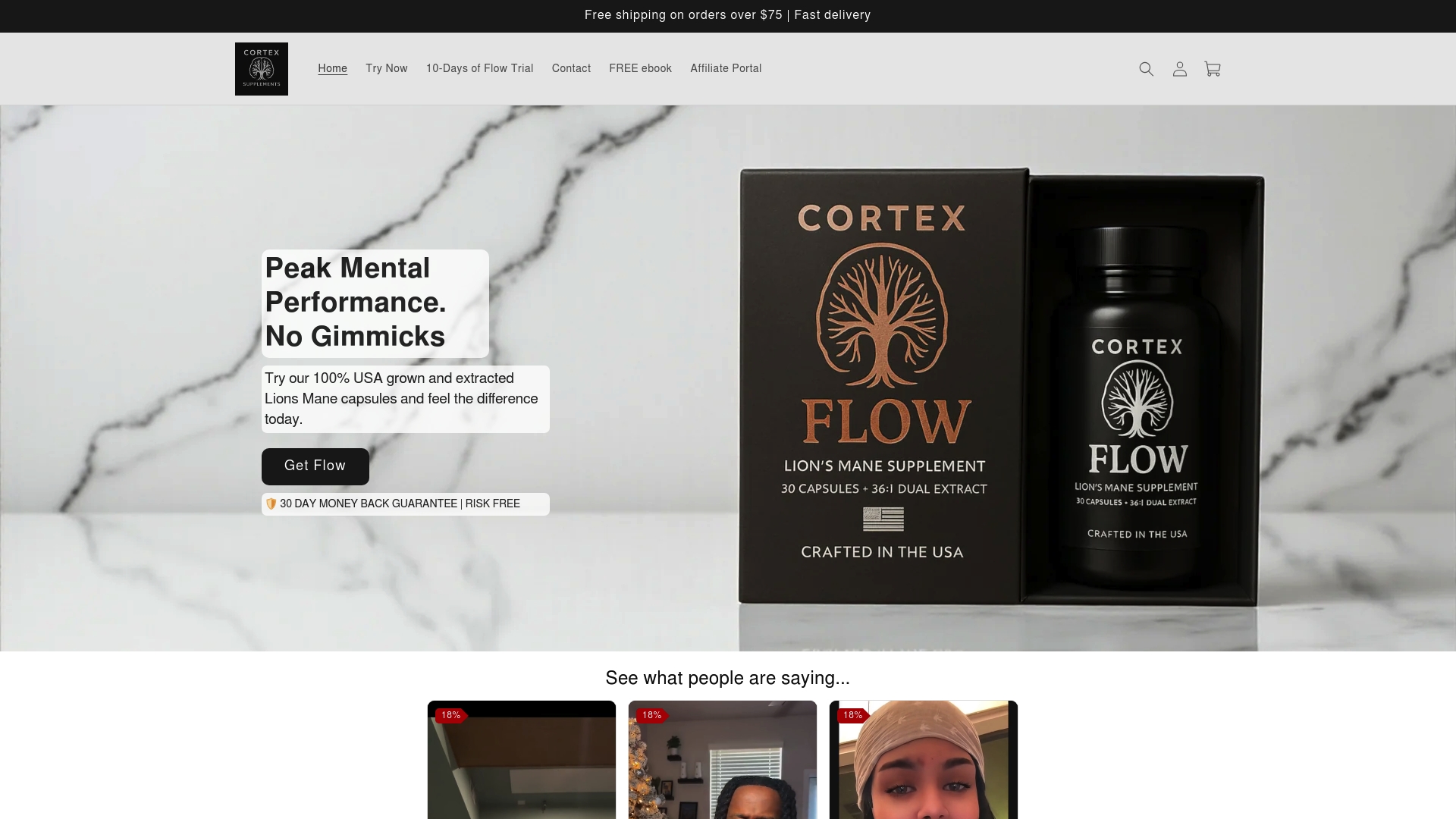
Experience the difference with Cortex Flow, the world’s most potent lion’s mane extract capsules made from 100% fruiting bodies we personally grow in the United States. Our freeze-dried 36:1 extract ensures you get the full profile of cognitive-enhancing compounds backed by research. Stop settling for vague blends or mycelium fillers. Visit Cortex Supplements to discover how our focused formula can help you reclaim mental sharpness and sustain productivity. Learn more about our lion’s mane extract capsules and why potency and purity matter for brain health today.
Frequently Asked Questions
What is the scientific name of lion’s mane mushroom?
The scientific name of lion’s mane mushroom is Hericium erinaceus, which means “hedgehog” in Latin, reflecting its spiky appearance.
What are the key active compounds in lion’s mane that support cognitive function?
The primary active compounds in lion’s mane are hericenones and erinacines, which help promote nerve growth factor (NGF) production, supporting neural connections and cognitive function.
How can I evaluate the quality of a lion’s mane supplement?
To evaluate the quality, check for a clear extraction ratio, ensure it is made from fruiting body extracts, and look for standardization of active compounds. A ratio of 15:1 or higher is ideal for potency.
What are common misconceptions about lion’s mane supplements?
Common misconceptions include the belief that lion’s mane is a cure-all, that all supplements are equal, and that results will be instant. It’s important to understand that lion’s mane supports cognitive function as a complement to a healthy lifestyle.
Recommended
- Natural Supplements for Attention—Lion’s Mane Impact – Cortex Supplements
- Lions Mane Supplement Guide for Enhanced Focus and Clarity – Cortex Supplements
- Lion’s Mane Fruiting Body: Cognitive Benefits Demystified – Cortex Supplements
- Lion’s Mane vs Adaptogens: Cognitive Benefits Explained – Cortex Supplements
