

Staying sharp during the workday can feel impossible when distractions pile up and afternoon brain fog hits hard. For professionals in Texas juggling ADHD or mental fatigue, the search for natural solutions often leads to Lion’s Mane mushroom. Understanding bioactive compounds like erinacines and hericenones is key, since not every supplement delivers the same support for clarity and focus. This guide breaks down the terminology and label clues that reveal which Lion’s Mane products truly help your brain work at its best.
Table of Contents
- Lion’s Mane Mushroom: Core Terms Defined
- Extract Types and Labeling Differences
- Potency Ratios and Fruiting Body Importance
- Key Benefits and Real-World Applications
- Common Misconceptions and What to Avoid
Key Takeaways
| Point | Details |
|---|---|
| Understand Extract Types | Choose products that specify “100% fruiting body” for maximum cognitive benefits, avoiding those with “mycelium on grain.” |
| Check Potency Ratios | Look for high extraction ratios (e.g., 36:1) that indicate concentrated bioactive compounds, ensuring effectiveness. |
| Verify Label Claims | Be cautious of vague descriptions and request a Certificate of Analysis to confirm product quality. |
| Maintain Consistency | Daily use of Lion’s Mane supplements is crucial for observable cognitive improvements, typically within 2-4 weeks. |
Lion’s Mane Mushroom: Core Terms Defined
Understanding Lion’s Mane starts with knowing the core terminology. The scientific name is Hericium erinaceus, a tooth fungus with distinctive long spines native to North America and Eurasia. You’ll hear these names thrown around—understanding the difference between them matters when you’re choosing a supplement.
The mushroom contains bioactive compounds like erinacines and hericenones, which are responsible for its brain-supporting properties. These compounds are what actually interact with your nervous system. When supplement companies talk about potency, they’re essentially measuring how much of these compounds made it into your capsule.
Here’s where terminology gets practical:
- Fruiting body: The visible mushroom part you’d recognize in nature—dense with beneficial compounds
- Mycelium: The root-like network that grows through wood; less potent than fruiting body
- Polysaccharides: Complex carbohydrates that support immune function and cognitive benefits
- Nerve growth factor (NGF): A protein your brain uses to maintain and grow neurons
Many supplement brands use mycelium on grain because it’s cheap and easy to produce. The grain dilutes the actual mushroom material, meaning you’re paying for filler. Fruiting body extraction delivers genuine potency—no padding, just concentrated mushroom.
The term extraction ratio (like 36:1) tells you how much raw material was concentrated into your final product. A 36:1 ratio means 36 pounds of mushroom became 1 pound of extract. Higher ratios typically mean more bioactive compounds per capsule.
When you see “dual extract” or “hot water extract,” the manufacturer used different methods to pull out water-soluble and alcohol-soluble compounds. This captures more of the beneficial properties than single-extraction methods.
Your supplement’s potency depends on three factors: using fruiting bodies, concentration ratio, and extraction method—not marketing claims or price tags.
Pro tip: When comparing Lion’s Mane supplements, check if they specify fruiting body versus mycelium on the label. If it doesn’t say “fruiting body,” you’re likely getting a weaker product regardless of the extraction ratio listed.
Extract Types and Labeling Differences
Not all Lion’s Mane extracts are created equal, and the labels often hide this reality. The extraction method determines which bioactive compounds end up in your capsule, which directly affects how well it works for your brain.
Fruiting body extracts contain polysaccharides and hericenones—compounds that cross the blood-brain barrier and support cognitive function. Mycelium extracts contain erinacines, a different set of compounds with their own benefits. The problem? Most brands don’t clearly label which one you’re getting.
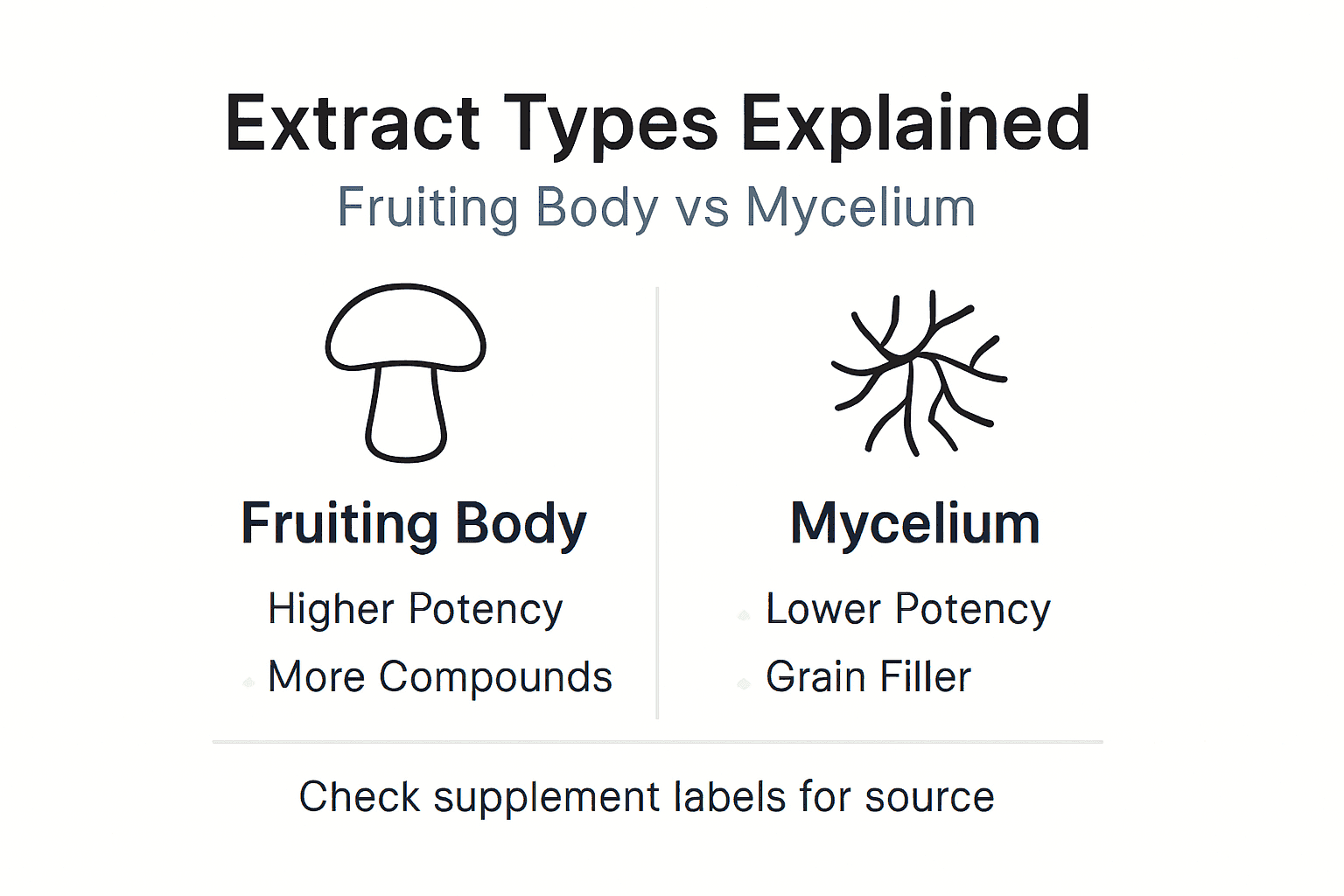
Labeling discrepancies occur frequently because products don’t uniformly disclose the plant part used or extraction method. You might buy what you think is premium fruiting body extract, only to discover it’s mostly mycelium on grain. This inconsistency means varied bioactive profiles and potential efficacy gaps.
Here’s what to look for on labels:
- “100% fruiting body” or “fruiting body extract”: The real deal for cognitive support
- “Mycelium on grain” or just “mycelium”: Less potent, often padded with grain filler
- “Dual extract”: Both water and alcohol extraction—captures more compounds
- “Hot water extract”: Water-based extraction; pulls polysaccharides effectively
- “Standardized to X% beta-glucans”: Indicates concentration of specific beneficial compounds
Texas-based producers like Cortex Flow use 100% fruiting body with a 36:1 extraction ratio, meaning the label actually reflects what’s inside. You’re not guessing or hoping—you know exactly what you’re paying for.
Many brands hide behind vague language like “mushroom complex” or “proprietary blend.” This is a red flag. If they won’t specify fruiting body versus mycelium, they’re probably cutting corners.
Labels that don’t specify fruiting body or extraction method are designed to confuse. Clear labeling indicates a company confident in its product.
When you’re comparing products side by side, the extract type matters far more than price or brand recognition. Your brain deserves transparency, not marketing theater.
Here’s a quick comparison of Lion’s Mane supplement label terms to help you identify product quality:
| Label Term | What It Means | Implications for Potency |
|---|---|---|
| 100% Fruiting Body | Pure mushroom extract | Highest bioactive concentration |
| Mycelium on Grain | Root-like network, grain filler | Lower potency, diluted content |
| Dual Extract | Water + alcohol extraction | Broad compound coverage |
| Hot Water Extract | Water extraction method | Targets polysaccharides |
| Standardized Beta-Glucans | Specific compound concentration | Indicates measurable actives |
Pro tip: Request a Certificate of Analysis (COA) from any Lion’s Mane supplier before buying. This third-party document verifies the extract type, bioactive compound percentages, and confirms there’s no grain filler or contaminants.
The following table summarizes core Lion’s Mane extract methods and their business impacts:
| Extraction Method | Key Compounds Captured | Clinical Impact |
|---|---|---|
| Fruiting Body | Hericenones, polysaccharides | Strongest cognitive support |
| Mycelium Extract | Erinacines | Moderate neurological effect |
| Dual Extraction | Water-soluble + alcohol-soluble | Maximizes bioactive benefits |
| Hot Water Extraction | Polysaccharides | Reliable immune benefits |
Potency Ratios and Fruiting Body Importance
You’ve probably seen numbers like 10:1 or 36:1 on supplement labels and wondered what they actually mean. These extraction ratios tell you how concentrated the final product is compared to the raw material.
A 10:1 ratio means 10 pounds of raw mushroom were processed down to 1 pound of extract. A 36:1 ratio means 36 pounds became 1 pound. Higher ratios equal more concentrated bioactive compounds per capsule—more potency, more results.
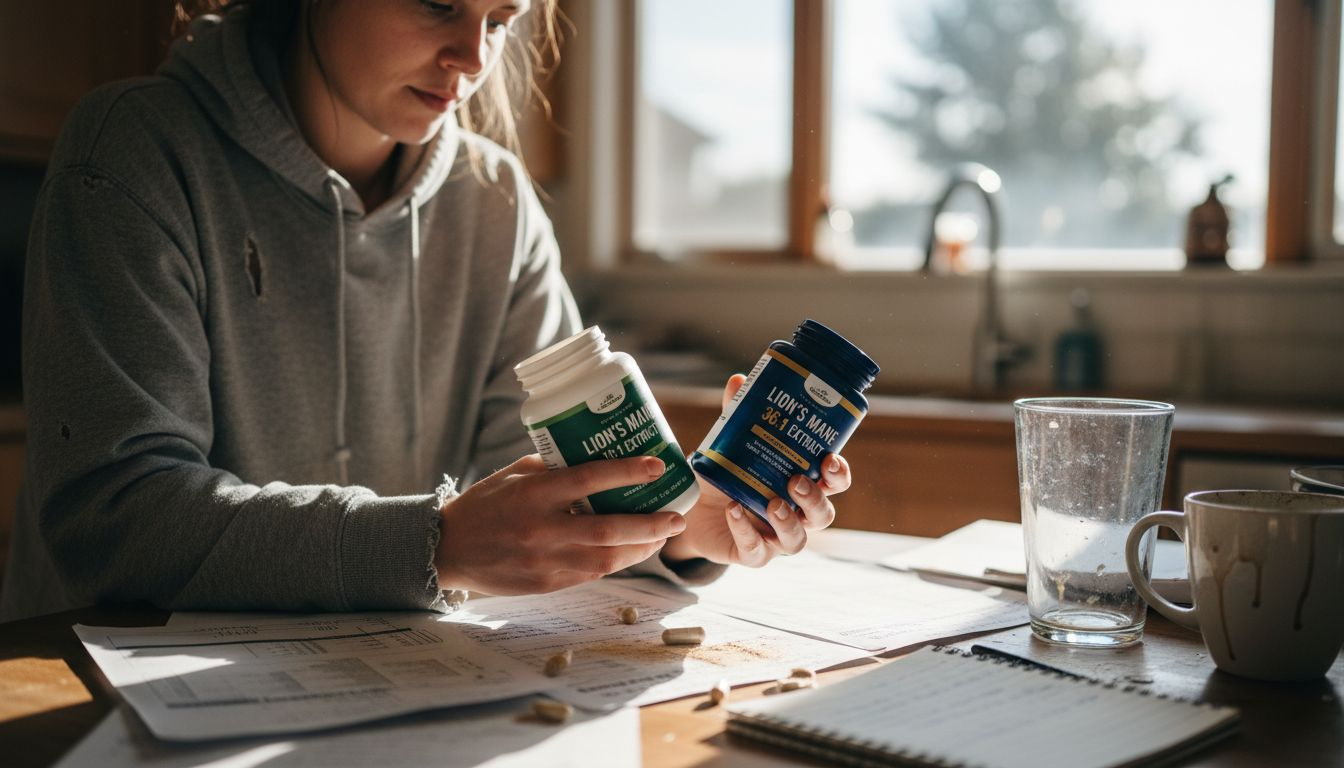
But here’s the catch: the ratio only matters if you’re starting with the right material. Fruiting body extracts contain key bioactive compounds like hericenones and polysaccharides that drive neuroprotective effects. If you’re using mycelium on grain at a 36:1 ratio, you’re still concentrating something inferior.
Think of it like this: you can concentrate water all day long, but you’ll never get coffee. The source material determines the outcome.
Why fruiting body matters most:
- Higher concentration of hericenones: The primary compound for cognitive support
- Rich in polysaccharides: Immune support plus brain benefits
- Better standardization: Consistent bioactive profiles across batches
- Greater clinical efficacy: Research shows stronger results with fruiting body extracts
- No grain filler: Pure mushroom, nothing padding your capsule
When a company uses fruiting body extract at a 36:1 ratio, you get maximum potency. This combination delivers the compounds your brain actually needs to fight afternoon brain fog and maintain laser focus.
Mycelium extracts pushed through high ratios (30:1, 50:1) are often marketing theater. They’re trying to compete on numbers when they should be competing on quality.
Potency ratios only mean something when built on quality source material—fruiting body extracts standardized by their bioactive compounds deliver real, measurable cognitive benefits.
Your focus and mental clarity depend on whether that capsule contains concentrated fruiting body compounds or concentrated filler. The ratio tells you concentration; the source material determines whether it works.
Pro tip: Compare Lion’s Mane products by asking two questions: Is it 100% fruiting body? What extraction ratio was used? If both answers are strong (fruiting body + 20:1 or higher), you’ve found quality. If the company can’t answer clearly, keep looking.
Key Benefits and Real-World Applications
Lion’s Mane isn’t just another supplement sitting on a shelf. Clinical and preclinical studies show neuroprotective and antioxidant properties that translate into real improvements for your brain function and mental health.
Imagine it’s 3 PM on a Tuesday. Your brain typically turns to mush around this time—the afternoon fog rolls in, focus evaporates, and you’re reaching for coffee number four. Lion’s Mane works differently than stimulants. It doesn’t jolt you awake; it supports your brain’s ability to stay sharp naturally.
Here’s what Lion’s Mane actually does in your body:
- Stimulates nerve growth factor (NGF) synthesis: Builds and maintains your brain cells
- Reduces inflammation: Targets the cellular damage that clouds thinking
- Enhances antioxidant activity: Protects neurons from oxidative stress
- Improves mood regulation: Addresses the cognitive-emotional connection many professionals miss
- Supports gut health: Better microbiota diversity means better brain signaling
For professionals with ADHD or cognitive struggles, these benefits hit differently. You’re not just fighting afternoon brain fog—you’re addressing the underlying neurological factors that make focus harder for your brain than it is for others.
Real applications include targeting mild cognitive impairments and attention challenges that disrupt your workday. Instead of relying on prescription stimulants with their crash-and-burn cycle, you’re supporting your brain’s natural cognitive architecture.
Many professionals in Texas report clearer thinking within 2-4 weeks of consistent use. You notice you can hold complex ideas longer, recall details faster, and stay locked in during high-focus work without the jitters.
The anti-inflammatory aspect matters too. Chronic inflammation undermines focus, mood, and motivation. Lion’s Mane addresses this systematically, not just symptomatically.
Lion’s Mane works upstream—supporting the biological foundations of focus rather than forcing alertness through stimulation.
This is why people don’t just take it once and see results. Consistent daily use allows your brain to build stronger neural pathways, improve cellular protection, and optimize the systems that drive cognitive performance.
Pro tip: Take Lion’s Mane daily at the same time each morning, ideally with a meal containing healthy fats to enhance absorption of its bioactive compounds. Consistency matters more than dosage—your brain rewards steady, reliable supplementation.
Common Misconceptions and What to Avoid
Lion’s Mane has generated plenty of hype, and with hype comes misconceptions. Not all of them are harmless—some will drain your wallet or waste your time chasing results that won’t come.
The biggest misconception? Assuming all Lion’s Mane products work equally regardless of source or extraction method. This assumption costs you money and effectiveness. You might buy a cheap mycelium-on-grain product, take it daily for two months, see no results, and conclude Lion’s Mane doesn’t work for you. The supplement didn’t fail—the product did.
Consumers should avoid products lacking clear disclosure about fruiting body versus mycelium and standardized bioactive compound information. If the label doesn’t specify these details, the company is hiding something intentionally.
Here are the misconceptions and traps to sidestep:
- “More servings per day equals faster results”: More isn’t always better; consistency matters more than dosage
- “Results appear within days”: Real cognitive improvements take 2-4 weeks minimum of daily use
- “One brand is as good as another”: Quality varies enormously; cheap products often contain fillers
- “It replaces medical treatment”: Lion’s Mane complements professional care; it doesn’t replace it
- “Anecdotal reviews prove efficacy”: Personal stories are compelling but unreliable without controlled research
Another trap: Misunderstandings arise from inconsistent terminology and unverified health claims. You’ll see “cognitive enhancement” thrown around without backing. You’ll see claims that Lion’s Mane cures memory loss when the research only shows it may support normal cognitive function.
We’re still in early stages. Larger, longer clinical trials are necessary to confirm full safety and efficacy across all populations. This doesn’t mean Lion’s Mane doesn’t work—it means you should be skeptical of anyone claiming certainty beyond what research supports.
Avoid relying solely on anecdotal evidence and products without rigorous clinical backing. Look for companies transparent about their extraction methods, sourcing, and what research actually supports.
Misconceptions thrive when companies prioritize marketing over transparency. Trust brands that clearly disclose what’s in the bottle and what the research actually shows.
The right Lion’s Mane product combined with realistic expectations delivers real cognitive benefits. The wrong product combined with unrealistic expectations wastes both.
Pro tip: Before buying any Lion’s Mane supplement, verify three things: fruiting body sourcing, extraction ratio, and third-party testing results. Companies hiding any of these details are prioritizing profit over your results.
Unlock True Cognitive Power with Pure 100% Fruiting Body Lion’s Mane
The article reveals a common challenge many face when choosing Lion’s Mane supplements: the confusion around potency, sourcing, and extraction methods. If you’ve been frustrated by unclear labels, weak products diluted with mycelium on grain, or misleading potency ratios, you are not alone. You want a supplement that delivers real brain-supporting compounds like hericenones and polysaccharides at a high concentration—not filler or marketing fluff.
At Cortex Supplements, we solve this problem with our flagship product, Cortex Flow. It is a freeze-dried extract made exclusively from 100% American-grown Lion’s Mane fruiting bodies with a powerful 36:1 extraction ratio. This means every capsule packs potent neuroprotective compounds your brain actually needs to fight brain fog and improve focus naturally. We offer transparency with clear labeling and third-party verification so you never guess what you are consuming.
Elevate your mental clarity and support your cognitive health with the most potent, pure Lion’s Mane available. Discover how precision sourcing and true extract potency make all the difference at Cortex Supplements.
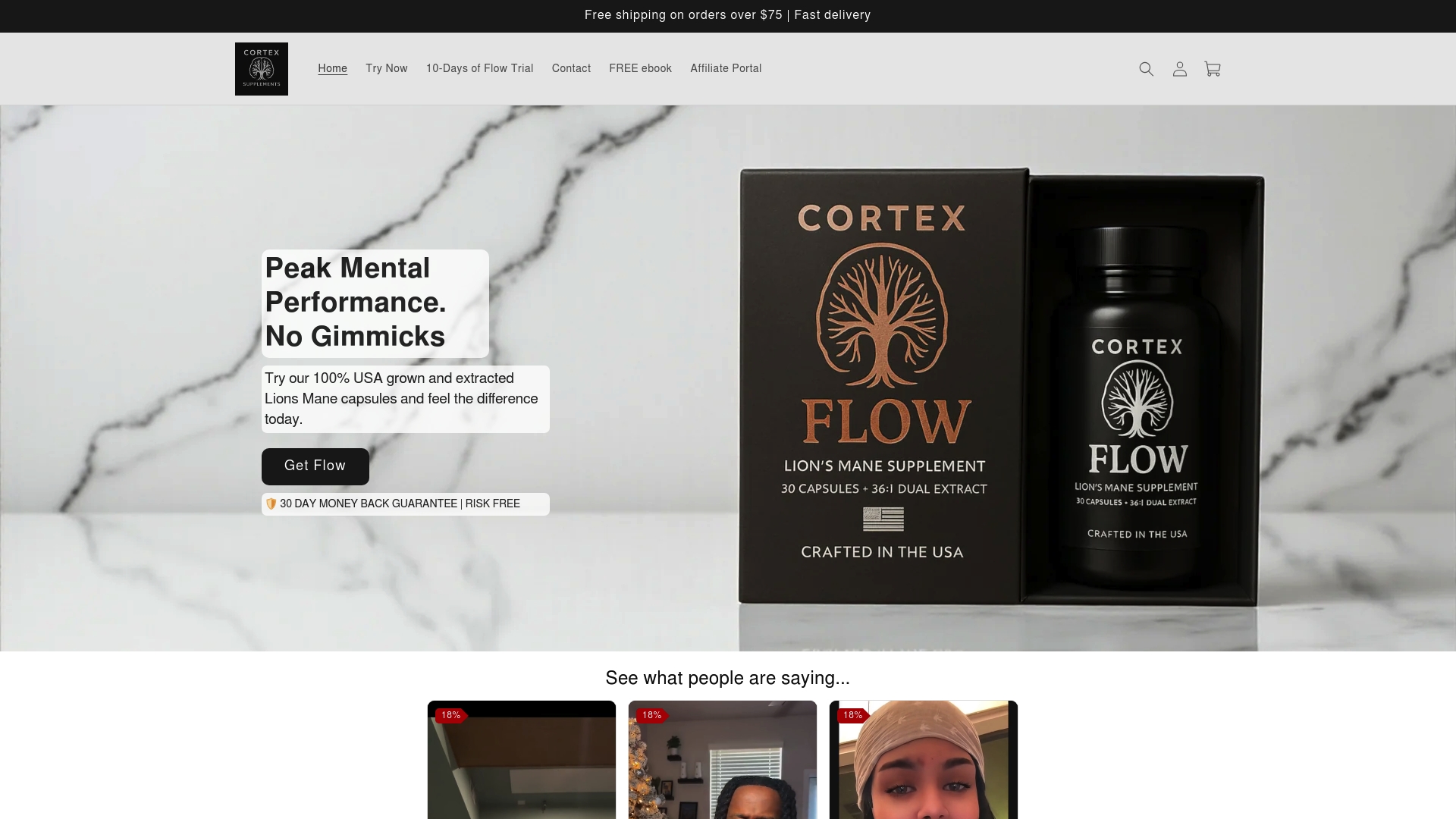
Experience real results starting today. Visit Cortex Flow to get your bottle of premium 100% fruiting body Lion’s Mane extract and start supporting your brain like never before.
Frequently Asked Questions
What is the difference between fruiting body and mycelium in Lion’s Mane supplements?
The fruiting body is the visible mushroom part packed with beneficial compounds like polysaccharides and hericenones. Mycelium is the root-like network that often contains lower potency and may be diluted with grain fillers, making fruiting body extracts generally more effective.
How do extraction ratios impact the potency of Lion’s Mane supplements?
Extraction ratios indicate how concentrated the final product is compared to the raw material. A higher ratio, like 36:1, means more bioactive compounds per capsule, but only if the source material is a high-quality fruiting body rather than a grain-filled mycelium.
Why are dual extraction methods important for Lion’s Mane supplements?
Dual extraction methods capture both water-soluble and alcohol-soluble compounds, maximizing the range of beneficial properties in the supplement. This method leads to a more comprehensive profile of bioactive compounds that enhance cognitive support.
What common misconceptions should I be aware of when choosing a Lion’s Mane supplement?
One major misconception is that all Lion’s Mane products are equally effective, irrespective of their source or extraction method. It’s crucial to choose products labeled as 100% fruiting body and to seek transparent information about extraction methods and bioactive compound concentrations.
Recommended
- Lion’s Mane Terminology: Cognitive Focus Essentials – Cortex Supplements
- Lion’s Mane Fruiting Body: Cognitive Benefits Demystified – Cortex Supplements
- 7 Types of Lion’s Mane Supplements Explained for Focus – Cortex Supplements
- Lion’s Mane Trends 2026: Smarter Brain Support Moves Mainstream – Cortex Supplements
