

Trying to stay sharp during Texas workdays is tough when ADHD pulls your attention in every direction. Common misconceptions cloud the search for solutions, and relying solely on popular prescription choices invites both health and legal concerns. Exploring natural cognitive enhancers opens up safer options, but separating fact from fiction takes a clear understanding. This guide equips you with research-backed insights to spot the safest methods and avoid risky shortcuts, helping you make smarter choices for lasting focus and productivity.
Table of Contents
- Defining Cognitive Enhancers And Common Myths
- Types Of Cognitive Enhancers Explained
- How Cognitive Enhancers Affect Brain Function
- Legal Status And Safety Considerations In The U.S.
- Risks, Misuse, And Comparing Alternatives
Key Takeaways
| Point | Details |
|---|---|
| Cognitive Enhancers Are Not FDA-Approved | No cognitive enhancers are officially recognized by the FDA for healthy individuals, leading to potential legal and health risks. |
| Risks of Misuse and Dependency | Regular use of cognitive enhancers can lead to addiction, tolerance, and cognitive decline over time. |
| Individual Responses Vary | The effectiveness of cognitive enhancers depends on individual brain chemistry, making personalized approaches essential. |
| Lifestyle Alternatives Are Effective | Implementing lifestyle changes such as improved sleep, exercise, and nutrition can yield sustainable cognitive benefits without the risks associated with enhancers. |
Defining Cognitive Enhancers and Common Myths
When you hear “cognitive enhancer,” what comes to mind? Most people think of prescription medications or mysterious substances that unlock hidden brain power. The reality is more nuanced and worth understanding, especially if you’re exploring options to sharpen your focus at work.
Cognitive enhancers, also called nootropics or smart drugs, are substances designed to improve mental performance in healthy people. They’re built to boost alertness, attention, executive function, learning, and memory—basically, all the tools you need when you’re grinding through a tough afternoon at the office.
Here’s what makes them tricky: no medications are officially licensed as cognitive enhancers for healthy individuals. That’s a crucial fact that contradicts what many people believe.
Common myths about cognitive enhancers include:
- They provide dramatic, immediate improvements in focus and decision-making ability
- They work the same way for everyone, regardless of individual brain chemistry
- They carry minimal health risks when used without medical supervision
- They’re essentially safe because they’re marketed as performance boosters
- They can replace sleep, exercise, and proper nutrition
Research shows something different. When researchers examined cognitive enhancement effectiveness, they discovered mixed results and significant concerns about misuse. People often overestimate benefits while underestimating real health risks like addiction and potential cognitive decline.
Many of these substances work by affecting neurotransmitters—brain chemicals that control focus, mood, and alertness. But here’s the catch: your brain is unique. What works for your colleague might not produce the same results for you.
The FDA doesn’t recognize cognitive enhancers as approved treatments for healthy brains, yet millions use them seeking competitive advantage at work.
Another persistent myth: that all nootropics are prescription drugs. Actually, nootropic research reveals that many compounds originally designed to treat cognitive impairments are now used off-label by healthy individuals. The health risks multiply significantly when used without medical oversight.
You’ve probably heard the term “natural cognitive enhancer” thrown around. Natural doesn’t automatically mean safe or effective. Some plant-based compounds do show genuine promise for supporting focus through legitimate mechanisms, but the evidence varies widely.
The ethical conversation matters too. Using substances to artificially boost performance raises questions about fairness, dependency, and what happens when you stop using them. Your brain adapts to chemical changes, and withdrawal effects are real concerns that many people don’t discuss.
What separates fact from fiction? Look for peer-reviewed research, understand your individual health status, and consult with healthcare providers before trying anything new.
Pro tip: Before trying any cognitive enhancer, identify the specific problem you’re trying to solve—is it midday energy crashes, trouble sustaining attention during meetings, or difficulty retaining information? This clarity helps you evaluate whether a substance addresses your actual issue.
Types of Cognitive Enhancers Explained
Cognitive enhancers come in different flavors, and understanding the distinctions matters when you’re evaluating what might work for your focus challenges. They’re not all created equal, and the type you choose determines how your brain responds.
The main categories break down like this. You’ve got prescription stimulants—medications like methylphenidate and modafinil designed for specific disorders like ADHD. Then there are over-the-counter supplements, which range from vitamins to herbal products you can grab without a prescription.
Research on cognitive enhancer classifications reveals several distinct types that work through different mechanisms:
- Herbs and botanical compounds that support brain function through plant-based ingredients
- Amino acids that serve as building blocks for neurotransmitters your brain needs
- Acetylcholinesterase inhibitors that preserve acetylcholine, a neurotransmitter linked to memory and focus
- Cholinergic enhancers that boost acetylcholine production directly
- Vitamins and minerals that provide nutritional support for cognitive function
The key difference? Prescription stimulants are designed to treat diagnosed conditions. Over-the-counter supplements aim to support existing brain function in healthy people. Your ADHD brain might respond differently to these options than someone without ADHD, which is why personalization matters.
Different cognitive enhancer types use completely different mechanisms—some work on neurotransmitters, others simply fill nutritional gaps your diet might miss.
When professionals in Texas examine different nootropic categories and their applications, they discover varying safety profiles too. Prescription options have rigorous testing but come with potential side effects and dependency risks. Supplements offer fewer regulations but often lack extensive clinical data.
Herbal compounds like lion’s mane mushroom work through completely different pathways than synthetic stimulants. They support brain health gradually rather than creating immediate chemical shifts. This distinction matters if you’re concerned about crashes or dependency.
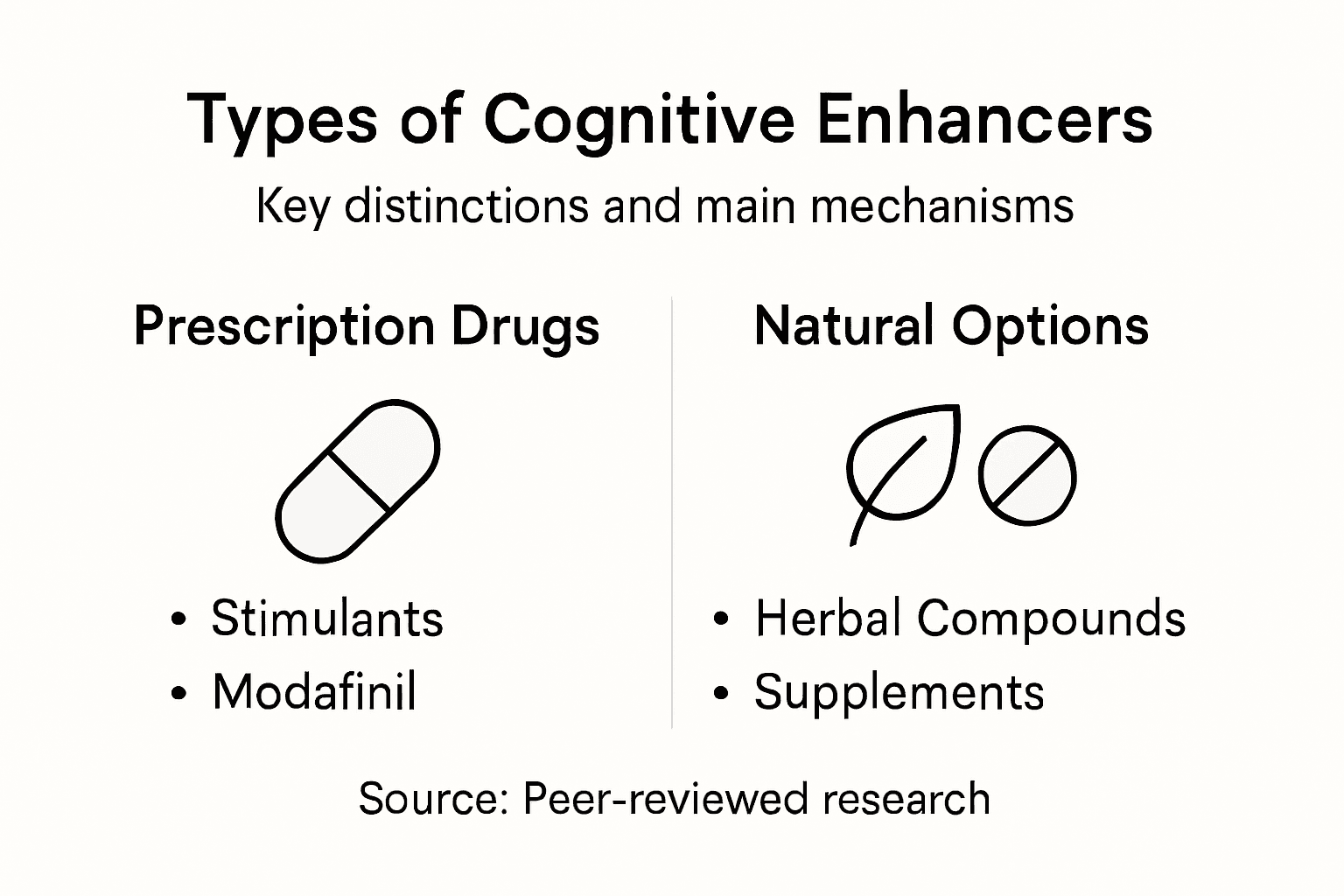
Acetylcholinesterase inhibitors preserve a neurotransmitter already in your brain, while cholinergic enhancers actively increase production. Both target focus and memory, but they approach the problem differently.
Your individual brain chemistry determines which type might actually help you. What provides noticeable benefits for your colleague might feel ineffective for you because your neurotransmitter baseline and needs differ.
Here’s a concise look at how major types of cognitive enhancers differ:
| Type | Intended Use | Mechanism | Speed of Effect |
|---|---|---|---|
| Prescription Stimulants | ADHD, Narcolepsy treatment | Boost dopamine/norepinephrine | Fast (hours) |
| Herbal or Botanical | General focus support | Modulate neuroinflammation | Gradual (weeks) |
| Amino Acid Supplements | Cognitive nutrition | Enhance neurotransmitter synthesis | Moderate (days-weeks) |
| Acetylcholinesterase Inhibitors | Memory preservation | Prevent breakdown of acetylcholine | Moderate (days) |
| Cholinergic Enhancers | Memory/learning support | Directly increase acetylcholine | Moderate (days) |
| Vitamin/Mineral Supplements | Nutritional gaps | Support brain metabolism | Gradual (weeks) |
Pro tip: Start by identifying which cognitive challenge you face most—is it attention span during long meetings, mental clarity after lunch, or memory retention of important details? Match the enhancer type to your specific problem rather than chasing whatever seems popular.
How Cognitive Enhancers Affect Brain Function
Your brain runs on chemistry. Thousands of chemical reactions happen every second, and cognitive enhancers work by tweaking those reactions. Understanding how they influence your neurotransmitters and brain regions helps explain why they work differently for different people.

Neurotransmitters are your brain’s chemical messengers. They carry signals between neurons and determine whether you can focus, remember details, or feel alert. Cognitive enhancers primarily work by modulating these neurotransmitter systems, especially those linked to attention and memory.
When researchers examine how enhancers modulate neurotransmitter systems, they find that improvements in cognitive function depend heavily on which neurotransmitters get affected. Stimulants increase dopamine and norepinephrine, boosting alertness and focus. Other enhancers target acetylcholine, which supports memory formation and recall.
Here’s what happens in your brain when you take a cognitive enhancer:
- Increased neurotransmitter availability makes signals between brain cells stronger and faster
- Enhanced alertness from stimulation of your prefrontal cortex, the decision-making region
- Improved attention span through modulation of systems that filter distractions
- Better memory consolidation when enhancers support the hippocampus, your memory hub
- Reduced mental fatigue by optimizing how your brain uses energy
But here’s the catch: the effect depends on your baseline brain chemistry. If you already have high dopamine naturally, adding more might not help—or it might overstimulate you. Your ADHD brain likely functions differently than your colleague’s, so the same enhancer produces different results.
Cognitive enhancers don’t create new brain capabilities—they optimize existing systems by changing how efficiently neurotransmitters work.
Cognitive enhancers promote neuroplasticity, meaning they help your brain form new neural connections and strengthen existing ones. This process takes time. You won’t notice dramatic improvements immediately with supplement-based enhancers, though prescription stimulants often work faster.
Different enhancer types produce different speeds of effect. Pharmaceutical agents provide faster results but carry higher risks. Nutritional approaches like specific mushroom extracts work gradually, supporting your brain’s infrastructure without dramatic chemical shifts.
Your brain also adapts. With repeated use, your neural receptors become less responsive to the same chemical signals. This is why some people develop tolerance, needing higher doses to achieve the same focus boost.
Individual brain chemistry is the wildcard. Genetics influence your neurotransmitter baseline, your receptors’ sensitivity, and how quickly your body metabolizes enhancers. Two professionals with identical job stress might need completely different cognitive support.
Pro tip: Track your focus patterns for one week before starting any enhancer—note when you crash, when you’re sharpest, and which tasks drain you most. This baseline helps you accurately gauge whether an enhancer actually improves your cognition or just changes how you feel.
Legal Status and Safety Considerations in the U.S.
Here’s the reality that often surprises professionals seeking cognitive enhancement: the U.S. government doesn’t officially approve any drugs as cognitive enhancers for healthy people. Not one. This regulatory gap creates a murky landscape where many people unknowingly operate outside legal and safety boundaries.
The FDA approves medications for specific medical conditions. Stimulants like Adderall treat ADHD. Modafinil treats narcolepsy. When healthy professionals use these drugs to boost focus at work, they’re using them off-label—outside their approved purpose. This distinction matters legally and medically.
No drugs hold FDA approval as cognitive enhancers for healthy individuals. This means anyone taking prescription stimulants without a diagnosis is operating in legal gray territory. Many of these off-label substances carry risks of addiction and serious adverse effects that regulatory agencies take seriously.
Understand the categories:
- Prescription medications require a doctor’s supervision and are only legal when prescribed for an approved condition
- Over-the-counter supplements face looser regulation through the FDA’s Dietary Supplement Health and Education Act
- Herbal products vary widely in quality, potency, and safety standards since manufacturers aren’t required to prove efficacy
- Controlled substances like certain stimulants are restricted due to addiction potential
- Unregulated compounds sold online may contain unlisted ingredients or harmful contaminants
The safety framework is clear: regulatory agencies emphasize caution about non-prescription use because safety evidence in healthy populations simply doesn’t exist for most substances. Pharmaceutical companies test drugs on people with diagnosed conditions, not on high-performing professionals looking for an extra edge.
The U.S. has no official cognitive enhancers for healthy brains, yet millions use off-label prescription drugs designed for medical conditions—creating legal and health risks regulators warn against.
Addiction risk is real with prescription stimulants. Your brain adapts to these chemicals. Stop using them after weeks or months, and withdrawal symptoms emerge: fatigue, depression, difficulty concentrating. For Texas professionals balancing demanding careers and personal obligations, this dependency risk deserves serious consideration.
Supplements occupy different legal territory. The FDA doesn’t pre-approve them like medications. Manufacturers are responsible for safety, but enforcement is weak. Quality varies dramatically between brands. Some products contain unlisted ingredients; others fail to deliver what labels promise.
Your safest path involves transparency with healthcare providers. Tell your doctor you’re exploring cognitive support options. Work with them to identify legitimate needs, evaluate actual risks, and monitor effects. This approach protects both your health and your legal standing.
Pro tip: Before purchasing any cognitive enhancer, verify that the manufacturer provides third-party testing results and maintains transparent sourcing practices—this separates quality products from those cutting corners on safety standards.
Risks, Misuse, and Comparing Alternatives
The cognitive enhancer temptation is real. You’re swamped with work, deadlines pile up, and someone mentions they’re taking something that keeps them sharp all day. Before you follow that path, understand what you’re actually risking.
Cognitive enhancer misuse carries serious health consequences, especially among healthy individuals chasing productivity gains. The risks aren’t theoretical—they’re documented and significant. Addiction develops faster than many people expect, particularly with stimulant medications like amphetamines and methylphenidate.
Here are the actual risks you face:
- Addiction and dependency develop through regular use, making it hard to focus without the substance
- Paradoxical cognitive decline occurs when your brain adapts and function actually worsens over time
- Cardiovascular complications including elevated heart rate, blood pressure spikes, and irregular heartbeat
- Sleep disruption that compounds fatigue and reduces the very focus you’re trying to improve
- Mood changes like anxiety, irritability, and depression, especially during withdrawal
- Tolerance buildup requiring escalating doses to achieve the same effect
Misuse happens quietly. You start with a friend’s prescription or an online purchase. You tell yourself it’s temporary, just until the big project ends. Weeks turn into months. Your brain adapts. You need more to feel normal. Stopping triggers withdrawal symptoms that feel unbearable.
Prescription stimulant misuse creates a trap: short-term focus gains become long-term dependency that undermines the productivity you sought.
Now consider the alternatives. Research shows lifestyle and behavioral strategies provide sustainable cognitive benefits without the crash and addiction risks. These approaches work slower—you won’t feel transformed tomorrow—but they actually stick.
Compare your real options:
Sleep optimization rebuilds mental clarity more effectively than stimulants. Consistent sleep schedules, darker bedrooms, and morning light exposure regulate your circadian rhythm and restore focus naturally.
Physical activity produces dopamine and norepinephrine the same way stimulants do, minus the addiction risk. Thirty minutes of exercise beats a pill for sustained attention improvements.
Nutrition adjustments supply the building blocks your brain needs for neurotransmitter production. Omega-3 fatty acids, B vitamins, and adequate protein matter more than most people realize.
Cognitive training strengthens your brain’s attention systems through practice. Apps and exercises targeting working memory and focus improve performance without chemicals.
These methods take weeks to show results. They’re less exciting than popping a pill. They require consistency. But they work, and they build genuine capability rather than borrowing focus from tomorrow.
The following table summarizes practical lifestyle alternatives and their unique cognitive benefits for healthy professionals:
| Method | Primary Cognitive Benefit | Key Additional Benefit |
|---|---|---|
| Sleep Optimization | Restores mental clarity | Improves emotional regulation |
| Regular Exercise | Enhances sustained attention | Reduces stress hormones |
| Balanced Nutrition | Fuels neurotransmitter production | Supports overall brain health |
| Cognitive Training | Strengthens working memory | Increases processing speed |
Your ADHD brain might still benefit from professional support—but through proper diagnosis and prescribed treatment, not self-medication.
Pro tip: Start with one lifestyle change this week: establish a consistent sleep schedule or add 20 minutes of daily movement. Track your focus improvements over two weeks before considering any supplement or medication, giving yourself a baseline to measure actual enhancement.
Unlock Natural Focus with a Trusted Cognitive Enhancer
If you struggle with maintaining attention during long workdays or want to support memory and mental clarity without risking addiction or side effects, you are not alone. The article explains how cognitive enhancers work by modulating brain chemistry and highlights the importance of choosing natural, safe options that support your unique brain chemistry.
Our premium product, Cortex Flow, is designed precisely for professionals seeking gradual, sustainable focus improvement through a potent, natural source: 100% US-grown Lion’s Mane mushroom extract. Unlike prescription stimulants, Cortex Flow works gently by promoting neuroplasticity and supporting acetylcholine pathways—helping you enhance memory and focus without harsh chemicals.
Experience the power of a nootropic you can trust and that aligns with the science around safe cognitive enhancement. Visit Cortex Flow today to learn how our 36:1 freeze-dried extract capsules can support your mental performance naturally.

Ready to take control of your focus the safe way Avoid short-term fixes that lead to dependency Discover why natural nootropics like Cortex Flow are the sensible choice for lasting cognitive support Visit our website now and start your journey toward sharper mental clarity.
Frequently Asked Questions
What are cognitive enhancers?
Cognitive enhancers, also known as nootropics or smart drugs, are substances designed to improve mental performance in healthy individuals. They aim to boost alertness, attention, executive function, learning, and memory.
How do cognitive enhancers work?
Cognitive enhancers work by modulating neurotransmitter systems in the brain. They can increase the availability of certain chemicals that improve focus, memory, and overall cognitive function, depending on the type of enhancer used.
What are the different types of cognitive enhancers?
Cognitive enhancers can be categorized mainly into prescription stimulants, over-the-counter supplements, herbal compounds, amino acids, cholinergic enhancers, and vitamins/minerals. Each type works through different mechanisms to support brain function.
Are there risks associated with using cognitive enhancers?
Yes, there are several risks, including addiction, potential cognitive decline, cardiovascular issues, and mood changes. Using these substances without medical supervision can lead to significant health complications, especially when using prescription medications off-label.
Recommended
- Cognitive Enhancement: Boosting Focus and Clarity Naturally – Cortex Supplements
- Cognitive Support: Enhancing Focus for ADHD Minds – Cortex Supplements
- Supplements for Professionals: Enhancing Focus and Clarity – Cortex Supplements
- Top 5 Cognitivefunction.com Alternatives in 2026 for Enhanced Mental C – Cortex Supplements
