

Choosing a lion’s mane supplement can feel overwhelming when labels throw terms like extraction ratios, fruiting bodies, and mycelium at you all at once. You want cognitive benefits like sharper focus and better memory, but how do you know which product actually delivers? Research shows 70% of people taking high-quality lion’s mane supplements report improved focus and mental clarity after 8 weeks, so making the right choice matters. This guide equips you with the knowledge to confidently select supplements that work.
Table of Contents
- Introduction To Lion’s Mane And Cognitive Benefits
- Prerequisites: What You Need Before Choosing A Supplement
- Understanding Extraction Ratios And Potency
- Fruiting Body Vs. Mycelium: What Matters Most
- Dosage Recommendations For Cognitive Enhancement
- Quality Assurance: Third-Party Testing And Certification
- Common Mistakes And How To Avoid Them
- Expected Outcomes And Timelines
- Explore Cortex Supplements For Optimal Lion’s Mane Benefits
- FAQ
Key Takeaways
| Point | Details |
|---|---|
| Extraction ratio matters | Higher ratios like 36:1 concentrate more active compounds for better cognitive support. |
| Use fruiting bodies | 100% fruiting body supplements contain 30% more neuroactive compounds than mycelium products. |
| Dosage range | Effective daily doses span 500 mg to 3000 mg, with benefits appearing after 4 to 8 weeks. |
| Verify quality | Third-party testing ensures purity, safety, and accurate labeling of active ingredients. |
| Avoid common mistakes | Don’t ignore extraction ratios, skip testing verification, or stop use before 8 weeks. |
Introduction to Lion’s Mane and Cognitive Benefits
Lion’s mane mushroom has earned attention for its powerful cognitive enhancement properties. The secret lies in bioactive compounds called hericenones and erinacines, which scientific research links to neurogenesis and improved brain health. These compounds help your brain grow new neural connections, supporting better focus, memory retention, and mental clarity.
Clinical studies consistently demonstrate measurable improvements in cognitive function. People seeking natural alternatives to synthetic nootropics turn to lion’s mane because it offers brain support without harsh side effects. Understanding how cognitive benefits of lion’s mane work at a cellular level helps you appreciate why supplement quality makes such a significant difference.
The key benefits include:
- Enhanced focus and concentration during demanding mental tasks
- Improved memory formation and recall abilities
- Better mental clarity and reduced brain fog
- Support for long term brain health and neuroprotection
These advantages explain why choosing a high quality supplement becomes essential. When you understand the science behind lion’s mane, you can better evaluate products and select options that deliver real cognitive support rather than empty promises.
Prerequisites: What You Need Before Choosing a Supplement
Before you start comparing products, arm yourself with critical knowledge about supplement labels and quality markers. Understanding key terms prevents costly mistakes and helps you identify truly effective options.
First, learn what extraction ratios mean and how they indicate supplement strength. A 36:1 ratio means 36 pounds of raw mushroom material concentrated into 1 pound of extract, creating a potent formula. Next, distinguish between fruiting body and mycelium because this dramatically affects the concentration of beneficial compounds you actually receive.
Know your target dosage range based on research. Most studies showing cognitive benefits use 500 mg to 3000 mg daily, so products should clearly state serving sizes. You also need to verify third-party testing certificates, which confirm the supplement contains what the label claims without contaminants like heavy metals or pesticides.
Essential checklist before purchasing:
- Verify extraction ratio is clearly listed (look for 36:1 or higher)
- Confirm the product uses 100% fruiting bodies, not mycelium or grain fillers
- Check that dosage falls within the 500 mg to 3000 mg research backed range
- Look for third-party testing certificates on the product page
- Plan to take the supplement daily for at least 8 weeks to see results
Finally, commit to consistency. Lion’s mane requires daily use over several weeks before cognitive benefits become noticeable. Understanding lion’s mane terminology and potency gives you confidence to evaluate products accurately and avoid marketing hype that obscures real quality indicators.
Understanding Extraction Ratios and Potency
Extraction ratios tell you how concentrated the active compounds are in your supplement. This number directly impacts whether you’ll experience the cognitive benefits you’re seeking or just waste money on weak formulas.
A 36:1 extraction ratio means manufacturers concentrated 36 pounds of raw lion’s mane mushroom into just 1 pound of final extract. This concentration process isolates and amplifies the hericenones and erinacines your brain needs. Compare this to raw mushroom powder with a 1:1 ratio, which contains far lower concentrations of active compounds and requires massive doses to achieve any effect.

Higher extraction ratios deliver more potent cognitive support in smaller serving sizes. You get therapeutic levels of neuroactive compounds without swallowing handfuls of capsules. Low extraction ratios or raw powders simply can’t provide enough concentrated bioactives to match clinical study results.
Key points about extraction ratios and potency:
- Ratios of 36:1 or higher ensure adequate concentration of beneficial compounds
- Lower ratios require unrealistically large doses to achieve cognitive benefits
- Extraction concentrates the specific molecules linked to neurogenesis and brain health
- Always verify the extraction ratio on product labels before purchasing
- Raw powder supplements typically lack sufficient potency for measurable results
Pro tip: If a product doesn’t list its extraction ratio prominently, assume it’s low quality or raw powder. Reputable manufacturers highlight strong extraction ratios because it’s a key selling point that demonstrates superior potency.
Understanding extraction ratios empowers you to compare supplements accurately. When you know what the numbers mean, you can quickly identify products that deliver real value versus those that just fill space on store shelves with ineffective formulas.
Fruiting Body vs. Mycelium: What Matters Most
The part of the mushroom used in your supplement dramatically affects the cognitive benefits you receive. This distinction matters more than most people realize when selecting effective lion’s mane products.
Fruiting bodies are the actual mushrooms you recognize, containing the highest concentrations of hericenones and erinacines. Research shows supplements made from 100% fruiting bodies contain over 30% more neuroactive compounds than those including mycelium. These compounds drive the neurogenesis and cognitive enhancement you’re seeking.
Mycelium is the root structure that grows underground or on grain substrates. Many manufacturers use mycelium because it’s cheaper and faster to produce. The problem? Mycelium grown on grain often contains mostly grain filler rather than actual mushroom material, drastically diluting potency. You end up paying for starch instead of beneficial compounds.
| Feature | Fruiting Body | Mycelium |
|---|---|---|
| Neuroactive compound concentration | High (30% more than mycelium) | Low to moderate |
| Grain filler content | None | Often 50% or more |
| Research backing | Extensive clinical studies | Limited evidence |
| Cost effectiveness | Higher upfront, better results | Lower cost, poor results |
| Cognitive benefit reliability | Consistent and measurable | Unreliable and weak |
Choosing 100% fruiting body supplements ensures you get therapeutic doses of the compounds that actually support brain health. When you see products mixing fruiting body with mycelium or listing “mycelial biomass,” recognize these as cost cutting measures that compromise effectiveness.
Always check which mushroom parts are used in supplements before purchasing. The scientific comparison of fruiting body versus mycelium clearly demonstrates why pure fruiting body extracts deliver superior cognitive support.
Pro tip: Look for products that explicitly state “100% fruiting body” on the label. If a product uses vague terms like “full spectrum” or “whole mushroom,” it likely contains significant mycelium and grain filler that dilute the beneficial compounds you need.
Dosage Recommendations for Cognitive Enhancement
Getting your dosage right makes the difference between experiencing real cognitive benefits and wasting money on ineffective supplementation. Clinical research supports daily doses ranging from 500 mg to 3000 mg for measurable improvements in focus, memory, and mental clarity.
Most people see optimal results around 1000 mg to 1500 mg daily, though your ideal dose depends on factors like body weight, supplement quality, and individual response. Starting at the lower end lets you assess tolerance before increasing to find your sweet spot.
Capsule form offers the most precise and convenient dosing method. You know exactly how much you’re taking each day without measuring powders or dealing with the earthy taste. Consistency matters more than high doses because lion’s mane works through cumulative effects over weeks, not immediate impacts.
Follow these steps for optimal dosage and intake:
- Start with 500 mg to 1000 mg daily to establish baseline tolerance
- Take your dose at the same time each day, preferably with food
- Continue this initial dose for at least 2 weeks before adjusting
- Gradually increase by 500 mg increments if needed, up to 3000 mg maximum
- Track your cognitive performance and adjust based on results
- Maintain consistent daily use for a minimum of 8 weeks
Don’t fall into the trap of thinking more equals better. Clinical dosage studies show that exceeding 3000 mg daily doesn’t enhance benefits and may increase the risk of side effects like digestive discomfort. Your body can only process and utilize a certain amount of bioactive compounds at once.
Remember that cognitive improvements appear gradually. You won’t feel a sudden rush or immediate change after your first dose. The real benefits accumulate as consistent supplementation supports ongoing neurogenesis and neural pathway development over several weeks.
Quality Assurance: Third-Party Testing and Certification
Third-party testing serves as your protection against contaminated, mislabeled, or ineffective supplements. Without independent verification, you’re trusting manufacturers to police themselves, which historically leads to quality problems.
Independent laboratories test supplements for heavy metals like lead and mercury, pesticide residues, microbial contamination, and accurate ingredient labeling. These tests confirm the product contains the stated amount of lion’s mane extract without dangerous additives. Quality manufacturers eagerly share these certificates because they demonstrate commitment to safety and transparency.
Look for clear lab reports posted on product pages or available upon request. Certificates should include specific test results, not just vague claims about quality control. The testing lab should be recognized and independent, not affiliated with the manufacturer.
Key elements of proper third-party verification:
- Heavy metal testing for lead, mercury, arsenic, and cadmium
- Microbial testing for harmful bacteria, yeast, and mold
- Pesticide screening for agricultural chemical residues
- Active ingredient verification matching label claims
- Batch specific testing with recent dates and clear documentation
Reputable suppliers make third-party certification easy to verify. If you have to dig through multiple pages or contact customer service to find testing information, consider it a red flag. Transparency should be the default, not something you need to fight for.
Consistent testing across batches ensures every bottle meets the same quality standards. One time testing means nothing if subsequent batches go unchecked. Ask manufacturers about their testing frequency and batch tracking systems before committing to a purchase.
Quality assurance protects your health and your investment. When you verify independent testing, you gain confidence that the supplement will deliver the cognitive benefits you’re paying for without exposing you to contaminants that could cause harm.
Common Mistakes and How to Avoid Them
Even informed consumers make avoidable errors when selecting lion’s mane supplements. Recognizing these pitfalls helps you navigate the market more effectively and choose products that actually work.
The biggest mistake is ignoring extraction ratios entirely. Many people buy based on price or brand recognition without checking if the product contains concentrated extract or just raw powder. Low potency means you’re essentially taking ineffective doses regardless of how many capsules you swallow.
Another common error involves choosing mycelium heavy products because they cost less. You might save money upfront, but you won’t experience cognitive benefits because the active compound concentration is too low. This false economy wastes both money and time while delaying the results you’re seeking.
Some people assume doubling or tripling recommended doses will speed up results. This approach doesn’t work with lion’s mane because neurogenesis takes time regardless of dose size. Excessive intake just increases side effect risk without accelerating cognitive improvements.
Mistakes to avoid:
- Purchasing supplements without checking extraction ratios or mushroom part used
- Choosing products based solely on low prices instead of quality indicators
- Exceeding 3000 mg daily thinking more will produce faster results
- Skipping verification of third-party testing certificates and lab reports
- Stopping supplementation before completing at least 8 weeks of consistent use
- Buying products with vague labeling or unclear ingredient information
Pro tip: Create a simple checklist covering extraction ratio, fruiting body content, third-party testing, and dosage information. Run every product through this filter before purchasing to eliminate low quality options quickly and focus on supplements that meet evidence based standards.
Patience proves essential with lion’s mane supplementation. Quitting after 2 or 3 weeks because you don’t feel different yet represents wasted effort. The cognitive benefits build gradually as your brain develops new neural connections, requiring consistent support over months rather than days.
Expected Outcomes and Timelines
Setting realistic expectations helps you stay consistent long enough to experience actual cognitive benefits. Understanding when and how improvements appear prevents premature disappointment and supplement abandonment.
Research confirms that consistent use for 4 to 8 weeks is necessary to see measurable cognitive benefits from lion’s mane supplementation. The compounds work by supporting neurogenesis, which takes time as your brain builds new neural pathways. You won’t notice changes overnight or even within the first week.
About 70% of participants reported improved focus and mental clarity after 8 weeks in clinical trials. This means most people experience benefits, but individual responses vary based on factors like baseline cognitive function, supplement quality, dosage consistency, and overall health status.
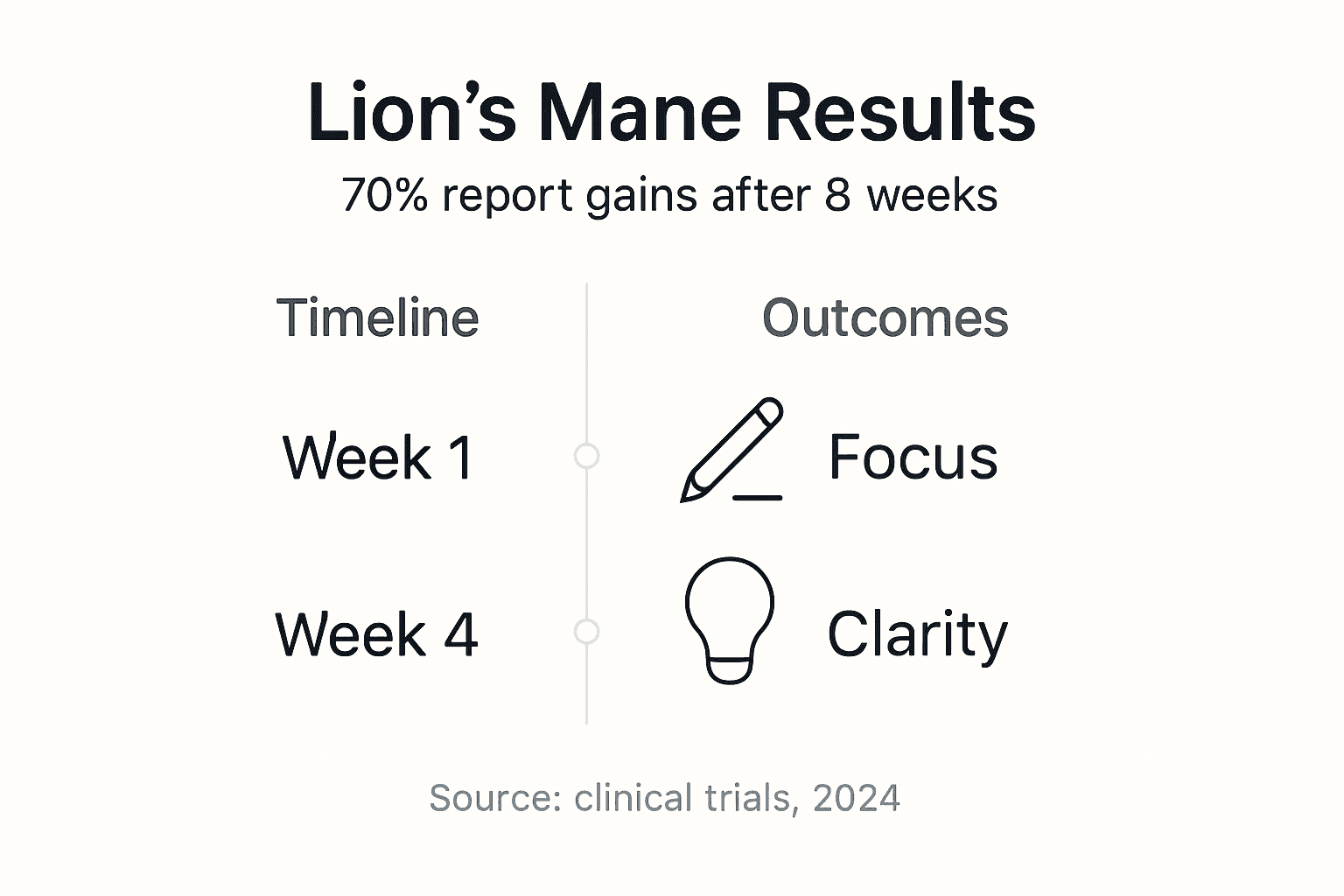
You might notice subtle improvements first, like slightly better concentration during work tasks or reduced brain fog in the afternoons. These small changes accumulate into more noticeable cognitive enhancement as you continue daily supplementation. Some people report clearer thinking, while others notice improved memory recall or sustained mental energy.
| Timeline | Expected Outcomes | Notes |
|---|---|---|
| Week 1 to 2 | Minimal to no noticeable changes | Compounds begin accumulating; patience required |
| Week 3 to 4 | Subtle improvements may emerge | Some users report slight focus enhancement |
| Week 5 to 8 | Measurable cognitive benefits | 70% of users experience improved clarity and focus |
| Beyond 8 weeks | Continued improvement and maintenance | Long term use supports sustained brain health |
Tracking your progress helps identify improvements that might otherwise go unnoticed. Keep simple notes about focus levels, memory performance, and mental clarity throughout the day. After 8 weeks, review your notes to see how your cognitive function has evolved since starting supplementation.
Understand that cognitive improvement timelines reflect gradual biological processes, not instant pharmaceutical effects. The timeline research consistently shows that meaningful benefits require sustained daily intake over several weeks as your brain responds to ongoing neurogenic support.
Explore Cortex Supplements for Optimal Lion’s Mane Benefits
Now that you understand what makes an effective lion’s mane supplement, you’re ready to make an informed choice. Cortex offers precisely the high quality formulation this guide recommends: 100% fruiting body capsules with a potent 36:1 extraction ratio, grown and processed in the United States.
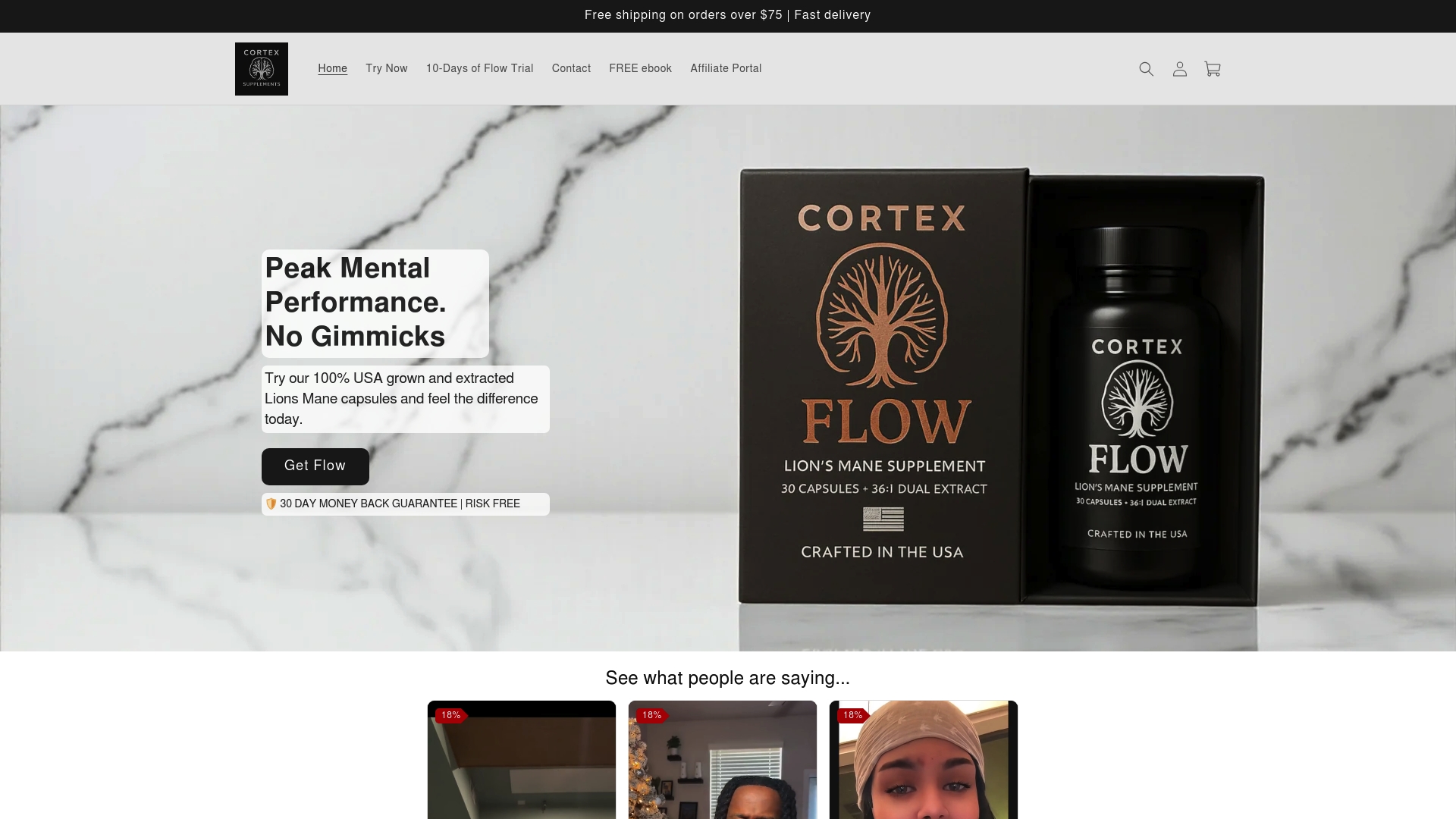
Every batch undergoes rigorous third-party testing to verify purity and potency, giving you confidence in what you’re taking. Our educational resources help you optimize your capsules intake approach and understand key terminology that empowers better decisions. Compare our offering with other options through our detailed extract capsules analysis to see how Cortex Flow delivers superior cognitive support backed by science.
FAQ
How long does it take to see cognitive improvements from lion’s mane?
Most people notice measurable improvements after 4 to 8 weeks of consistent daily supplementation. This timeline reflects the gradual neurogenesis process as your brain develops new neural pathways. About 70% of users in clinical studies reported enhanced focus and mental clarity by the 8 week mark. Individual results vary based on supplement quality, dosage consistency, and your baseline cognitive function, so patience and daily commitment are essential.
What extraction ratio should I look for in a lion’s mane supplement?
Aim for extraction ratios of at least 36:1 to ensure sufficient concentrations of hericenones and erinacines, the active compounds responsible for cognitive benefits. Higher ratios indicate more concentrated extracts that deliver therapeutic doses in practical serving sizes. Lower ratios or raw mushroom powders lack the potency needed to match clinical study results and often require unrealistically large doses to achieve any meaningful effect.
Should I choose fruiting body or mycelium based supplements?
Always select supplements made from 100% fruiting bodies because they contain over 30% more neuroactive compounds than mycelium based products. Fruiting bodies provide the highest concentrations of hericenones and erinacines that drive cognitive enhancement. Mycelium products often include significant grain filler that dilutes potency and reduces effectiveness, making them poor choices for serious cognitive support.
Is third-party testing necessary for lion’s mane supplements?
Third-party testing is absolutely essential to verify purity, safety, and accurate labeling of active ingredients. Independent laboratories check for heavy metals, pesticides, microbial contamination, and confirm the supplement contains what the label claims. Without third-party verification, you risk consuming contaminated products or ineffective formulas that waste your money while failing to deliver cognitive benefits.
Can I take more than 3000 mg daily for faster results?
Clinical studies support 500 mg to 3000 mg as the effective and safe daily dosage range for cognitive benefits. Taking more than 3000 mg doesn’t accelerate results because neurogenesis takes time regardless of dose size. Higher doses may increase the risk of digestive discomfort and other side effects without providing additional cognitive enhancement, making them an inefficient and potentially uncomfortable approach.
