

You pick up a lion’s mane supplement promising cognitive clarity, but the label lists a mysterious proprietary blend with no botanical part specified. Are you getting potent fruiting body extract or cheap mycelium filler? Without ingredient transparency, you’re gambling with your health and wallet. This guide reveals how to decode supplement labels, understand FDA requirements, and choose cognitive enhancers that deliver real results through transparent ingredient disclosure.
Table of Contents
- Why Ingredient Transparency Matters For Your Health
- Understanding FDA Regulations And The Supplement Facts Panel
- The Impact Of Ingredient Selection And Labeling On Lion’s Mane Supplements
- Emerging Legislation And The Future Of Supplement Transparency
- Explore Transparent Lion’s Mane Supplements From Cortex
Key takeaways
| Point | Details |
|---|---|
| Transparency builds trust | Clear ingredient labeling helps you verify product quality and avoid hidden allergens or contaminants. |
| FDA mandates detailed panels | Supplement Facts must list serving sizes, active ingredients, percentages, and botanical parts used. |
| Lion’s mane parts matter | Mycelium versus fruiting body extracts produce different cognitive and immune effects requiring clear disclosure. |
| New 2026 legislation coming | Federal product listing requirements will enhance traceability and consumer protection across the industry. |
| Label literacy empowers choices | Understanding regulations helps you select effective, safe supplements aligned with your cognitive health goals. |
Why ingredient transparency matters for your health
Walk into any health store and you’ll face shelves packed with supplements making bold cognitive enhancement claims. Yet many labels hide behind vague language like “proprietary blend” or fail to specify extraction methods and botanical parts. This opacity isn’t just annoying, it’s dangerous. When you can’t verify what’s inside a capsule, you risk consuming allergens, contaminants, or ineffective ingredients that waste your money and potentially harm your health.
Ingredient transparency builds consumer confidence by ensuring products contain exactly what labels claim. For health-conscious individuals seeking natural cognitive support, this verification matters enormously. You need to know whether that lion’s mane supplement uses potent fruiting bodies or diluted mycelium grown on grain. The difference affects both safety and results.
The FDA requires supplement manufacturers to list all active and inactive ingredients with specific formatting standards. This regulatory framework protects you by mandating disclosure of potential allergens, botanical sources, and ingredient quantities. Proper labeling helps you evaluate supplement quality before purchase, comparing extraction ratios, purity levels, and sourcing practices across brands.
Transparency also assists in avoiding harmful interactions or overactive immune responses. Some lion’s mane preparations can trigger inflammation if you’re sensitive to certain compounds, while others provide balanced cognitive support. Without clear ingredient information, you’re flying blind.
Consider these transparency benefits:
- Verify active ingredient concentrations match marketing claims
- Identify potential allergens like soy, gluten, or shellfish in inactive ingredients
- Compare extraction methods and botanical parts across competing products
- Assess third-party testing and quality certifications
- Make informed decisions aligned with your specific health goals
“Ingredient transparency is crucial for consumer trust and compliance with FDA regulations, ensuring you know exactly what you’re putting in your body.”
When brands hide behind proprietary formulas or vague language, question their motives. Transparent companies have nothing to hide and everything to gain by building your confidence through complete disclosure.
Understanding FDA regulations and the Supplement Facts panel
The FDA doesn’t approve dietary supplements before they hit shelves, but it does mandate strict labeling requirements that protect your right to informed choices. Federal regulation 21 CFR 101.36 specifies formatting and content for the Supplement Facts panel you see on every compliant product. This standardized format helps you quickly compare products and verify ingredient claims.
Every Supplement Facts panel must include specific elements in a prescribed order. Serving size appears at the top, followed by servings per container. Active ingredients list with amounts per serving and percentage of Daily Value when established. Botanical ingredients require additional detail, including the Latin binomial name and the specific plant part used, critical information for mushroom supplements like lion’s mane.
Inactive ingredients, also called “other ingredients,” appear separately below the Supplement Facts panel. These include capsule materials, fillers, binders, and preservatives. For people with allergies or sensitivities, this section proves just as important as active ingredients. A supplement might contain excellent lion’s mane extract but use a gelatin capsule you can’t consume, or include magnesium stearate that causes digestive issues.
Compliant labeling protects both you and manufacturers. Brands following FDA rules avoid costly recalls, legal liability, and reputation damage. You gain confidence that products meet minimum safety and transparency standards, though compliance alone doesn’t guarantee quality or efficacy.
Key Supplement Facts panel requirements include:
- Serving size in common household measures and metric weights
- Total servings per container clearly stated
- Active ingredients with amounts per serving
- Percentage Daily Value for vitamins and minerals with established DVs
- Botanical source identification including plant part
- Proprietary blend total weight if used, though individual amounts may be hidden
- Allergen warnings for major food allergens
Pro Tip: Look for supplements that voluntarily exceed FDA minimums by listing individual ingredient amounts even within proprietary blends, providing third-party testing certificates, and specifying extraction ratios or concentrations.
For lion’s mane supplements, the botanical part disclosure makes or breaks transparency. A label reading “Hericium erinaceus (mushroom)” tells you almost nothing. Does it contain fruiting body, mycelium, or both? What’s the extraction ratio? Quality brands specify “Hericium erinaceus fruiting body extract 36:1” so you know exactly what you’re getting.
| Label Element | What It Tells You | Why It Matters |
|---|---|---|
| Botanical part | Fruiting body vs mycelium source | Different parts have distinct cognitive and immune effects |
| Extract ratio | Concentration level like 36:1 | Higher ratios indicate more potent active compounds |
| Serving size | Amount per dose | Helps calculate daily intake and compare products |
| Other ingredients | Capsule materials and fillers | Identifies potential allergens or unwanted additives |
Understanding these regulations transforms you from passive consumer to informed buyer. You can spot red flags like missing botanical parts, suspicious proprietary blends, or absent allergen warnings that signal low-quality or potentially unsafe products.
The impact of ingredient selection and labeling on lion’s mane supplements
Not all lion’s mane is created equal, and transparent labeling reveals these critical differences. The mushroom contains multiple parts, primarily the visible fruiting body and the underground mycelium network. Each produces different bioactive compounds with distinct effects on your brain and immune system. Without clear labeling specifying which part a supplement uses, you can’t predict its impact on your cognitive health.

Research shows mycelium extract promotes balanced immune response while fruiting body extract can trigger inflammation and immune overactivation in some individuals. For cognitive enhancement, you want compounds like erinacines and hericenones that support nerve growth factor production. Fruiting bodies concentrate hericenones, while mycelium contains more erinacines. The ratio and concentration matter enormously for achieving your mental clarity goals.
Transparent labels help you avoid products that might cause unwanted immune reactions or simply fail to deliver cognitive benefits. A supplement listing only “lion’s mane mushroom powder” could contain mostly mycelium grown on grain substrate, diluting active compounds with starchy filler. You deserve to know whether you’re paying for potent extract or cheap biomass.
Extraction method also affects bioavailability and potency. Hot water extraction pulls different compounds than alcohol extraction. Dual extraction captures both water-soluble polysaccharides and alcohol-soluble terpenoids. Understanding extract types helps you choose supplements matched to your specific cognitive needs.
| Extract Type | Primary Compounds | Cognitive Benefits | Immune Effects | Transparency Need |
|---|---|---|---|---|
| Fruiting body extract | Hericenones, beta-glucans | Nerve growth factor support, focus | Can trigger overactivation | Must specify part and ratio |
| Mycelium extract | Erinacines, polysaccharides | Neuroprotection, memory | Balanced immune modulation | Requires substrate disclosure |
| Dual extraction | Both compound classes | Comprehensive cognitive support | Variable based on ratio | Needs extraction method detail |
| Whole mushroom powder | Mixed, lower concentration | Minimal, diluted effects | Unpredictable | Often lacks critical information |
Pro Tip: Always verify that lion’s mane labels specify the botanical part, extraction ratio like 10:1 or 36:1, and extraction method to ensure you’re getting cognitive-enhancing compounds at therapeutic concentrations.
The concentration ratio tells you how much raw material produces the final extract. A 36:1 ratio means 36 pounds of fresh fruiting bodies concentrated into 1 pound of extract powder, delivering far more bioactive compounds per capsule than whole mushroom powder. Without this number on the label, you can’t compare potency across brands or calculate whether you’re reaching effective dosages.
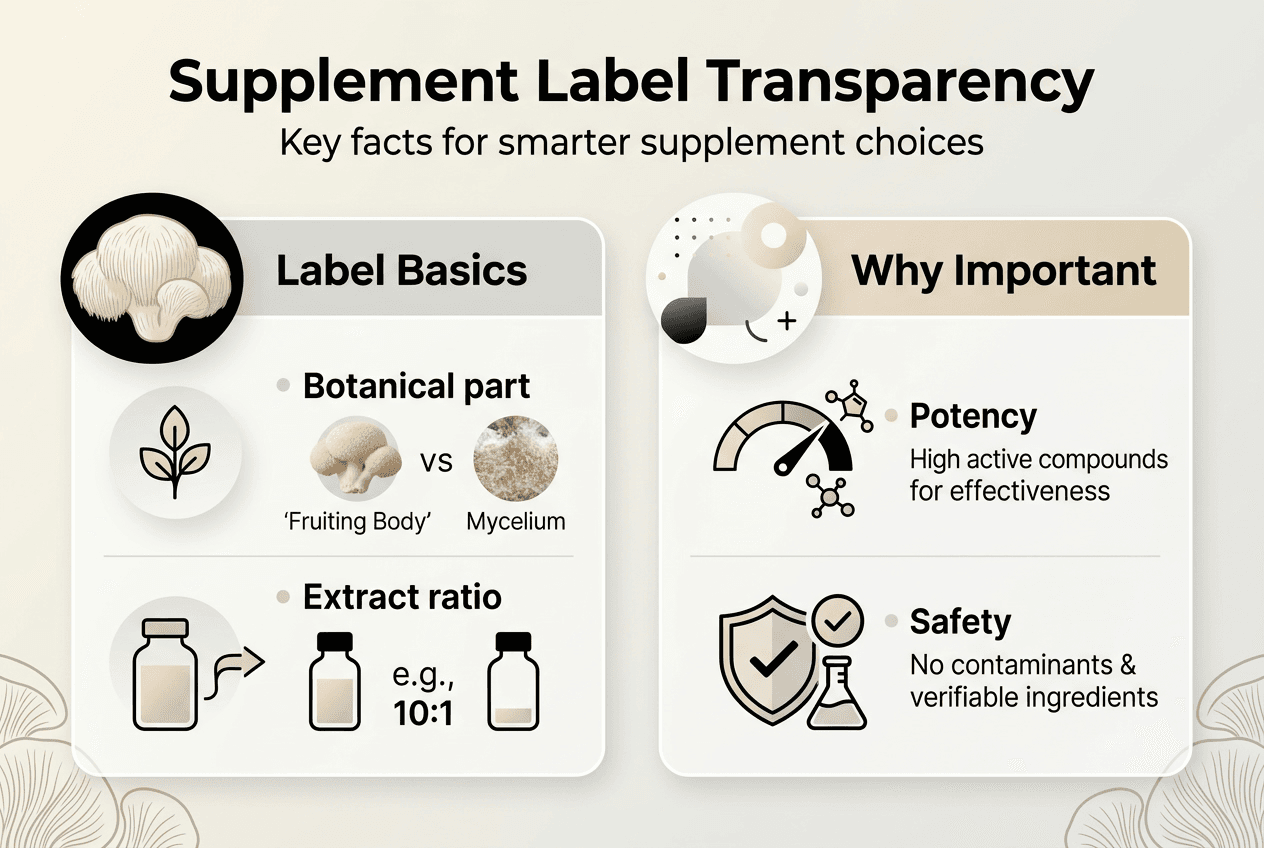
Some manufacturers hide behind proprietary blends listing “lion’s mane complex” without breaking down components. This opacity prevents you from knowing if you’re getting therapeutic amounts of active compounds or mostly inert filler. Transparent brands voluntarily disclose these details because they’re confident in their formulations and want to earn your trust through openness.
For cognitive enhancement specifically, look for supplements emphasizing fruiting body extracts with high hericenone content and clear extraction ratios. These formulations target nerve growth factor production most effectively. If immune support matters more to you, mycelium extracts might suit your needs better. Either way, the label should give you enough information to make this informed choice rather than guessing.
Emerging legislation and the future of supplement transparency
The supplement industry stands at a regulatory crossroads in 2026. Current FDA oversight requires labeling compliance but lacks comprehensive product tracking, making it difficult to identify and remove unsafe or mislabeled supplements quickly. The Dietary Supplement Listing Act of 2026 aims to change this by creating a federal registry where manufacturers submit detailed product information before marketing.
This proposed legislation would require supplement companies to provide the FDA with ingredient lists, labels, directions for use, and allergen information for every product. The registry would enhance traceability, allowing regulators to track products from manufacturing through distribution and quickly respond to safety concerns. For you as a consumer, this means faster removal of dangerous products and greater confidence that supplements on shelves meet minimum safety standards.
Public support for transparency mandates is overwhelming. Nearly nine in 10 U.S. adults favor requiring manufacturers to provide product and ingredient information to the FDA. This consensus reflects growing consumer demand for accountability in an industry that directly impacts health and wellness. You want to trust that cognitive enhancement supplements contain what they claim without hidden contaminants or misleading formulations.
The legislation would modernize oversight without stifling innovation. Manufacturers could still develop new formulations and bring products to market quickly, but they’d need to register basic information first. This balance protects your safety while preserving the industry’s ability to offer diverse natural health solutions.
Key benefits of the proposed transparency legislation:
- Federal product database enables rapid identification of contaminated or mislabeled supplements
- Enhanced enforcement targets bad actors while protecting compliant manufacturers
- Consumers gain access to verified product information through potential public database
- Allergen tracking improves for people with sensitivities or dietary restrictions
- Industry-wide accountability raises quality standards across all brands
Improved enforcement could significantly reduce the estimated number of unsafe or fraudulent supplements currently sold. When the FDA can quickly identify which products contain undisclosed ingredients or make illegal health claims, regulators can remove them before they harm consumers. This protects you from wasting money on ineffective products or risking your health with contaminated formulations.
“The Dietary Supplement Listing Act represents a long-standing push for transparency that benefits both consumers seeking safe cognitive support and responsible manufacturers committed to quality.”
For lion’s mane and other cognitive enhancement supplements, this legislation would make it easier to verify product authenticity and ingredient quality. You could potentially look up any supplement in the federal database to confirm its registered ingredients match the label claims. This verification layer adds accountability that current regulations lack.
The industry’s leading trade groups support this transparency initiative, recognizing that consumer trust drives long-term growth. Reputable manufacturers welcome standards that differentiate them from low-quality competitors cutting corners on ingredient disclosure. When you can easily distinguish transparent brands from opaque ones, market forces reward honesty and quality.
As this legislation moves forward, expect gradual improvements in supplement transparency throughout 2026 and beyond. The federal registry would take time to implement fully, but its existence would immediately pressure manufacturers to improve labeling and ingredient disclosure. You’ll benefit from this shift through better information, safer products, and greater confidence in your cognitive enhancement choices.
Explore transparent lion’s mane supplements from Cortex
Now that you understand ingredient transparency and why it matters for cognitive health, you’re ready to experience supplements that embody these principles. Cortex Supplements prioritizes complete ingredient disclosure and clear labeling on every product, so you know exactly what you’re consuming and why it works.
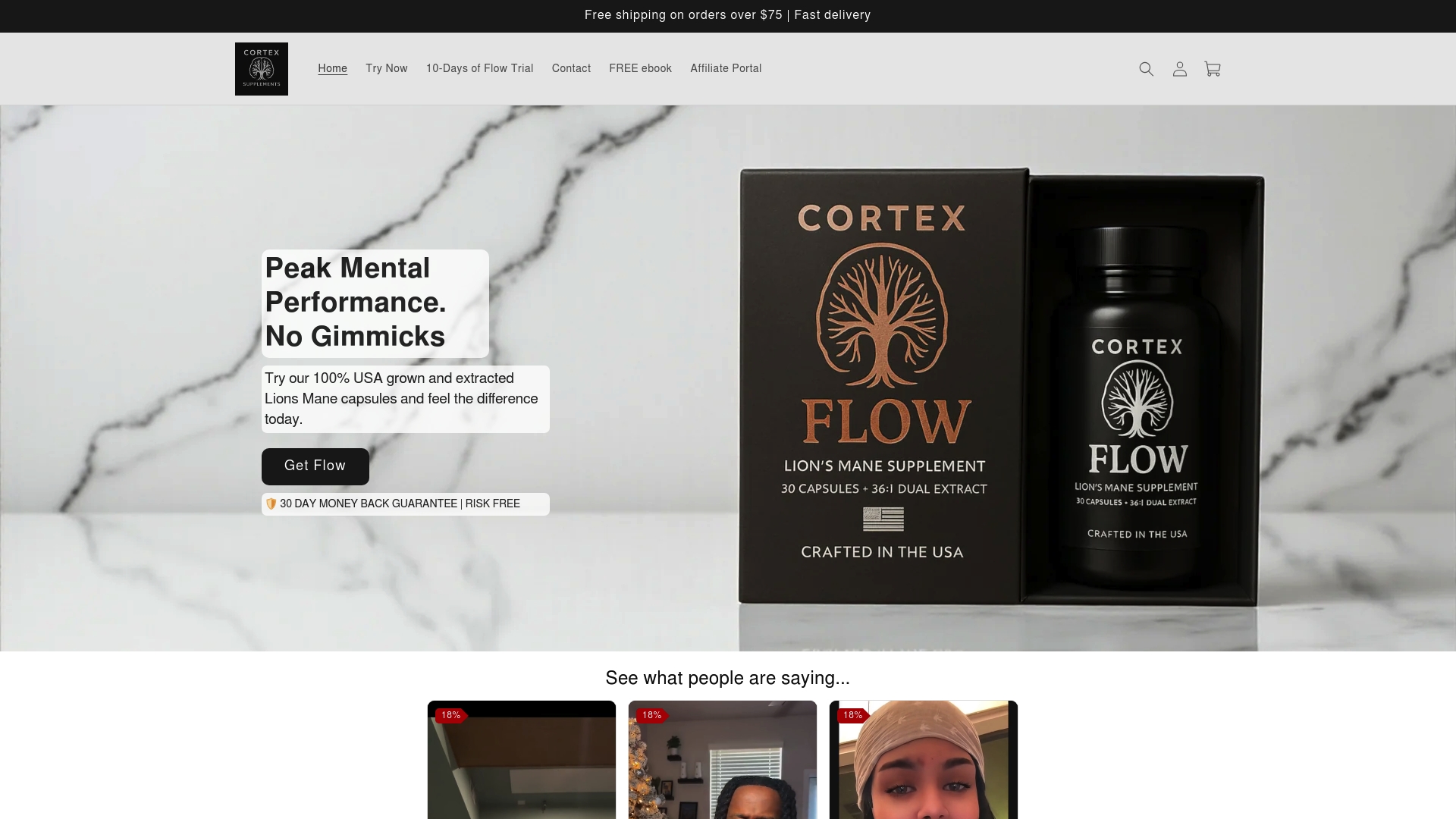
Our flagship Cortex Flow features 100% lion’s mane fruiting body extract at a potent 36:1 concentration ratio, grown and processed entirely in the United States by our Texas-based team. Every bottle clearly lists the botanical source, extraction method, and active compound concentrations. No proprietary blends, no mycelium filler, no hidden ingredients.
Experience the difference transparency makes through our 10 Day Flow Challenge, a guided program helping you optimize cognitive performance with consistent supplementation. Or start smaller with our 10 Days of Flow sample pack to test product quality and ingredient transparency risk-free. You deserve supplements that respect your intelligence and health with honest, complete disclosure.
Frequently asked questions
What is ingredient transparency in supplements?
Ingredient transparency means fully disclosing all components, both active and inactive, on supplement labels with specific details about sources and concentrations. It ensures you know exactly what you’re consuming and helps you avoid allergens, contaminants, or ineffective ingredients. Transparent labels list specific botanical parts and extraction ratios for natural products like lion’s mane, giving you the information needed to make informed health decisions.
How can I verify the quality and safety of a lion’s mane supplement?
Check the label for complete ingredient lists including the specific botanical part used, such as fruiting body versus mycelium. Look for third-party testing certifications, clear FDA-compliant Supplement Facts panels, and disclosed extraction ratios indicating potency. Avoid products with vague proprietary blends or undisclosed ingredient amounts, as these hide critical information about fruiting body quality and concentration.
What changes will the Dietary Supplement Listing Act of 2026 bring for consumers?
The proposed legislation mandates supplement companies provide the FDA with detailed product information and labels before marketing. This federal registry will increase transparency and help you avoid unsafe or mislabeled products through better tracking and faster regulatory response. Enhanced enforcement can focus resources on non-compliant bad actors, benefiting overall market safety and your confidence in cognitive enhancement supplements.
Why does the botanical part matter in lion’s mane supplements?
Different parts of the lion’s mane mushroom contain distinct bioactive compounds with varying effects on cognition and immune function. Fruiting bodies concentrate hericenones that support nerve growth factor, while mycelium contains more erinacines with different neuroprotective properties. Transparent labeling of the botanical part helps you choose supplements aligned with your specific cognitive health goals and avoid potential immune overactivation from certain extract types.
How do extraction ratios affect supplement potency?
Extraction ratios like 10:1 or 36:1 indicate how much raw material concentrates into the final extract powder. A 36:1 ratio means 36 pounds of fresh mushrooms produce 1 pound of extract, delivering significantly more bioactive compounds per capsule than whole mushroom powder. Without this ratio disclosed on labels, you can’t compare potency across brands or verify you’re reaching therapeutic dosages for cognitive enhancement.
Recommended
- Natural supplements for brain health: 2026 guide – Cortex Supplements
- Brain health checklist: top natural supplements 2026 – Cortex Supplements
- Mental clarity checklist: optimize focus with Lion’s Mane 2026 – Cortex Supplements
- Natural brain supplements for focus and memory 2026 – Cortex Supplements
- Checklist for choosing safe toothpaste in 2026 – Stop Oral Care
