

Most mushroom supplements hide a critical detail: whether they contain fruiting bodies or just mycelium grown on grain. This distinction determines whether you get the neuroprotective compounds that make Lion’s Mane effective for cognitive enhancement. Fruiting bodies are the visible mushroom parts containing the highest concentrations of hericenones and erinacines, the bioactive molecules responsible for supporting brain health. Understanding what fruiting bodies are and how to identify them in supplements ensures you invest in products that deliver real cognitive benefits.
Table of Contents
- Understanding Fruiting Bodies And Their Role In Mushroom Supplements
- Neuroprotective Compounds In Lion’s Mane Fruiting Bodies And Their Benefits
- Choosing And Using Lion’s Mane Fruiting Body Supplements For Cognitive Health
- Current Research Insights And Emerging Questions On Lion’s Mane Fruiting Bodies
- Enhance Your Cognitive Health With Cortex Supplements
Key takeaways
| Point | Details |
|---|---|
| Fruiting bodies are the spore-producing mushroom parts with concentrated bioactive compounds | They contain significantly higher levels of neuroprotective molecules than mycelium-based products |
| Lion’s Mane fruiting bodies uniquely provide hericenones and erinacines | These compounds stimulate nerve growth factor production and promote hippocampal neurogenesis |
| Clinical studies demonstrate cognitive improvements from fruiting body extracts | Research shows enhanced processing speed, reduced cognitive impairment symptoms, and stress reduction |
| Quality supplements specify fruiting body content and provide third-party testing | Look for explicit labeling, Certificates of Analysis, and GMP compliance when selecting products |
| Effective dosing ranges from 1.8 to 3.2 grams daily depending on goals | Start low to assess tolerance and take with fat-containing meals for better absorption |
Understanding fruiting bodies and their role in mushroom supplements
Fruiting bodies are the visible, spore-producing structures of mushrooms that grow above ground or on substrates. They differ fundamentally from mycelium, the thread-like underground network that absorbs nutrients. When you see a mushroom in nature or at the market, you’re looking at the fruiting body.
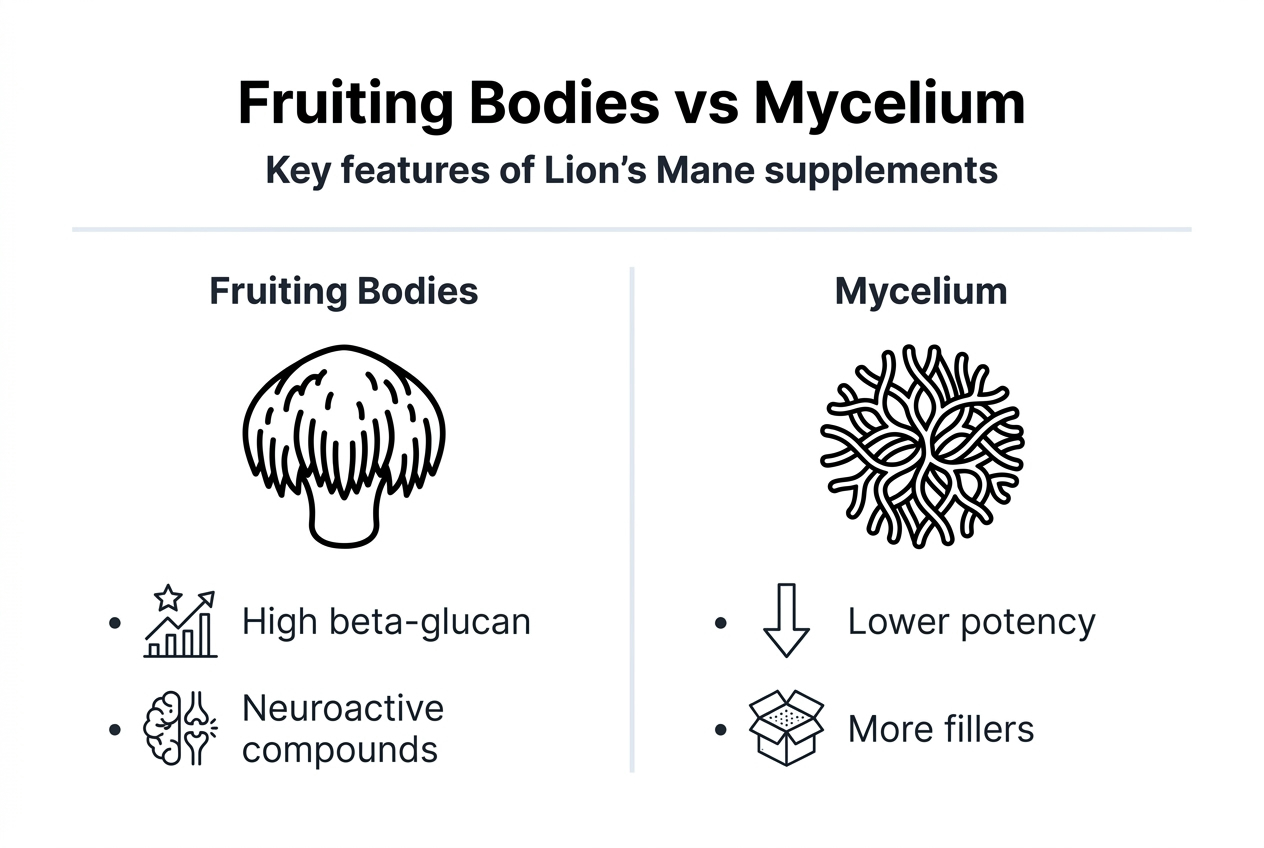
This anatomical distinction matters tremendously for supplement quality. Fruiting bodies contain substantially higher concentrations of bioactive compounds compared to mycelium grown on grain substrates. Many manufacturers use mycelium because it grows faster and costs less, but this approach dilutes the beneficial molecules you need for cognitive support.
Mushroom product labeling requires distinguishing fruiting body from mycelium per FDA guidelines, yet many products remain deliberately vague. Unclearly labeled supplements may contain mostly grain starch with minimal mushroom material. This regulatory ambiguity means you must actively verify what you’re purchasing.
For Lion’s Mane specifically, fruiting bodies provide access to hericenones and erinacines, the unique compounds that cross the blood-brain barrier to promote neural health. Understanding Lion’s Mane terminology helps you navigate product claims and identify genuine fruiting body supplements.
Key differences between fruiting body and mycelium supplements:
- Fruiting bodies deliver concentrated bioactive molecules; mycelium products often contain more grain filler than mushroom material
- Hericenones appear primarily in fruiting bodies, while erinacines concentrate in mycelium but at lower overall potency
- Third-party testing reveals actual compound levels, exposing products that rely on biomass weight rather than active ingredients
- Price differences often reflect production costs, not necessarily quality or effectiveness
Pro Tip: Always request a Certificate of Analysis showing beta-glucan content and compound verification. Legitimate fruiting body supplements will have at least 25% beta-glucans, while mycelium products typically show under 10%.
Neuroprotective compounds in Lion’s Mane fruiting bodies and their benefits
Hericenones and erinacines are responsible for neuroprotection and cognitive enhancement in Lion’s Mane. These diterpenoid compounds stimulate nerve growth factor (NGF) and brain-derived neurotrophic factor (BDNF) synthesis, proteins essential for neuron survival and growth.

What makes these molecules remarkable is their ability to cross the blood-brain barrier, a protective membrane that blocks most substances from reaching brain tissue. Once in the brain, hericenones promote neurotrophic growth factors via MAPK/ERK, PLC-γ, and PI3K/Akt signaling pathways. These cascades trigger neuronal growth, differentiation, and survival responses.
The hippocampus, your brain’s memory center, benefits particularly from this neurogenesis. Studies show increased neural stem cell proliferation and enhanced synaptic plasticity, the biological foundation for learning and memory formation. Lion’s Mane fruiting body mechanisms work at multiple levels to protect and enhance cognitive function.
Clinical evidence demonstrates measurable improvements in cognitive test performance. Participants taking fruiting body extracts showed better scores on memory assessments and reduced symptoms of mild cognitive impairment compared to placebo groups. These benefits emerge from both acute effects and cumulative neuroprotection over time.
Primary bioactive mechanisms:
- NGF stimulation promotes neuron maintenance, repair, and new growth in damaged brain regions
- BDNF enhancement supports synaptic plasticity, learning capacity, and mood regulation
- Anti-inflammatory cytokine modulation reduces neuroinflammation linked to cognitive decline
- Antioxidant activity neutralizes free radicals that damage neurons and accelerate aging
| Compound Type | Primary Source | Key Mechanism | Cognitive Benefit |
|---|---|---|---|
| Hericenones | Fruiting bodies | NGF synthesis via MAPK pathway | Memory formation and neural repair |
| Erinacines | Mycelium (lower concentration) | BDNF stimulation via PI3K/Akt | Synaptic plasticity and mood |
| Beta-glucans | Fruiting bodies | Immune modulation and inflammation reduction | Neuroprotection from inflammatory damage |
| Polysaccharides | Both sources | Antioxidant and gut microbiome support | Indirect brain health via gut-brain axis |
How Lion’s Mane supports neurogenesis involves multiple complementary pathways working simultaneously. This synergy explains why whole fruiting body extracts outperform isolated compounds in research studies.
Pro Tip: The combination of hericenones and erinacines creates additive effects stronger than either compound alone, which is why whole fruiting body extracts deliver superior results compared to synthetic or isolated preparations.
Choosing and using Lion’s Mane fruiting body supplements for cognitive health
Selecting a quality Lion’s Mane supplement requires scrutinizing labels and documentation. Quality supplements specify fruiting bodies, include third-party certifications, and test for contaminants. Products that simply list “Lion’s Mane mushroom” without anatomical specificity likely contain mycelium or mixed sources.
GMP (Good Manufacturing Practice) compliance ensures consistent production standards and contamination screening. Reputable manufacturers test for heavy metals, pesticides, and microbial contamination. Request these test results; legitimate companies provide them readily.
Effective dosage ranges from 1.8g for acute use to 3.2g daily for chronic neuroprotection. Start at the lower end to assess your individual response. Some people notice improved focus within days, while cumulative benefits for memory and cognitive resilience require consistent use over weeks or months.
Possible mild side effects include digestive discomfort and headaches, though these occur infrequently. If you experience persistent adverse effects, reduce your dose or discontinue use. Consultation with healthcare professionals is advised, especially if you take medications or have existing health conditions.
Steps to select and evaluate a Lion’s Mane supplement:
- Verify the label explicitly states “fruiting body” or “fruiting body extract,” not just “mushroom” or “mycelium.”
- Request a Certificate of Analysis showing beta-glucan percentage (should be 25% or higher for quality fruiting body products).
- Confirm third-party testing for heavy metals, pesticides, and microbial contamination with recent test dates.
- Check for GMP certification or equivalent quality manufacturing standards from recognized certifying bodies.
- Compare extraction ratios; higher ratios like 10:1 or 36:1 indicate concentrated bioactive compounds.
- Read reviews focusing on cognitive effects rather than just general wellness claims to gauge real-world effectiveness.
| Feature | Fruiting Body Supplements | Mycelium Supplements |
|---|---|---|
| Hericenone content | High concentration | Minimal to none |
| Beta-glucan percentage | 25-40% typical | 5-15% typical |
| Grain filler content | None in pure extracts | Often 50%+ of product weight |
| Cognitive research support | Extensive clinical evidence | Limited human studies |
| Typical price (per month) | $35-60 for quality extracts | $20-40 but lower active compounds |
| Bioavailability | High with proper extraction | Variable, often lower |
Choosing the right Lion’s Mane supplement involves balancing quality markers with your budget and goals. How to take Lion’s Mane effectively includes timing considerations; many users prefer morning doses for daytime focus benefits.
For busy professionals seeking streamlined guidance, our 6-step Lion’s Mane checklist provides a quick reference for supplement selection and usage optimization.
Pro Tip: Taking Lion’s Mane with a meal containing healthy fats like avocado, nuts, or olive oil improves absorption of fat-soluble bioactive compounds, enhancing the supplement’s effectiveness.
Current research insights and emerging questions on Lion’s Mane fruiting bodies
RCTs show modest improvements in cognitive scores and processing speed with Lion’s Mane fruiting body supplements. Randomized controlled trials in both healthy adults and individuals with mild cognitive impairment demonstrate statistically significant benefits, though effect sizes vary across studies.
Processing speed improvements reach approximately 6.7% within an hour of consumption in acute studies. Longer trials spanning 28 days show stress reduction of nearly 19% alongside cognitive enhancements. These findings suggest both immediate and cumulative benefits from regular supplementation.
Animal and in vitro studies reveal mechanisms such as neurogenesis, anti-inflammation, and gut microbiota modulation. Mouse models demonstrate increased hippocampal neuron formation, reduced inflammatory markers in brain tissue, and beneficial changes in gut bacterial populations that influence brain health through the gut-brain axis.
Some clinical trials observed no significant global cognition changes but improved specific motor tasks post-supplementation. This variability highlights the complexity of measuring cognitive enhancement and suggests Lion’s Mane may target specific neural pathways more effectively than others.
Key research findings:
- Mini-Mental State Examination scores showed statistically significant improvements in mild cognitive impairment populations
- Inflammatory cytokine levels decreased in supplemented groups, indicating reduced neuroinflammation
- Gut microbiome composition shifted toward beneficial bacterial strains associated with better cognitive function
- Animal studies demonstrated dose-dependent neurogenesis in the hippocampus and cortex
- No serious adverse effects reported across multiple human trials, supporting safety for general use
“Combined cognitive improvements measured by Mini-Mental State Examination demonstrated that Lion’s Mane fruiting body extracts produced clinically meaningful enhancements in memory recall, attention span, and executive function tasks compared to placebo controls across multiple randomized trials.”
Research gaps include optimal dosing protocols for different populations, long-term safety data beyond 16 weeks, regional brain effects through neuroimaging, and chronic supplementation impact on age-related cognitive decline prevention. Most studies focus on short to medium-term outcomes, leaving questions about lifelong use unanswered.
Lion’s Mane and Alzheimer’s disease represents a particularly promising research direction. Preclinical evidence suggests potential for slowing amyloid plaque formation and tau protein aggregation, but human trials in Alzheimer’s populations remain limited.
For those seeking practical application of current evidence, our mental clarity checklist integrates Lion’s Mane supplementation with complementary lifestyle strategies for optimal cognitive performance.
Enhance your cognitive health with Cortex supplements
Now that you understand how Lion’s Mane fruiting bodies support brain health, consider applying this knowledge with a trusted supplement. Cortex Flow features premium Lion’s Mane fruiting body extracts at a potent 36:1 ratio, formulated specifically to support focus, memory, and cognitive resilience.
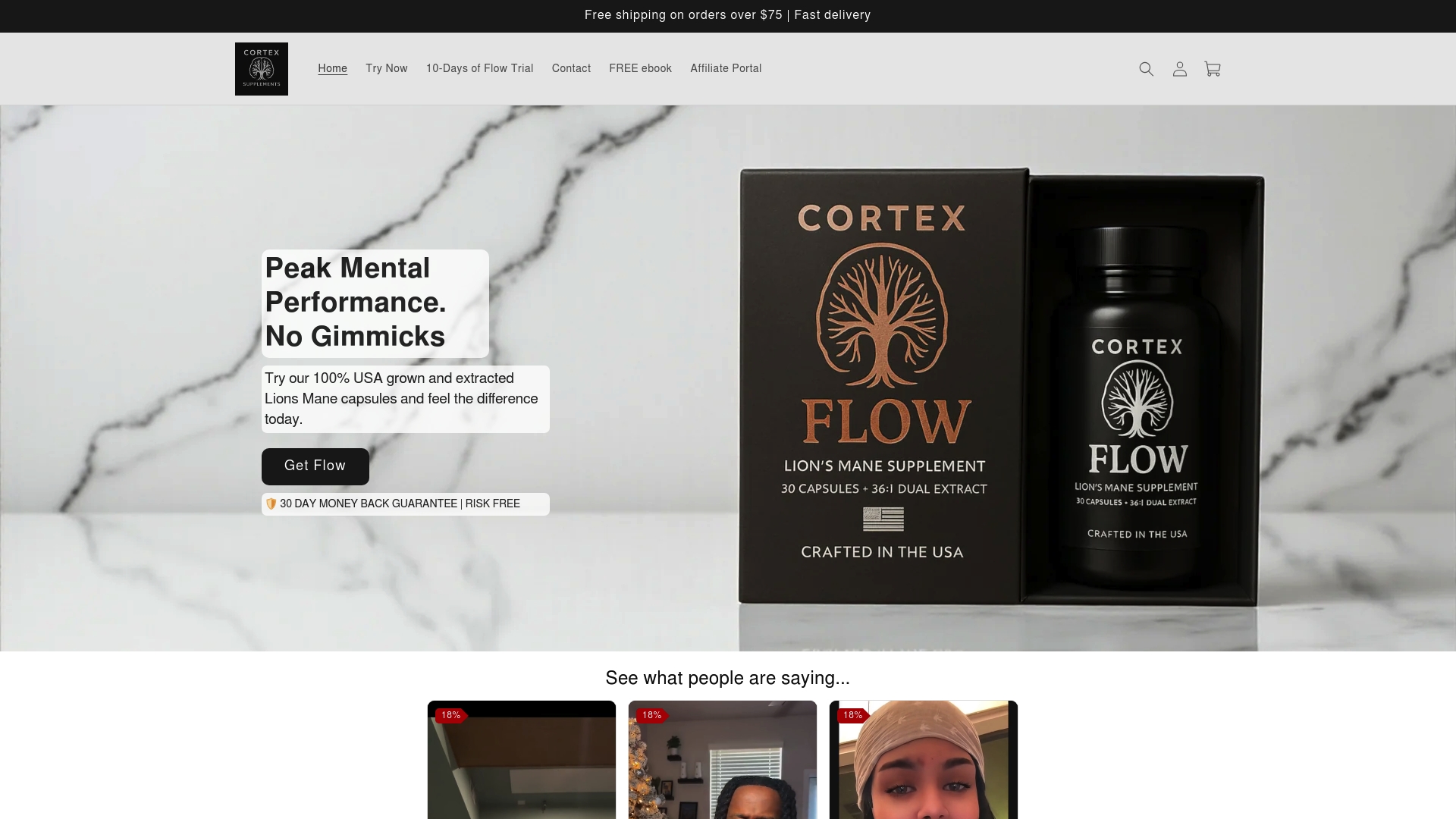
We grow our mushrooms in the United States and use only 100% fruiting bodies, ensuring you get the hericenones and erinacines that research validates. Our freeze-dried extraction process preserves bioactive compounds while concentrating them for maximum effectiveness.
Try our 10-Day Flow sample pack to experience the cognitive benefits firsthand with a risk-free introduction. Join the 10 Day Flow check-in community for personalized tips and support as you optimize your mental performance.
FAQ
What are fruiting bodies in mushrooms?
Fruiting bodies are the visible, spore-producing structures of mushrooms that grow above ground. They represent the reproductive portion of the fungus and contain the highest concentrations of bioactive compounds responsible for health benefits. In Lion’s Mane supplements, fruiting bodies provide hericenones and other neuroprotective molecules that support cognitive function.
How do fruiting bodies differ from mycelium in supplements?
Fruiting bodies contain significantly higher levels of beneficial compounds like beta-glucans and hericenones compared to mycelium. Mycelium-based supplements often include the grain substrate the fungus grows on, diluting active ingredients with starch filler. Fruiting body products deliver concentrated bioactive molecules without grain contamination, making them more effective for cognitive enhancement.
Why are Lion’s Mane fruiting bodies preferred for cognitive benefits?
Lion’s Mane fruiting bodies contain unique concentrations of hericenones that stimulate nerve growth factor production and promote neurogenesis. Clinical research demonstrating cognitive improvements uses fruiting body extracts specifically, not mycelium products. The higher bioactive compound density in fruiting bodies translates to more reliable and measurable brain health benefits.
What is the typical effective dosage of Lion’s Mane fruiting body extract?
Effective dosages range from 1.8 grams daily for short-term cognitive support to 3.2 grams for ongoing neuroprotection. Start with lower doses to assess individual tolerance and increase gradually if needed. Most clinical studies showing cognitive benefits used doses between 2 and 3 grams of fruiting body extract taken consistently over several weeks.
Are there any side effects of taking fruiting body supplements?
Most people tolerate Lion’s Mane fruiting body supplements well, with only occasional mild side effects. Some individuals experience temporary digestive discomfort or headaches, particularly when starting supplementation. These effects typically resolve within a few days as your body adjusts to the new compound introduction.
Recommended
- Lion’s Mane Fruiting Body: Cognitive Benefits Demystified – Cortex Supplements
- Lion’s Mane Terminology Explained: Potency, Forms, and Misconceptions – Cortex Supplements
- Lion’s Mane Terminology: Cognitive Focus Essentials – Cortex Supplements
- 7 Types of Lion’s Mane Supplements Explained for Focus – Cortex Supplements
