

You know the feeling. Your brain turns to mush by 2 PM, and you’re staring at the same paragraph for the tenth time. Whether you’re recovering from a concussion, managing ADHD, or just battling everyday brain fog, staying focused feels impossible. That’s where lion’s mane mushroom comes in. This natural nootropic has been used for centuries in traditional medicine, and modern science backs its ability to support cognitive function. In this guide, we’ll walk you through exactly how to use lion’s mane to sharpen your focus, from choosing the right product to tracking your results.
Table of Contents
- Understanding focus and how lion’s mane works
- What you need to start: Lion’s mane preparation and requirements
- How to take lion’s mane for focus: Step-by-step workflow
- Tracking results and troubleshooting: Ensuring effectiveness
- Enhance your routine with premium lion’s mane blends
- Frequently asked questions
Key Takeaways
| Point | Details |
|---|---|
| Proven brain support | Lion’s mane is clinically studied for its ability to improve focus, memory, and overall brain health. |
| Preparation matters | Choosing a proper lion’s mane supplement and dosing method is crucial for effective results. |
| Consistency is key | Daily supplementation and tracking lead to noticeable cognitive improvements over weeks. |
| Quality is essential | Always choose fruiting body extracts and check for third-party testing for safety. |
| Results may vary | Most people see focus gains in 2–8 weeks, but patience and adjustment may be needed. |
Understanding focus and how lion’s mane works
Focus isn’t just about willpower. It’s a complex dance of neurotransmitters, neural pathways, and brain health. When your attention wavers, it’s often because your brain lacks the resources to maintain concentration. Stress, poor sleep, inflammation, and aging all chip away at your cognitive reserves.
Lion’s mane mushroom works differently than caffeine or prescription stimulants. Instead of forcing your brain into overdrive, it supports the underlying structures that make focus possible. Research shows that lion’s mane stimulates nerve growth factor (NGF) production, a protein essential for maintaining and regenerating neurons. More NGF means healthier brain cells, better communication between neurons, and improved cognitive performance.
Studies reveal impressive results. 70% of users report measurable cognitive gains within 8 weeks of consistent lion’s mane supplementation. That’s not a placebo effect. That’s real neurological support.
Here’s what lion’s mane does for your brain:
- Promotes neurogenesis (growth of new brain cells)
- Reduces inflammation in neural tissue
- Protects against oxidative stress
- Enhances memory formation and recall
- Supports myelin sheath repair
- Improves mental clarity and processing speed
How does lion’s mane stack up against other natural focus boosters? Let’s compare:
| Supplement | Primary Mechanism | Focus Benefit | Onset Time | Best For |
|---|---|---|---|---|
| Lion’s Mane | NGF stimulation, neuroprotection | Sustained attention, mental clarity | 2-8 weeks | Long-term cognitive health, recovery |
| Ginkgo Biloba | Blood flow enhancement | Short-term alertness | 4-6 weeks | Memory support, circulation |
| Rhodiola Rosea | Stress adaptation | Energy, fatigue resistance | 1-2 weeks | Stress-related focus issues |
| Bacopa Monnieri | Neurotransmitter modulation | Memory consolidation | 8-12 weeks | Learning, information retention |
Lion’s mane stands out because it doesn’t just mask symptoms. It rebuilds the foundation. While Ginkgo might give you a temporary boost and Rhodiola helps you handle stress, lion’s mane supports neurogenesis at a cellular level. You’re not borrowing focus from tomorrow. You’re investing in better brain health.
The benefits of lion’s mane extend beyond focus. Users report better mood stability, reduced anxiety, and improved sleep quality. When your brain functions optimally, everything else falls into place.
What you need to start: Lion’s mane preparation and requirements
Not all lion’s mane supplements are created equal. Walk into any health store, and you’ll find dozens of options with wildly different quality levels. Here’s what separates the real deal from the overpriced sawdust.
Look for these quality markers:
- 100% fruiting body extract (not mycelium on grain)
- High extraction ratio (20:1 or higher concentrates active compounds)
- Third-party testing for purity and potency
- No fillers, binders, or artificial ingredients
- Transparent sourcing (where and how mushrooms are grown)
- Beta-glucan content listed on the label
Different lion’s mane extracts vary significantly in potency. A 36:1 dual extract means 36 pounds of mushrooms were concentrated into 1 pound of extract. That’s serious potency. Mycelium products, on the other hand, often contain mostly grain starch with minimal active compounds.
Here’s a breakdown of available forms:
| Form | Typical Dosage | Pros | Cons | Best Use Case |
|---|---|---|---|---|
| Capsules | 500-1500 mg | Convenient, precise dosing, portable | May take longer to absorb | Daily supplementation, travel |
| Powder | 1-3 grams | Flexible dosing, can add to drinks | Earthy taste, requires measuring | Smoothies, coffee, cooking |
| Tincture | 1-2 ml | Fast absorption, easy to adjust dose | Alcohol base, shorter shelf life | Quick dosing, sublingual use |
| Tea | 1-2 cups | Gentle, ritualistic | Weakest potency, time-consuming | Relaxation, evening routine |
Pro Tip: Check for a Certificate of Analysis (COA) on the manufacturer’s website. This document shows third-party lab results for heavy metals, pesticides, and active compound levels. If a company won’t share their COA, walk away.
Before you start, consider these precautions:
- Mushroom allergies: If you react to other fungi, start with a tiny dose
- Blood clotting: Lion’s mane may slow clotting, so consult your doctor if you take anticoagulants
- Pregnancy and breastfeeding: Not enough research exists, so err on the side of caution
- Autoimmune conditions: Some immune-modulating effects may interact with autoimmune treatments
When choosing lion’s mane supplements, read reviews from people with similar goals. Someone recovering from a brain injury has different needs than someone optimizing performance. Look for detailed experiences, not just star ratings.
You’ll also want a simple tracking method. A notebook, phone app, or spreadsheet works. You’ll record your baseline focus levels, daily dosage, and any changes you notice. This data becomes invaluable when fine-tuning your approach.

How to take lion’s mane for focus: Step-by-step workflow
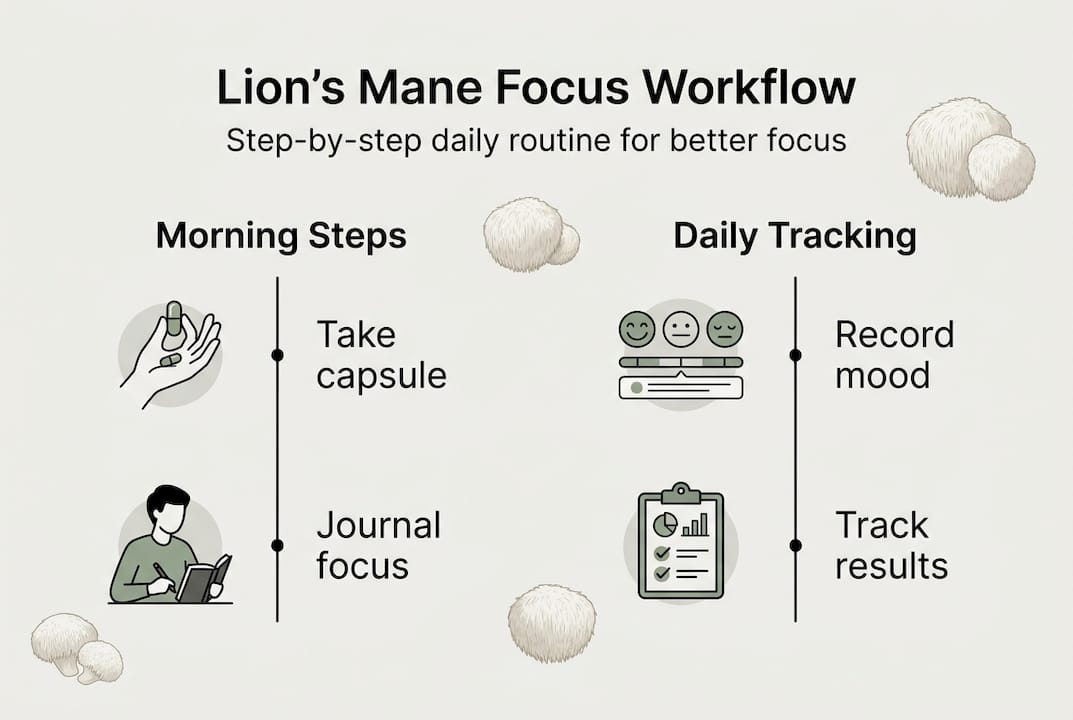
Now for the practical part. Here’s exactly how to integrate lion’s mane into your daily routine for maximum cognitive benefit.
Step 1: Choose your product
Based on the quality criteria above, select a high-potency fruiting body extract. Capsules offer the most consistent dosing for beginners. If you prefer powder, make sure you have a reliable scale.
Step 2: Determine your starting dose
Begin with 500-750 mg of extract daily. This conservative start lets you gauge your body’s response. Some people feel effects immediately, while others need time to build up. Don’t chase quick results by doubling the dose right away.
Step 3: Pick your timing
Most people take lion’s mane in the morning with breakfast. The cognitive boost builds throughout the day without interfering with sleep. Avoid taking it after 4 PM, as some users report mild alertness that can delay sleep onset.
Step 4: Stack strategically
Lion’s mane pairs beautifully with your morning coffee or tea. The caffeine provides immediate alertness while lion’s mane builds long-term cognitive resilience. You can also combine it with B-complex vitamins or omega-3s for enhanced brain support.
Step 5: Establish consistency
Take your dose at the same time every day. Set a phone reminder if needed. Practical daily supplementation requires habit formation. Link it to an existing routine like brushing your teeth or making coffee.
Step 6: Gradually increase if needed
After two weeks at your starting dose, you can increase to 1000-1500 mg daily if you’re not seeing results. Some people need higher doses, especially those recovering from neurological injuries. Never exceed 3000 mg without consulting a healthcare provider.
Best practices for optimal results:
- Take with food to improve absorption and reduce any stomach sensitivity
- Stay hydrated throughout the day
- Maintain consistent sleep schedules
- Avoid alcohol during the first month to accurately assess effects
- Keep a simple daily log of focus levels and mood
Pro Tip: Combine lion’s mane with adaptogens like ashwagandha or rhodiola for stress-related focus issues. The synergy between lion’s mane and adaptogens can amplify benefits while keeping you calm and centered.
Safety Note: If you’re taking medications for blood pressure, blood sugar, or immune function, consult your doctor before starting lion’s mane. Pregnant or breastfeeding women should avoid supplementation until more research is available.
Tracking your progress is essential. Note your baseline focus ability before starting. How long can you work without distraction? How quickly do you complete tasks? Rate your mental clarity on a scale of 1-10. Check these metrics weekly.
For detailed guidance on how to take lion’s mane for focus, including advanced stacking strategies, explore comprehensive protocols. The key is patience and consistency. Your brain is rebuilding neural pathways, not just getting a temporary boost.
Tracking results and troubleshooting: Ensuring effectiveness
You’ve started taking lion’s mane. Now what? How do you know it’s actually working, and what do you do if you’re not seeing results?
Measuring cognitive improvements requires objective methods. Subjective feelings matter, but data tells the real story. Try these tracking approaches:
Attention span tests: Use free online tools like the Stroop test or continuous performance tasks. Test yourself weekly and track your scores.
Work output metrics: How many focused work blocks do you complete? How long before you reach for your phone? Track these numbers.
Journaling: Write a brief daily note about mental clarity, energy levels, and focus quality. Patterns emerge over weeks.
Task completion rates: Monitor how many items you check off your to-do list. Improved focus means better follow-through.
Signs that lion’s mane is working:
- You can read or work for longer stretches without mental fatigue
- Brain fog lifts, especially in the afternoon
- Switching between tasks feels smoother and less jarring
- You remember details more easily
- Mental processing feels quicker and clearer
- You feel more present in conversations
Remember, 70% of users notice cognitive gains within 8 weeks. If you’re in the first month, patience is key. Neurogenesis takes time.
Common issues and solutions:
| Issue | Possible Cause | Solution |
|---|---|---|
| No noticeable effects after 4 weeks | Dose too low, poor quality product | Increase dose to 1500 mg, verify product quality |
| Mild stomach upset | Taking on empty stomach | Always take with food |
| Slight headache | Detox reaction, dehydration | Increase water intake, reduce dose temporarily |
| Difficulty sleeping | Taking too late in day | Move dose to morning only |
| Inconsistent results | Irregular dosing schedule | Set daily reminder, link to existing habit |
If you’re not seeing improvements after 8 weeks at an adequate dose, revisit your product choice. Low-quality supplements simply don’t contain enough active compounds. Check the extraction ratio and beta-glucan content. Consider switching to a verified high-potency option.
Some people are non-responders to specific nootropics. If lion’s mane isn’t working for you, explore natural focus supplements like bacopa or ginkgo. Everyone’s neurochemistry is unique.
Pro Tip: Take a one-week break every 8-12 weeks. This reset period helps you notice the difference lion’s mane makes and prevents your body from adapting to the supplement.
Important Reminder: Results vary based on your starting point, overall health, sleep quality, stress levels, and diet. Lion’s mane is powerful, but it’s not magic. It works best as part of a holistic approach to brain health.
For deeper insights into cognitive focus essentials and how different compounds interact with your brain, explore the science behind attention and neuroplasticity. Understanding the mechanisms helps you optimize your approach.
Enhance your routine with premium lion’s mane blends
You’ve learned the science, the preparation, and the execution. Now it’s time to put this knowledge into action with a product you can trust.
We created Cortex Flow specifically for people like you who are serious about cognitive performance. It’s not just another supplement. It’s a 36:1 dual extract of 100% lion’s mane fruiting bodies, grown right here in the United States. Every batch is third-party tested, and we share our Certificates of Analysis publicly because transparency matters.
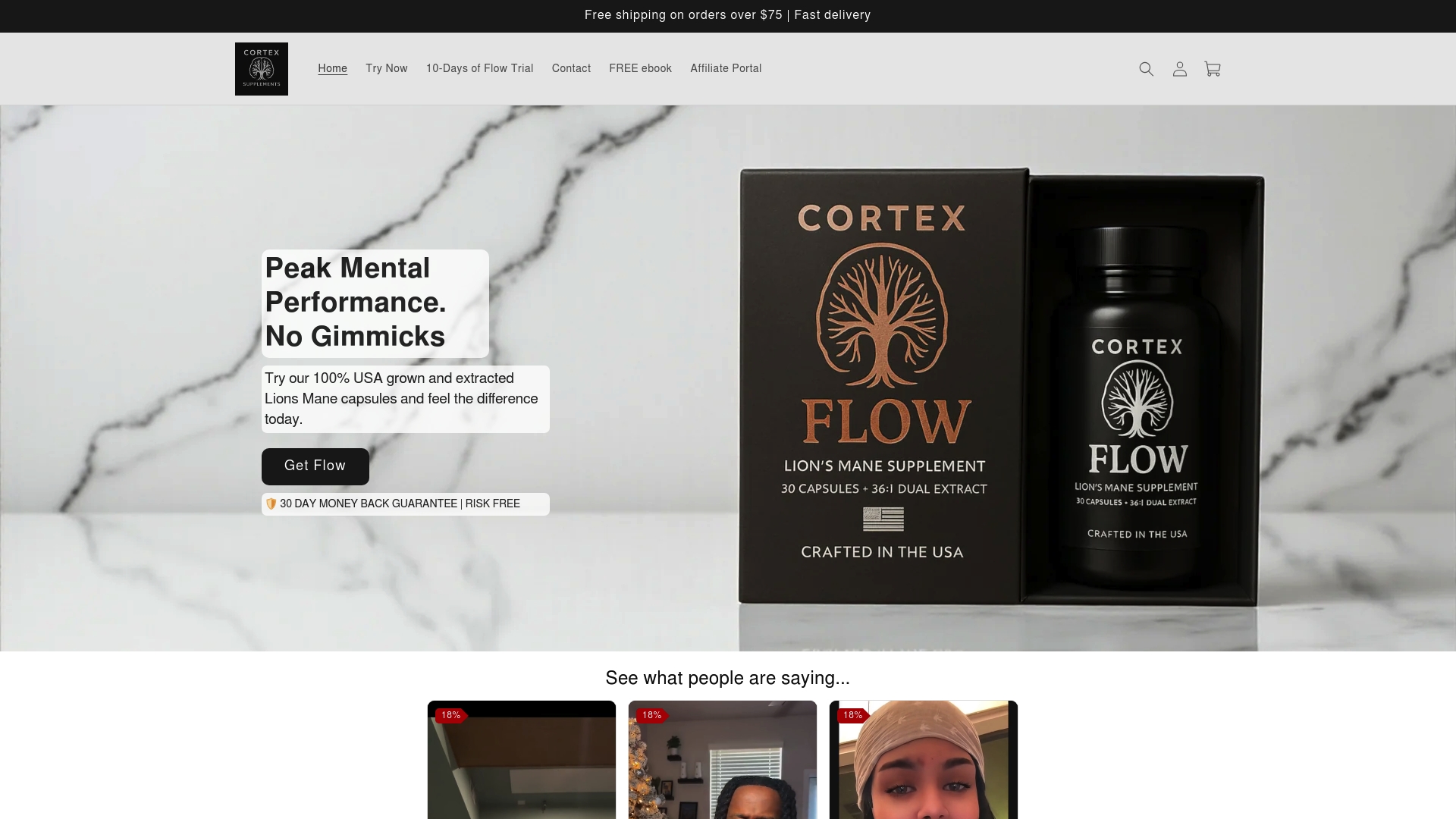
Each bottle contains 30 capsules of pure, potent lion’s mane extract. No fillers. No mycelium on grain. Just the compounds your brain needs to build new neural pathways and sharpen your focus. Whether you’re recovering from a concussion, managing attention difficulties, or simply want to think more clearly, Cortex Flow delivers consistent results.
Not ready to commit to a full bottle? Try our 10-Days of Flow starter pack. It’s the perfect way to experience the difference high-quality lion’s mane makes without a long-term commitment. See how your focus improves, how brain fog lifts, and how much more you can accomplish when your brain is firing on all cylinders.
Explore our complete range of lion’s mane solutions designed for cognitive enhancement. We’re a Texas-based company that grows our own mushrooms because quality control matters. When you choose Cortex, you’re choosing a partner in your cognitive health journey.
Frequently asked questions
How quickly can I expect to see results with lion’s mane for focus?
Most people begin noticing cognitive benefits within 2 to 8 weeks of consistent supplementation. 70% report measurable cognitive gains within 8 weeks, though some experience improvements sooner depending on their starting point and dosage.
Is lion’s mane safe for long-term use?
Lion’s mane is generally safe for most adults when sourced from quality suppliers and used as directed. Long-term studies show good tolerance, but consult your doctor if you have existing health conditions or take medications.
Can I combine lion’s mane with other brain-boosting supplements?
Yes, lion’s mane pairs well with adaptogens like rhodiola or ashwagandha, as well as B vitamins and omega-3s. Stacking lion’s mane with other nootropics can enhance cognitive benefits, but start with one supplement at a time to assess individual effects.
Are there people who shouldn’t take lion’s mane?
People with mushroom allergies, pregnant or breastfeeding women, and those on blood-thinning medications should consult their physician before using lion’s mane. If you have an autoimmune condition, discuss potential interactions with your healthcare provider.
What’s the difference between fruiting body and mycelium extracts?
Fruiting body extracts contain significantly higher concentrations of active compounds like beta-glucans and hericenones. Mycelium products often include grain substrate, diluting potency. Always choose 100% fruiting body extracts for maximum cognitive benefits.
Recommended
- How to take Lion’s Mane for focus and cognitive boost – Cortex Supplements
- Lion’s Mane Supplement Workflow for Enhanced Focus – Cortex Supplements
- How to Choose Lion’s Mane: 36:1 Extract Boosts Focus – Cortex Supplements
- Lions Mane Supplement Guide for Enhanced Focus and Clarity – Cortex Supplements
