

Choosing a mushroom supplement for brain health can feel overwhelming when you’re faced with dozens of products claiming cognitive benefits. Different mushroom species, extraction methods, and delivery formats all promise to enhance memory and focus, but not all supplements deliver the same results. This guide breaks down the main types of mushroom supplements available in 2026, helping you understand which forms and species offer genuine cognitive support so you can make an informed choice that matches your brain health goals.
Table of Contents
- How To Evaluate Mushroom Supplements For Brain Health
- Lion’s Mane Mushroom Supplements: Forms And Benefits
- Other Popular Mushroom Supplements For Cognitive And Overall Health
- Comparing Mushroom Supplement Types: Powders, Capsules, And Extracts
- Discover Cortex Flow: Premium Lion’s Mane Supplements For Focus And Memory
Key takeaways
| Point | Details |
|---|---|
| Species matters for cognitive benefits | Lion’s mane leads research for memory and focus, while reishi and cordyceps offer complementary stress and energy support |
| Fruiting body extracts deliver higher potency | Supplements made from fruiting bodies contain more bioactive compounds than mycelium-based products |
| Delivery format affects convenience and absorption | Powders offer dosing flexibility, capsules provide ease of use, and extracts maximize concentration of active compounds |
| Quality standards ensure consistent results | Look for third-party testing, standardized compounds, and transparent sourcing to guarantee supplement effectiveness |
How to evaluate mushroom supplements for brain health
Before diving into specific supplement types, you need a framework for evaluating quality and effectiveness. The mushroom species matters most, with lion’s mane standing out for cognitive support through neurogenesis, but the extraction method and form determine how much benefit you actually receive. Understanding these criteria helps you cut through marketing claims and identify supplements that deliver real results.
The source material makes a huge difference in potency. Fruiting body extracts tend to have higher levels of bioactive compounds relevant for cognitive health compared to mycelium grown on grain substrates. Fruiting bodies are the actual mushroom you’d recognize, while mycelium is the root structure that often contains filler material from its growth medium. When you see “mycelium on grain” on a label, you’re getting less mushroom and more grain starch.
Key evaluation factors include:
- Extraction ratio indicating concentration strength
- Third-party testing for purity and active compounds
- Transparent ingredient labeling showing exact species and parts used
- Standardization for specific bioactive compounds like beta-glucans or hericenones
- Sourcing practices ensuring clean growing conditions
Your lifestyle and goals should guide format selection. Busy professionals might prefer capsules for consistent daily dosing, while people who enjoy morning smoothies could benefit from powder flexibility. Budget matters too, since high-quality extracts cost more upfront but deliver better value per dose of active compounds.
Pro Tip: Check the supplement facts panel for standardized percentages of active compounds rather than just total mushroom content to ensure you’re getting therapeutic levels.
Lion’s mane mushroom supplements: forms and benefits
Lion’s mane dominates the cognitive supplement market for good reason. This distinctive mushroom supports focus, memory, and neurogenesis through unique compounds called hericenones and erinacines that stimulate nerve growth factor production. You’ll find lion’s mane in three main supplement forms, each offering different advantages depending on your preferences and goals.
Powder supplements give you maximum flexibility. You can adjust doses easily, mix them into coffee or smoothies, and absorb them with food for better bioavailability. The downside is the earthy, slightly bitter taste that some people find unpleasant. Quality varies widely, so verify you’re getting pure fruiting body powder rather than mycelium mixed with grain fillers.
Capsules provide the most convenient option for consistent daily use. Pre-measured doses eliminate guesswork, and you avoid any taste issues. They’re perfect for travel and busy schedules. The tradeoff is less dosing flexibility and potentially slower absorption compared to powders mixed with liquids. Look for capsules containing concentrated extracts rather than just ground mushroom powder for better potency.
Extract forms deliver the highest concentration of active compounds. These come as capsules, tinctures, or concentrated powders with extraction ratios like 10:1 or higher, meaning ten pounds of mushrooms produce one pound of extract. This concentration process isolates and preserves the bioactive compounds most relevant for brain health. Extracts cost more per bottle but provide more active ingredients per dose.
Choosing the right lion’s mane form:
- Identify your primary goal (daily maintenance vs. intensive cognitive support)
- Consider your routine and whether you prefer pills or mixing into beverages
- Compare supplement options based on extraction ratio and standardization
Always verify that supplements specify fruiting body extracts and include certificates of analysis. Quality certifications from third-party labs confirm you’re getting what the label promises. The best lion’s mane supplements clearly state their extraction method, ratio, and active compound percentages.
Other popular mushroom supplements for cognitive and overall health
While lion’s mane leads for direct cognitive benefits, other medicinal mushrooms provide complementary support for brain health through stress reduction and immune enhancement. Reishi, chaga, and cordyceps each offer unique benefits that work synergistically with lion’s mane to support overall wellness and mental clarity.
Reishi mushrooms excel at stress management and sleep quality. Chronic stress impairs memory and focus, so reishi’s adaptogenic properties help maintain cognitive performance during demanding periods. This mushroom contains triterpenes that promote relaxation without sedation, making it ideal for evening supplementation to support restorative sleep that consolidates memories.
Chaga mushrooms pack powerful antioxidants that protect brain cells from oxidative damage. While not directly cognitive enhancing, chaga’s anti-inflammatory properties support long-term brain health by reducing cellular stress. Many people combine chaga with lion’s mane for comprehensive neuroprotection.
Cordyceps mushrooms boost energy and oxygen utilization, which indirectly supports mental performance. Better cellular energy production means improved focus and reduced mental fatigue. Athletes and professionals use cordyceps to maintain peak performance during physically and mentally demanding activities.
| Mushroom Species | Primary Benefits | Common Forms | Best Used For |
|---|---|---|---|
| Lion’s Mane | Memory, focus, nerve growth | Capsules, powders, extracts | Direct cognitive enhancement |
| Reishi | Stress reduction, sleep quality | Tinctures, capsules, teas | Evening relaxation and recovery |
| Chaga | Antioxidant protection, immunity | Powders, extracts | Long-term cellular health |
| Cordyceps | Energy, oxygen utilization | Capsules, powders | Physical and mental stamina |
Many supplement manufacturers create mushroom blends combining these species in ratios designed for comprehensive support. These formulas aim to address multiple aspects of health simultaneously, though single-species supplements allow more precise dosing for specific goals. You can also stack individual supplements to create your own custom regimen.
Pro Tip: Start with lion’s mane as your foundation for cognitive benefits, then add complementary mushrooms based on secondary goals like stress management or energy enhancement.
Consider combining lion’s mane with adaptogens for a holistic approach to mental performance. The synergy between cognitive-specific mushrooms and adaptogenic varieties often produces better results than any single ingredient alone.
Comparing mushroom supplement types: powders, capsules, and extracts
The delivery format you choose significantly impacts how much benefit you receive from mushroom supplements. Each type offers distinct advantages in bioavailability, convenience, and potency. Understanding these differences helps you match the supplement form to your lifestyle while maximizing cognitive benefits.
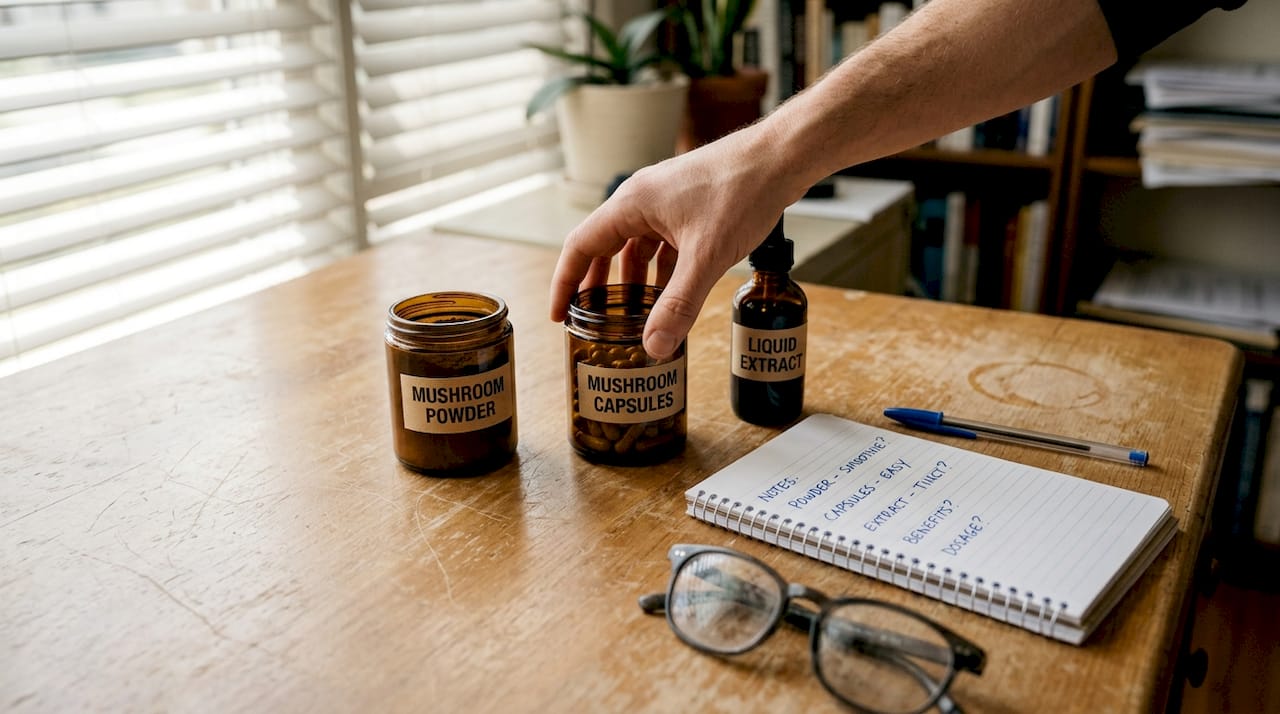
Powders provide the most versatile option but require more effort. You control the exact dose, mix them with various foods or drinks, and often pay less per serving. Absorption can be excellent when combined with fats or taken with meals. The challenges include measuring doses, dealing with taste, and reduced portability. Storage requires attention to prevent moisture exposure that degrades quality.
Capsules win for convenience and consistency. Pre-measured doses eliminate errors, there’s no taste to manage, and they travel easily. You sacrifice dosing flexibility and may experience slower absorption since the capsule must dissolve before releasing contents. Quality varies based on what’s inside, so comparing extract capsules reveals significant differences in potency.
Liquid extracts and concentrated extract powders deliver maximum potency. Extracts generally offer higher concentrations of active compounds compared to powders or whole fruiting bodies. Extraction ratios of 10:1, 20:1, or even higher mean you’re getting therapeutic doses in smaller volumes. Liquid tinctures absorb quickly under the tongue, while extract powders in capsules provide concentrated benefits with convenience.
| Format | Absorption Speed | Dosage Flexibility | Shelf Life | Best For |
|---|---|---|---|---|
| Powder | Medium to fast | High | 1-2 years | People who enjoy mixing supplements into beverages |
| Capsules | Medium | Low | 2-3 years | Busy schedules requiring consistent daily dosing |
| Liquid Extract | Very fast | Medium | 2-4 years | Quick absorption and flexible dosing |
| Extract Powder | Fast | High | 2-3 years | Maximum potency with mixing flexibility |
Cost per dose varies significantly. Raw powders cost less initially but may require higher doses to match extract potency. Concentrated extracts have higher upfront costs but deliver more active compounds per dollar when you calculate based on standardized ingredients rather than total weight.
Key considerations for format selection:
- Morning routine compatibility (can you take capsules on empty stomach or need food?)
- Taste sensitivity (some people can’t tolerate mushroom flavor)
- Travel frequency (powders are less portable)
- Budget for initial investment vs. long-term value
- Desired onset speed (liquid extracts work fastest)
Pro Tip: For cognitive goals, choose standardized extracts with guaranteed active compound levels rather than basic powders to ensure you’re getting therapeutic doses.
The best format is the one you’ll take consistently. A moderately potent supplement taken daily outperforms the most concentrated extract taken sporadically. Match the delivery method to your habits and preferences for sustainable supplementation.
Discover Cortex Flow: premium lion’s mane supplements for focus and memory
Now that you understand how to evaluate mushroom supplements, you need a trusted source that meets the highest quality standards. Cortex Flow delivers exactly what serious cognitive enhancement requires: pure lion’s mane fruiting body extract at an impressive 36:1 concentration ratio. We grow every mushroom ourselves in the United States, ensuring complete control over quality from cultivation to encapsulation.
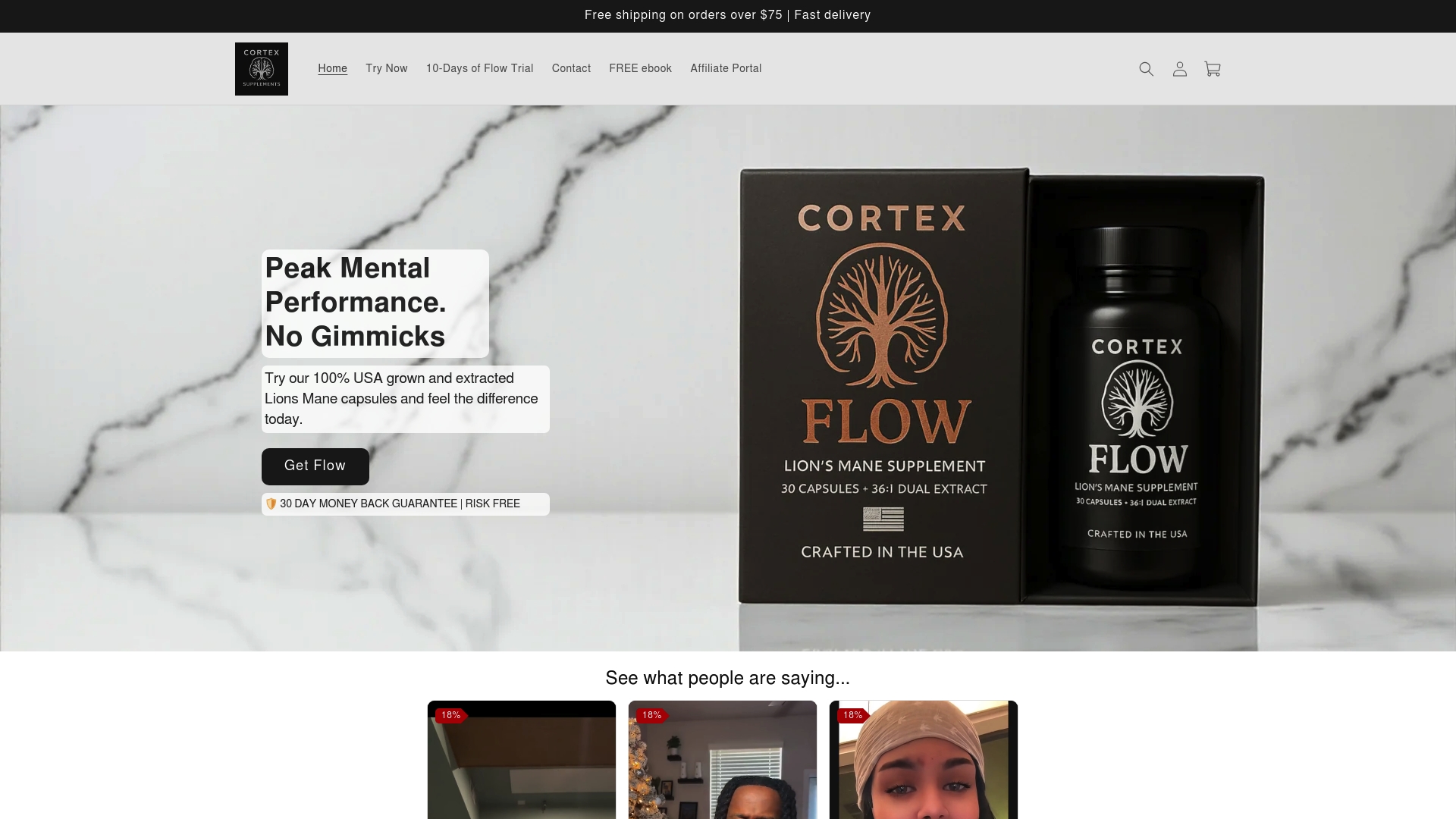
Each Cortex Flow capsule contains freeze-dried extract standardized for maximum bioactive compounds, giving you therapeutic doses without fillers or mycelium grain mixtures. Our Texas-based operation maintains rigorous quality standards with third-party testing confirming purity and potency. If you’re new to lion’s mane supplementation, try our 10-Days of Flow sample pack to experience the cognitive benefits before committing to a full bottle. We’ve eliminated the guesswork from mushroom supplements so you can focus on the results: sharper memory, better focus, and sustained mental clarity.
FAQ
What are the best types of mushroom supplements for memory enhancement?
Lion’s mane mushroom in fruiting body extract form has the strongest research support for memory enhancement. Look for supplements standardized for hericenones and erinacines, the bioactive compounds that stimulate nerve growth factor production. Quality matters more than quantity, so choose concentrated extracts over basic powders.
Are mushroom powders or capsules more effective for brain health?
Effectiveness depends on what’s inside rather than the delivery format. Extracts in either powder or capsule form generally offer better potency than raw mushroom powders. Capsules provide convenience and consistent dosing, while powders allow flexible amounts and mixing options. Select based on your preferences and verify the product contains fruiting body extracts with standardized active compounds.
Can I combine lion’s mane with other mushroom supplements?
Yes, combining lion’s mane with mushrooms like reishi or cordyceps can enhance overall brain and immune support through complementary mechanisms. Lion’s mane targets cognitive function directly while reishi manages stress and cordyceps boosts energy. Many people stack individual supplements or use blended formulas with adaptogens for comprehensive wellness benefits.
How long does it take to notice benefits from mushroom supplements?
Most people notice initial cognitive improvements within two to four weeks of consistent daily use. Memory enhancement and focus benefits accumulate over time, with more significant results appearing after eight to twelve weeks. Consistency matters more than dosage timing, so take your supplement at the same time daily for best results.
What should I look for on mushroom supplement labels?
Prioritize labels that specify fruiting body extracts, extraction ratios, and standardized percentages of active compounds like beta-glucans. Avoid products listing only “mushroom mycelium” or “mycelium on grain” without fruiting bodies. Third-party testing certifications and transparent sourcing information indicate quality manufacturers committed to delivering effective products.
Recommended
- Mushroom supplements for seniors: cognitive support in 2026 – Cortex Supplements
- Why mushrooms for brain health? Unlock Lion’s Mane benefits – Cortex Supplements
- Natural supplements for brain health: 2026 guide – Cortex Supplements
- Brain health checklist: top natural supplements 2026 – Cortex Supplements
- Superfood Pulver 2026: Bio-Pulver für Entgiftung und Immunstärkung - YourPowerFoods.com
