

You’re mid-meeting and a colleague’s name just vanishes. You set your keys down and ten minutes later, no clue where they went. Sound familiar? Memory lapses like these aren’t just annoying. They chip away at your confidence and your performance. The good news is that science has a lot to say about what actually works. Lifestyle factors like exercise, sleep, and diet carry the strongest evidence for supporting memory health. This guide breaks down the best strategies, from daily habits to smart supplementation, so you can take real, informed action.
Table of Contents
- Understanding the foundations: What supports memory health?
- Step 1: Prioritize lifestyle strategies backed by science
- Step 2: Smart supplementation—what actually works?
- Step 3: Build your long-term memory plan—habits, tracking, and troubleshooting
- What to expect: Results, timing, and when to seek help
- Why most memory health advice overlooks the real keys
- Explore natural brain support from Cortex Supplements
- Frequently asked questions
Key Takeaways
| Point | Details |
|---|---|
| Lifestyle is key | Habits like regular exercise, quality sleep, nutritious diet, and social engagement provide the most powerful, lasting support for memory health. |
| Smart supplementation | B vitamins and omega-3s from whole foods offer evidence-backed benefits, while most pills play a minor, supportive role. |
| Track and troubleshoot | Monitor progress, adjust routines, and seek help if memory problems affect daily life for the best results. |
| Results take time | Meaningful memory improvements often take 6 weeks or longer, so consistent effort and realistic expectations are essential. |
Understanding the foundations: What supports memory health?
To support memory health effectively, it’s crucial to first understand what actually influences your brain’s ability to remember. Memory health refers to your brain’s capacity to encode, store, and retrieve information reliably over time. It’s shaped by a mix of factors, some you can control and some you can’t.
Genetics and aging play a role, but they’re not the whole story. Stress, poor sleep, a sedentary lifestyle, and social isolation all quietly erode memory function. The encouraging part? Most of those are modifiable.
Modifiable risk factors you can act on today:
- Chronic stress and anxiety
- Poor or inconsistent sleep
- Sedentary lifestyle with little aerobic activity
- High-sugar, low-nutrient diet
- Social isolation or lack of mental stimulation
- Unmanaged cardiovascular conditions
Understanding memory supplement effects is also important before adding anything to your routine. Supplements can support what lifestyle habits build, but they rarely work in isolation.
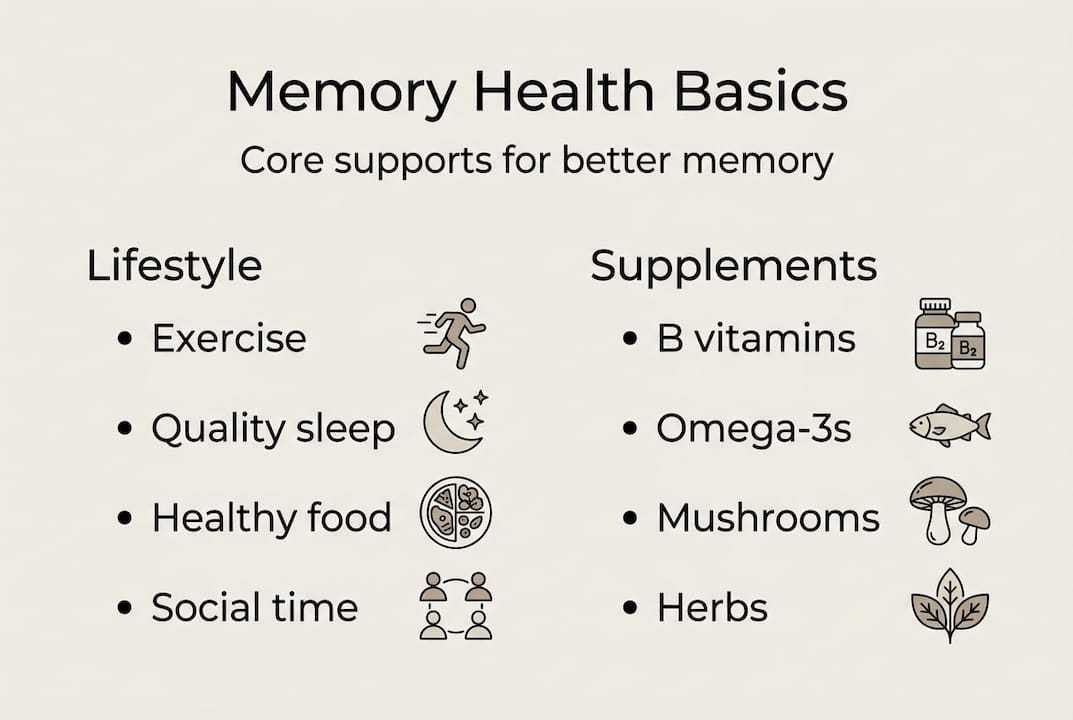
| Approach | Examples | Evidence strength |
|---|---|---|
| Lifestyle changes | Exercise, sleep, MIND diet, social engagement | Strong, consistent |
| Dietary supplements | B vitamins, omega-3s, vitamin E | Moderate, context-dependent |
| Herbal supplements | Ginkgo biloba, ginseng | Mixed or weak |
| Natural extracts | Lion’s mane, bacopa | Promising, emerging |
Exploring ways to improve memory through trusted sources is a smart first move before spending money on any product.
Step 1: Prioritize lifestyle strategies backed by science
With the basics in mind, let’s take the first concrete steps proven to protect and enhance memory. These aren’t vague suggestions. They’re specific, actionable habits with real research behind them.
Your daily memory-support action list:
- Get 30 minutes of aerobic exercise at least 5 days per week
- Aim for 7 to 9 hours of quality sleep each night
- Follow the MIND or Mediterranean diet as closely as possible
- Stay socially active, whether that’s a weekly call, a class, or a group activity
- Challenge your brain daily with reading, puzzles, or learning something new
Regular aerobic exercise, quality sleep, and the MIND diet are among the most reliable tools for protecting memory over time. And social engagement reduces cognitive decline risk in ways that even exercise alone can’t fully replicate.
The MIND diet reduces cognitive decline risk by up to 53% in some studies. That’s not a small number. It’s the kind of result that should make you rethink what’s on your plate.
| Lifestyle strategy | What the evidence says | Sample daily action |
|---|---|---|
| Aerobic exercise | Increases brain-derived neurotrophic factor (BDNF, a protein that supports brain cell growth) | 30-min brisk walk or bike ride |
| Sleep (7-9 hrs) | Clears metabolic waste from the brain during deep sleep | Set a consistent bedtime |
| MIND/Mediterranean diet | Reduces oxidative stress and inflammation | Add berries, leafy greens, and fish |
| Social engagement | Stimulates neural pathways and reduces stress hormones | Weekly group activity or call |
Pro Tip: Combine two habits at once for a bigger payoff. Walking with a friend gives you aerobic exercise AND social engagement simultaneously. It’s one of the most efficient moves you can make for your brain.

For a structured approach, check out these steps for cognitive vitality and use a brain health checklist to stay organized. You can also explore science-backed memory habits and practical sleep hygiene tips to fill in any gaps.
Step 2: Smart supplementation—what actually works?
Once your foundational habits are set, supplements can play a supportive but not miraculous role in enhancing memory. The supplement market is noisy. Here’s what the research actually supports.
Evidence-backed supplements worth knowing:
- B vitamins (B6, B12, folic acid): B vitamins may slow cognitive decline in people with deficiencies, though moderation matters. Food sources like leafy greens, eggs, and lean meat are ideal first.
- Omega-3 fatty acids: Omega-3s from fish support memory, but supplements haven’t been proven to treat or prevent Alzheimer’s disease.
- Vitamin E: Found in nuts and seeds, it has antioxidant properties that may protect brain cells. Supplement doses above food levels need medical supervision.
- Natural extracts: Natural compounds over 6 weeks can significantly improve cognitive test scores in meta-analyses. Lion’s mane mushroom is one of the most studied in this category.
Whole foods remain the preferred source for most of these nutrients. A handful of walnuts and a salmon fillet do more for your brain than most capsules on the market.
What about the popular stuff? Ginkgo biloba and most popular herbs show mixed or weak results in clinical research. Don’t let clever marketing convince you otherwise.
Pro Tip: Before starting any supplement, talk to your doctor, especially if you take medications. Some supplements interact with blood thinners or other prescriptions in ways that can cause real harm.
If you want to go deeper, our guide on supplements for brain health breaks down the research clearly. And if you’re curious about fungi specifically, our piece on mushroom supplements for memory is worth a read.
Step 3: Build your long-term memory plan—habits, tracking, and troubleshooting
Now that you know the evidence and have explored dietary and supplemental approaches, here’s how to embed these changes for real results. Knowing what to do is only half the battle. The other half is building a system that sticks.
Your step-by-step plan:
- Set specific goals. Instead of “I want a better memory,” try “I will walk 30 minutes five times a week and sleep by 10:30 PM.”
- Track your habits. Use a simple journal or an app to log sleep, exercise, meals, and how sharp you feel each day.
- Progress gradually. Add one new habit every two weeks. Stacking too many changes at once leads to burnout.
- Review monthly. Look back at your log and honestly assess what’s working.
Lifestyle patterns deliver stronger impact than any single nutrient or pill. That’s not a knock on supplements. It’s a reminder that your daily patterns are the real engine.
Common mistakes that stall progress:
- Inconsistent sleep schedule on weekends (“social jet lag”)
- Skipping meals or relying on processed snacks
- Letting social connections slide during busy periods
- Expecting results in days rather than weeks or months
- Stopping supplements or habits before giving them enough time
Pro Tip: Find an accountability partner. It could be a friend, a coworker, or even an online community. People who track habits with a partner are significantly more likely to stick with them long term.
If progress stalls, revisit your sleep first. It’s the most underrated lever in cognitive performance. You can also explore cognitive wellness trends and insights on brain health for athletes for fresh motivation. For broader lifestyle guidance, building healthy routines offers practical frameworks.
What to expect: Results, timing, and when to seek help
With habit-building skills in place, it’s important to know what results to expect and when professional support is necessary. Patience isn’t just a virtue here. It’s a requirement.
Typical timelines for noticing benefits:
- Exercise: Mood and focus improvements can appear within 1 to 2 weeks; memory gains build over months
- Sleep improvements: Mental clarity often improves within days of consistent quality sleep
- Diet changes: Cognitive benefits from the MIND diet typically emerge over months of consistent eating
- Supplements: Improvement from supplements often takes 6+ weeks of consistent use before measurable changes appear
Statistic callout: A meta-analysis of natural compounds found significant, measurable improvement in cognitive test scores after six or more weeks of use. That’s real progress, but it requires real patience.
It’s also worth being honest with yourself about what supplements can and can’t do. No supplement prevents Alzheimer’s, and overall lifestyle patterns matter far more than any single nutrient. Think of supplements as one piece of a much larger puzzle.
When to see a doctor:
- Sudden, unexplained memory loss
- Confusion or disorientation that is new or worsening
- Memory issues that affect your safety (forgetting to turn off the stove, getting lost in familiar places)
- Lapses that interfere with work, relationships, or daily tasks
For more context on what’s available, exploring types of mushroom supplements can help you make more informed choices as part of a broader plan.
Why most memory health advice overlooks the real keys
Here’s something we’ve noticed after reviewing dozens of studies and countless supplement claims: most memory health content focuses on the exciting stuff. The new extract. The breakthrough compound. The 30-day transformation.
What gets buried is the boring, unsexy truth. Consistency in sleep, movement, and diet compounds over time in ways that no single pill can replicate. The research on brain health supplement trends is promising, and we genuinely believe in quality natural extracts. But they work best as additions to strong habits, not replacements for them.
The people who see the most meaningful cognitive improvement aren’t the ones chasing the latest supplement. They’re the ones who walked every morning for a year, went to bed at the same time, and stayed connected to people they care about. That’s not a flashy answer, but it’s the honest one.
Mindfulness practices also play a role that often gets dismissed. Stress is one of the biggest silent threats to memory, and managing it consistently matters.
Pro Tip: Aim for consistency, not perfection. Missing one day of exercise or one night of good sleep won’t derail you. Missing thirty will. Build the habit, protect the streak, and forgive the occasional slip.
Explore natural brain support from Cortex Supplements
If you’re ready to complement your memory health plan with a natural, science-informed supplement, we’d love to introduce you to Cortex Flow.
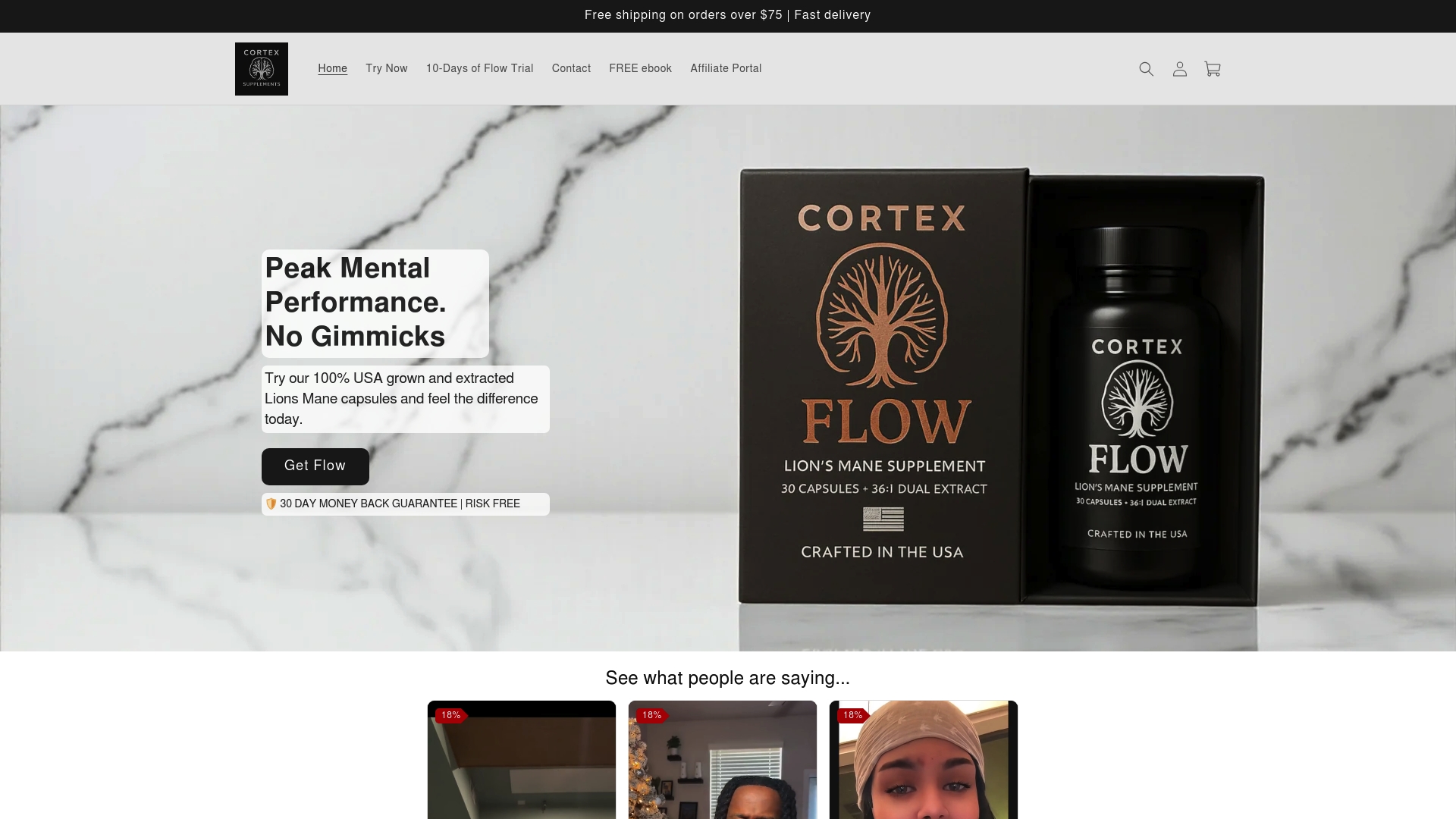
Cortex Flow is a freeze-dried, 36:1 extract of 100% lion’s mane fruiting bodies, grown right here in the United States. No fillers. No mycelium grain. Just potent, clean mushroom extract in every capsule. It’s designed to fit into the kind of holistic brain health routine this guide describes. Not a quick fix, but a meaningful addition to strong habits. Want to try it before committing to a full bottle? Our 10 Days of Flow pack is the perfect starting point. Explore more guides and support at Cortex Supplements.
Frequently asked questions
Which supplement is best for memory health?
B vitamins (B6, B12, folic acid) and dietary omega-3s have the strongest evidence for memory support; most other supplements show modest or unproven effects.
How quickly do memory supplements work?
Significant memory gains typically appear after at least six weeks of consistent use, so don’t judge a supplement in the first two weeks.
Can lifestyle changes really make a difference?
Absolutely. Lifestyle factors carry the strongest evidence for supporting memory health, and consistent activity, sleep, diet, and social engagement can dramatically reduce cognitive decline over time.
When should I see a doctor for memory issues?
If you notice sudden memory loss, new confusion, or lapses that disrupt daily life or safety, consult a medical professional promptly rather than waiting to see if it resolves on its own.
Is there a quick fix for memory problems?
No. No supplement or strategy delivers instant results. Lasting improvement comes from sustained healthy habits practiced consistently over months and years.
Recommended
- Natural supplements for brain health: 2026 guide – Cortex Supplements
- Brain health checklist: top natural supplements 2026 – Cortex Supplements
- Natural brain supplements for focus and memory 2026 – Cortex Supplements
- Boost brain health: Top trends shaping cognitive wellness – Cortex Supplements
- Role of nutrition in recovery: optimize your healing | Glendora Recovery Center
