

You train your legs, your lungs, your grip strength. But what about the organ that controls all of it? Most athletes spend zero time thinking about brain health, yet cognitive performance drives every split-second decision, every recovery window, and every moment you need to stay locked in under pressure. The truth is, your brain is your most important performance tool, and neglecting it is like skipping leg day every single week.
Table of Contents
- What brain health means for athletes
- How mental fatigue impacts performance and recovery
- Risks: Concussion, head impacts, and long-term brain injury
- Concussion aftermath: Increased injury and recovery risks
- Proven strategies: Enhancing and protecting brain performance
- Best practices: Monitoring, dual-task training, and recovery
- Support your brain health journey with Cortex
- Frequently asked questions
Key Takeaways
| Point | Details |
|---|---|
| Brain drives performance | Athletes’ decision-making, focus, and stamina all rely on optimal brain health. |
| Fatigue erodes your edge | Unchecked mental fatigue slows reaction time and delays recovery in training and competition. |
| Injury risk increases post-concussion | Previous concussions double the chance of future injuries, so smart recovery is vital. |
| Integrated training works best | Combining physical and cognitive drills (BET) yields superior endurance and cognitive gains. |
| Consistent routines boost resilience | Ongoing monitoring, dual-task training, and sleep keep athletes sharp season after season. |
What brain health means for athletes
Brain health is not just about avoiding injury. For athletes, it covers a full spectrum of abilities that directly shape how you train and compete.
Here is what brain health actually includes:
- Cognitive function: memory, attention, and processing speed
- Executive skills: planning, decision-making, and impulse control
- Emotional regulation: managing stress, frustration, and pressure
- Recovery capacity: how fast your nervous system bounces back after hard efforts
Physical training and cognitive capacity are deeply connected. Push your body hard without supporting your brain, and performance plateaus fast. Research confirms that aerobic exercise improves memory and attention, while mental fatigue measurably reduces accuracy in sport-specific tasks. That is not a small detail. That is the difference between winning and losing a close game.
An athlete cognition study found that basketball athletes show superior conflict resolution compared to non-athletes, suggesting that sport itself can sharpen the brain, but only when cognitive health is actively supported.
“Enhancing brain health gives athletes a measurable advantage in high-pressure moments, where physical ability alone is not enough.”
If you want a practical starting point, check out these cognitive vitality steps and explore the science behind mushroom benefits for brain health.
How mental fatigue impacts performance and recovery
You know the feeling. Late in a game, your legs still have something left, but your brain feels like it is running on fumes. That is mental fatigue, and it is more damaging than most athletes realize.
Mental fatigue slows reaction time and decreases accuracy, which means your decision-making breaks down exactly when the stakes are highest. It also increases perceived exertion, so the same physical effort feels harder, which pushes athletes toward early fatigue and poor pacing.
Here is how mental fatigue shows up in real training and competition:
- Slower reaction times in the final quarter or set
- More unforced errors and missed reads
- Reduced motivation to push through discomfort
- Longer recovery time between sessions
| Effect of mental fatigue | Impact on performance |
|---|---|
| Slower reaction time | Missed defensive reads, late responses |
| Reduced accuracy | More errors, poor shot selection |
| Higher perceived exertion | Early fatigue, reduced output |
| Impaired recovery | Longer time between peak efforts |
For more on managing this, read about relieving cognitive fatigue with targeted strategies.
Research on cognitive fatigue in athletes also shows that brain endurance training (BET) can reduce the cognitive cost of training, meaning your brain gets more efficient under load.
Pro Tip: Build two to three minute mental breaks into intense training blocks. Step away from tactical thinking, breathe, and reset. This simple habit helps sustain focus across longer sessions.
Risks: Concussion, head impacts, and long-term brain injury
Physical impacts are part of many sports. But the risks go far deeper than a headache that clears up in a few days.
Repetitive head impacts cause neuron loss and inflammation even in young athletes who never receive a formal concussion diagnosis. The data is striking: traumatic brain injury increases dementia risk by 70%, and studies show up to 56% neuron loss from repeated sub-concussive hits. NHL enforcers show CTE rates of 9.6% compared to 3.8% in other players, a direct reflection of position-based exposure.
| Sport or position | Key risk factor | Long-term concern |
|---|---|---|
| NFL linemen | High-frequency sub-concussive hits | CTE, cognitive decline |
| NHL enforcers | Fighting and body contact | Higher CTE and mortality |
| Soccer headers | Repetitive low-force impacts | Memory and attention loss |
| Rugby forwards | Scrums and tackles | Cumulative brain stress |
Former NFL players show worse cognitive performance compared to non-athlete controls, with effect sizes ranging from d=0.24 to 0.94 across memory, processing speed, and verbal ability. These are not subtle differences.
“Risk is proportional to years of play and position. The longer you play in a high-contact role, the more your brain accumulates stress that may not show up for years.”
Understanding your personal risk is essential for career longevity. Review the TBI outcomes research and explore our CTE recovery guide for practical next steps.
Concussion aftermath: Increased injury and recovery risks
Here is something most athletes do not hear enough: a concussion does not end when your symptoms clear. The vulnerability lingers, and it affects your whole body, not just your head.

Concussion history doubles the risk of all-cause injuries, with an odds ratio of 1.93 across a study of 86,879 athletes. Recurrent concussions push that risk even higher, with an odds ratio of 3.06. That means your ankles, knees, and muscles are all at greater risk after a brain injury, likely because of disrupted motor control and slower neural signaling.
A staged return to play is not optional. It is essential. Here is a smart framework:
- Rest phase: No screens, no training, no cognitive load for the first 24 to 48 hours
- Light aerobic phase: Walking or easy cycling, no resistance or sport-specific work
- Sport-specific movement: Running patterns and drills, no contact
- Non-contact training: Full practice intensity without collision risk
- Full contact practice: Medical clearance required before this step
- Return to competition: Only after completing all prior stages without symptom return
Pro Tip: Do not rush stage transitions. Spend at least 24 hours symptom-free at each stage before advancing. Rushing this process is the most common mistake athletes make post-concussion.
For more on supporting your brain through this process, read our guide on TBI athlete strategies and review the brain endurance and concussion research.
Proven strategies: Enhancing and protecting brain performance
Now for the part you can actually act on. Brain health is trainable. Here is what the research supports.
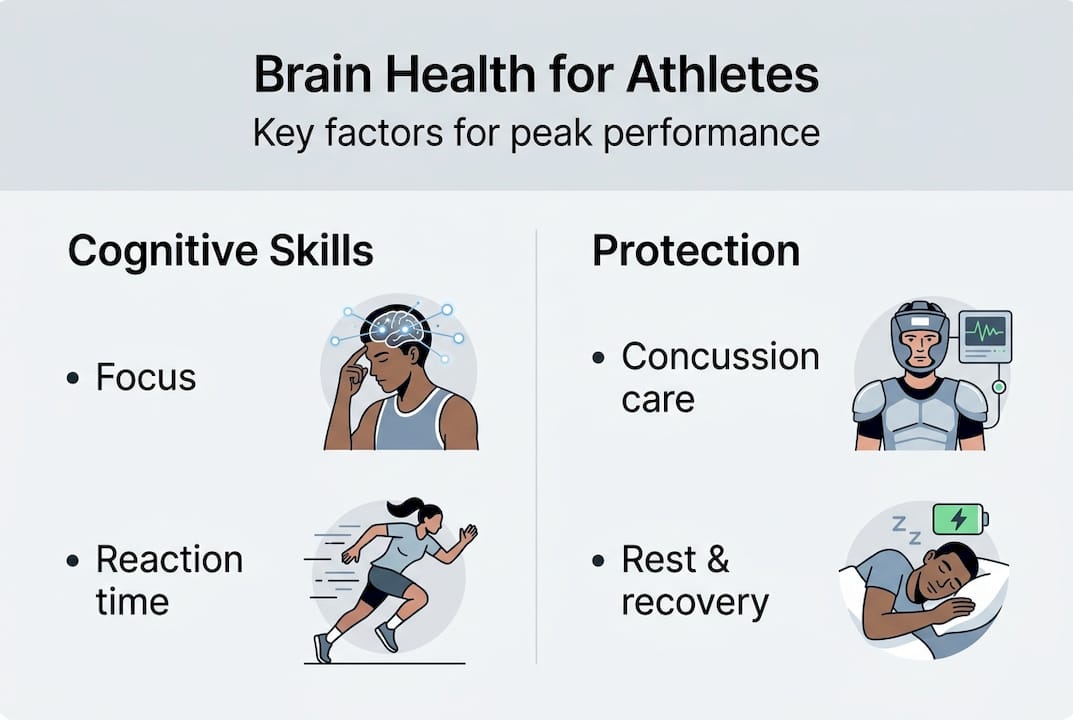
Brain endurance training (BET) combines cognitive tasks with physical training, and it outperforms cognitive-only drills for improving endurance. Athletes who use BET show extended time-to-exhaustion, while those who only do mental exercises see no change in physical performance. The combination is what matters.
Top strategies for protecting and boosting your athletic brain:
- Aerobic exercise: Consistent cardio supports neuroplasticity and memory consolidation
- Dual-task training: Pair physical drills with cognitive challenges like decision-making under load
- Quality sleep: Seven to nine hours is non-negotiable for memory consolidation and neural repair
- Targeted nutrition: Omega-3s, antioxidants, and functional mushrooms support brain cell health
- Stress management: Chronic stress degrades prefrontal cortex function over time
Here is a simple daily action plan:
- Get 30 or more minutes of aerobic exercise at moderate intensity
- Add one dual-task drill per session (for example, dribbling while calling out plays)
- Prioritize sleep over extra training volume when recovery is low
- Include brain-supportive nutrition daily, not just around competition
- Review your brain health actions checklist weekly
For a deeper look at supplementation, explore our guide to natural brain health supplements and the BET for endurance research.
Best practices: Monitoring, dual-task training, and recovery
Knowing the strategies is one thing. Building them into your season is another. Here is how to make brain health a consistent part of your training system.
Cognitive monitoring should be as routine as tracking your sprint times or max lifts. Subtle drops in reaction time or decision accuracy often show up before physical symptoms do. Catching them early means you can adjust load before a real setback occurs.
Key best practices to integrate right now:
- Baseline cognitive testing: Establish your normal scores at the start of each season
- Dual-task drills: Combine sport-specific movement with real-time decision tasks at least twice per week
- Structured recovery windows: Schedule mental rest the same way you schedule physical rest days
- Post-session cognitive check-ins: Rate your mental sharpness after hard sessions to track trends
- Long-term monitoring: Brain health monitoring research shows that risk persists well beyond six months post-concussion, so do not drop your guard early
Use a cognitive health checklist to stay consistent, and explore enhancing focus tools if you need extra support during high-demand training blocks.
Recovery is not passive. It is a skill. Build it like one.
Support your brain health journey with Cortex
You now have the framework. The next step is making sure your brain gets the daily support it needs to stay sharp, recover fast, and keep up with your training demands.
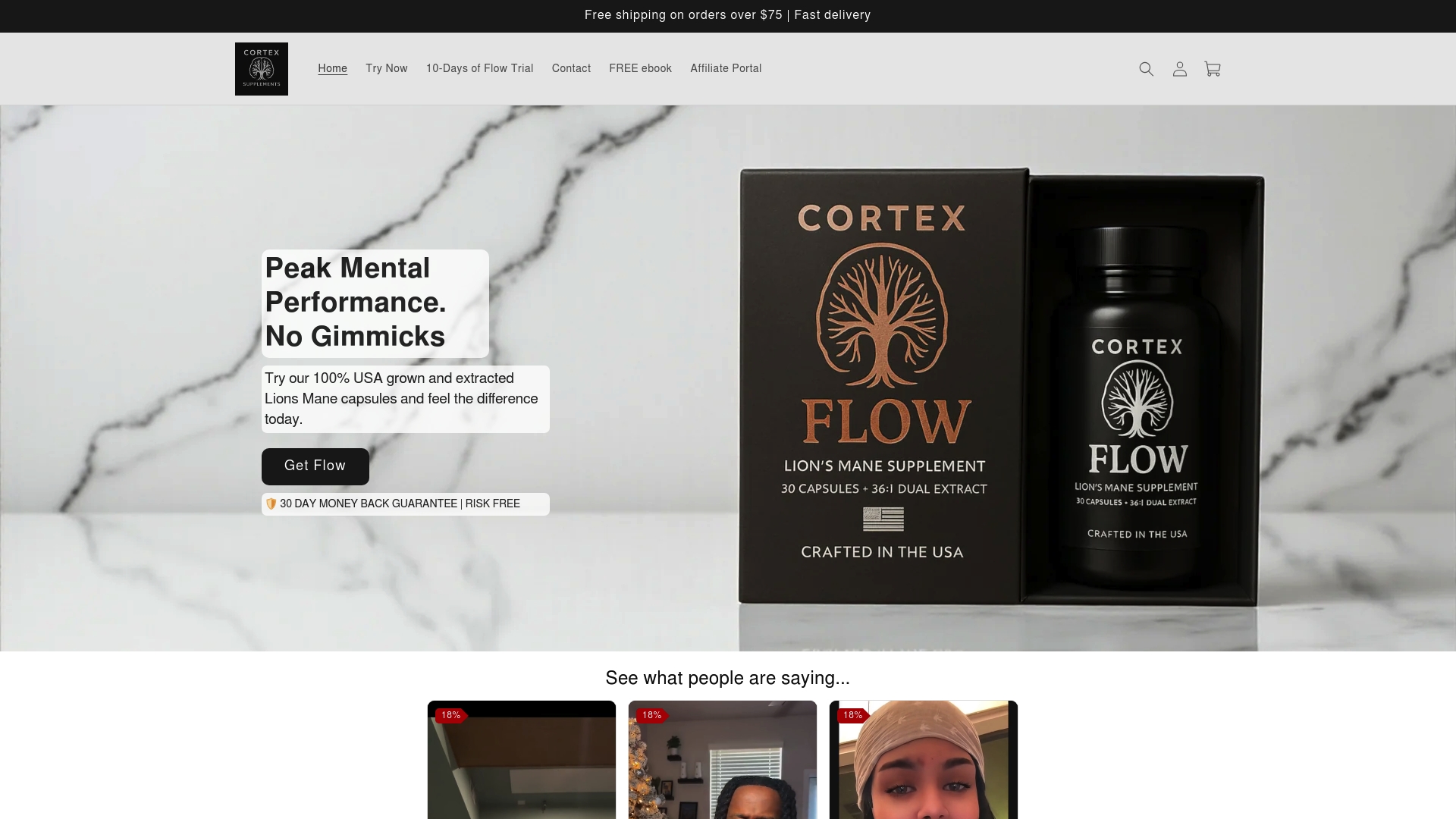
That is exactly why we created Cortex Flow. It is a freeze-dried, 36:1 extract of 100% lions mane fruiting bodies, grown right here in the United States. No fillers, no mycelium, no shortcuts. Just the most potent lions mane extract we know how to make, packed into 30 capsules per bottle. Lions mane supports nerve growth factor (NGF) production, which means it actively encourages the kind of neuroplasticity athletes need for learning, recovery, and sustained focus. If you want to try it before committing to a full bottle, our 10 days of flow pack is the perfect starting point. Give your brain the same attention you give your body.
Frequently asked questions
What are early signs of brain fatigue in athletes?
Mental fatigue impairs accuracy and reaction time, so early signs include slower responses, more mental errors during practice, and difficulty staying focused late in a session.
Does improving brain health actually enhance sports performance?
Yes. Better brain health boosts decision-making speed, sustained attention, and executive function, all of which translate directly to sharper performance in training and competition.
How long does concussion risk linger for athletes?
Concussion risk persists for over six months post-injury, and injury vulnerability doubles with a history of concussion, meaning recovery protocols need to extend well beyond symptom clearance.
What is brain endurance training (BET) and why does it matter?
BET combines cognitive tasks with physical training and has been shown to extend time-to-exhaustion, while cognitive training alone produces no measurable endurance benefit.
What practical steps can I take daily to boost brain health?
Incorporate aerobic training, dual-task drills, mental rest breaks, and quality sleep into your routine, since neuroplasticity-enhancing exercise and consistent recovery are the most evidence-backed daily habits for brain performance.
Recommended
- Boost brain health: Top trends shaping cognitive wellness – Cortex Supplements
- Cognitive support for TBI athletes: natural strategies 2026 – Cortex Supplements
- Top supplements for CTE recovery: brain health guide – Cortex Supplements
- Brain health checklist: steps for cognitive vitality – Cortex Supplements
