

Natural supplements are having a moment, and it’s not just hype. In 2026, millions of health-conscious adults are turning to mushrooms, adaptogens, and botanical extracts to sharpen focus, protect memory, and support long-term brain health. But with thousands of products flooding the market, the real question isn’t whether to take a supplement. It’s which ones actually work, and why. Lion’s Mane mushroom has emerged as one of the most talked-about options, backed by a growing body of research and a loyal following among people who take their cognitive health seriously. This guide cuts through the noise.
Table of Contents
- Why natural supplements are trending in 2026
- The evidence behind Lion’s Mane and cognitive enhancement
- Separating fact from marketing: Evaluating natural supplement claims
- Applying natural supplements for cognitive health: Evidence-based tips
- Explore more on natural cognitive support
- Frequently asked questions
Key Takeaways
| Point | Details |
|---|---|
| Rising popularity | Natural supplements are booming in 2026 due to health-conscious consumers and emerging research on brain benefits. |
| Lion’s Mane insights | Lion’s Mane may improve cognitive function, especially in older adults, but results for healthy users are mixed. |
| Evidence matters | Scientific support for natural supplements varies—evaluate claims and choose research-backed products. |
| Practical integration | Consistency, realistic expectations, and product quality are key to getting real benefits from supplements. |
| Critical evaluation | Check studies, ingredients, and safety before adding any natural supplement to your routine. |
Why natural supplements are trending in 2026
Something shifted in how people think about health. Instead of waiting for a problem to treat, more adults are investing in prevention, and that mindset is driving a surge in supplement use. According to supplement industry forces, the top growth areas in 2025 and 2026 include cognitive support, mood balance, longevity, and gut health. These aren’t fringe interests anymore. They’re mainstream health priorities.
The demand for types of mushroom supplements has grown especially fast. Consumers want options that feel aligned with their bodies, not synthetic compounds with long lists of side effects. Natural supplements fit that preference, and when they’re backed by real science, they become even more compelling.
Here’s what’s driving the 2026 supplement boom:
- Preventive health mindset: People want to protect their brains before decline sets in, not after.
- Personalized nutrition: Consumers are moving away from one-size-fits-all approaches.
- Science-backed demand: Buyers are more educated and want clinical evidence, not just marketing claims.
- Cognitive performance: Focus, memory, and mental clarity are now seen as trainable, not fixed.
- Longevity culture: Brain health is central to living well into older age.
| Supplement category | Primary benefit sought | Growth driver in 2026 |
|---|---|---|
| Mushroom extracts | Cognitive support, immunity | NGF/BDNF research, longevity trends |
| Adaptogens | Stress, mood, energy | Mental wellness movement |
| Omega-3s | Brain and heart health | Established clinical evidence |
| Nootropics | Focus, memory | Productivity culture |
| Probiotics | Gut-brain axis | Microbiome research |
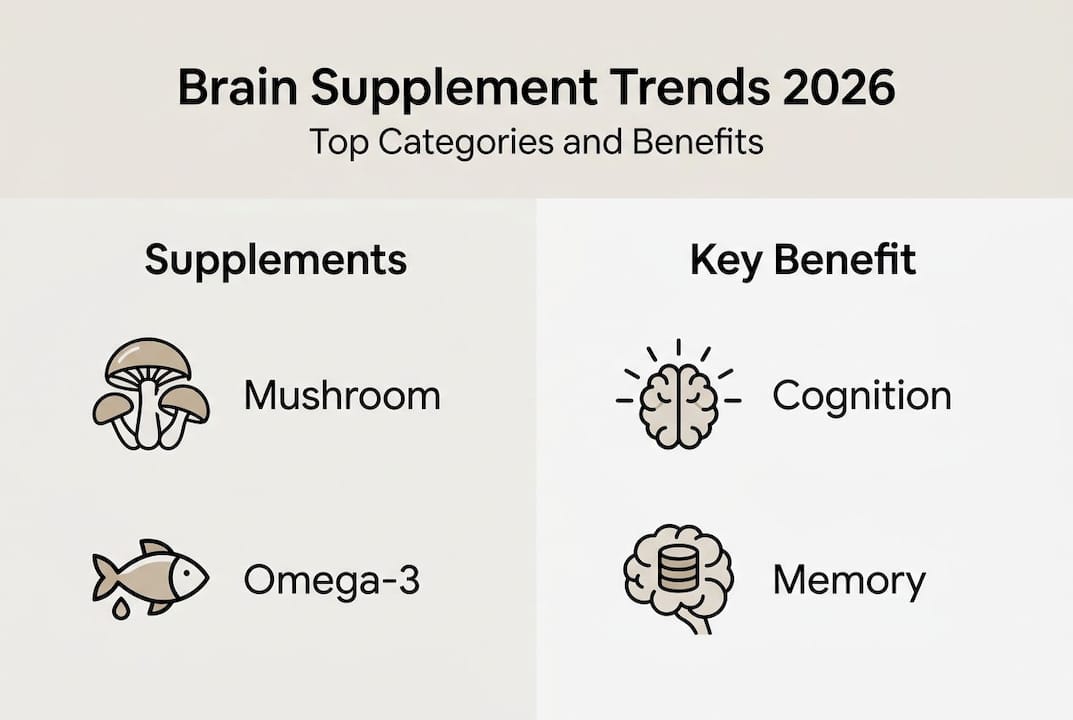
The 2026 supplement trends show that personalization and science credibility are no longer optional. Consumers are reading labels, asking questions, and choosing brands that can back up their claims. That’s a healthy shift for the industry.
The evidence behind Lion’s Mane and cognitive enhancement
Lion’s Mane (Hericium erinaceus) isn’t just popular because it sounds exotic. It has a legitimate scientific story behind it. The mushroom contains two key bioactive compounds: hericenones (found in the fruiting body) and erinacines (found in the mycelium). Both stimulate the production of NGF (nerve growth factor) and BDNF (brain-derived neurotrophic factor), proteins that support neuron growth, repair, and survival. NGF and BDNF synthesis are central to neuroplasticity, which is your brain’s ability to adapt and form new connections.

Understanding why Lion’s Mane works starts with these compounds. The lion’s mane fruiting body is where hericenones concentrate, which is why fruiting body extracts are generally preferred over mycelium-based products.
So what does the clinical evidence actually say? Here’s an honest breakdown:
- Mild cognitive impairment (MCI): This is where Lion’s Mane shows the clearest benefit. Studies using the MMSE (Mini-Mental State Examination) found measurable cognitive improvements after 16 weeks of supplementation.
- Healthy young adults: Results are more mixed. Acute effects are limited, and long-term data in this group is still developing.
- Neurogenesis support: The NGF/BDNF pathway is well-documented, even if translating that to measurable IQ points is more complex.
- Mood and anxiety: Some trials show secondary benefits for mood, likely connected to the gut-brain axis.
- Long-term neuroprotection: Animal studies are promising, but human long-term RCTs (randomized controlled trials) are still limited.
“RCTs show mixed results for Lion’s Mane on cognition: benefits in mild cognitive impairment, but limited or no acute effects in healthy young adults.”
This doesn’t mean Lion’s Mane is ineffective for healthy adults. It means the evidence is strongest for those with existing cognitive challenges, and that consistency over weeks matters more than a single dose. Learning the lion’s mane cognitive terms helps you read studies critically and understand what claims are actually supported.
| Supplement | Key mechanism | Evidence strength | Best for |
|---|---|---|---|
| Lion’s Mane | NGF/BDNF stimulation | Moderate (strong for MCI) | Memory, neuroprotection |
| Bacopa monnieri | Antioxidant, cholinergic | Moderate | Memory consolidation |
| Ginkgo biloba | Blood flow, antioxidant | Mixed | Circulation, mild cognition |
| Rhodiola rosea | Adaptogenic, anti-fatigue | Moderate | Stress, mental stamina |
| Phosphatidylserine | Cell membrane support | Moderate | Memory, processing speed |
For a deeper look at lion’s mane cognitive benefits, the fruiting body extraction method and concentration ratio matter enormously. Not all Lion’s Mane products are created equal.
Separating fact from marketing: Evaluating natural supplement claims
The supplement industry has a transparency problem. Many supplement studies are low-quality, underpowered, or funded by the companies selling the product. That creates a “wild west” environment where marketing often outpaces the actual evidence. Knowing how to spot the difference protects both your wallet and your health.
Red flags to watch for when evaluating any supplement:
- Vague claims: “Supports brain health” with no clinical data cited.
- Proprietary blends: These hide individual ingredient doses behind a single number.
- No third-party testing: Reputable brands submit to independent labs for purity and potency verification.
- Mycelium-only products: For Lion’s Mane specifically, mycelium grown on grain often contains more starch than active compounds.
- Exaggerated outcomes: Promises of dramatic memory improvement in days are not supported by science.
Pro Tip: Before buying any cognitive supplement, search for the brand’s certificate of analysis (COA). This document from a third-party lab confirms what’s actually in the product. If a company won’t share it, that tells you something important.
When comparing options, it helps to understand how lion’s mane vs adaptogens differ in their mechanisms. Adaptogens like ashwagandha work on the stress response system, while Lion’s Mane targets neurogenesis directly. They’re not interchangeable, even though both are marketed for brain health.
“Natural doesn’t automatically mean effective. The word ‘natural’ is a marketing term, not a quality standard.”
A solid guide to choosing lion’s mane supplements will walk you through extraction ratios, fruiting body vs. mycelium sourcing, and what concentration levels are supported by research. Understanding lion’s mane neurogenesis also helps you ask smarter questions before you buy.
Applying natural supplements for cognitive health: Evidence-based tips
Knowing the science is one thing. Putting it into practice is another. Here’s how to build a supplement routine that actually supports your brain over time.
- Start with your diet. Whole foods rich in omega-3s, polyphenols, and B vitamins lay the foundation. Supplements fill gaps, they don’t replace nutrition.
- Choose fruiting body extracts. For Lion’s Mane, fruiting bodies contain the highest concentration of hericenones. Look for a high extraction ratio, like 36:1, to ensure potency.
- Be consistent. The NGF/BDNF pathway takes time to respond. Most studies showing benefit ran for 12 to 16 weeks minimum.
- Track your baseline. Before starting, note your current focus, memory recall, and mental energy. Revisit those notes at 30, 60, and 90 days.
- Dose matters. Most clinical studies used between 500mg and 3,000mg of Lion’s Mane daily. Underdosing is one of the most common reasons people don’t notice results.
- Monitor and adjust. If you’re not noticing any change after 12 weeks at a proper dose, consider whether the product quality, your diet, or sleep might be the limiting factor.
Pro Tip: Take Lion’s Mane with a meal that contains healthy fats. Fat-soluble compounds absorb better alongside dietary fat, which may improve bioavailability.
The supplement trends in 2026 confirm that consumers want personalized, science-backed options. That means doing your homework on sourcing, extraction, and dosing rather than grabbing whatever is cheapest on a shelf. For those interested in longer-term neuroprotection, the research on lion’s mane and Alzheimer’s is worth reading, especially given the RCT insights around MCI populations.
Consistency, quality, and realistic expectations are the three pillars of any effective supplement strategy. Big promises delivered fast are almost always a sign to look elsewhere.
Explore more on natural cognitive support
If you’ve made it this far, you’re already thinking about brain health more seriously than most people. That’s exactly the kind of intentional approach that leads to real results over time. At Cortex Supplements, we’ve built our entire product line around one principle: potency you can trust, sourced from mushrooms we grow ourselves in the United States.
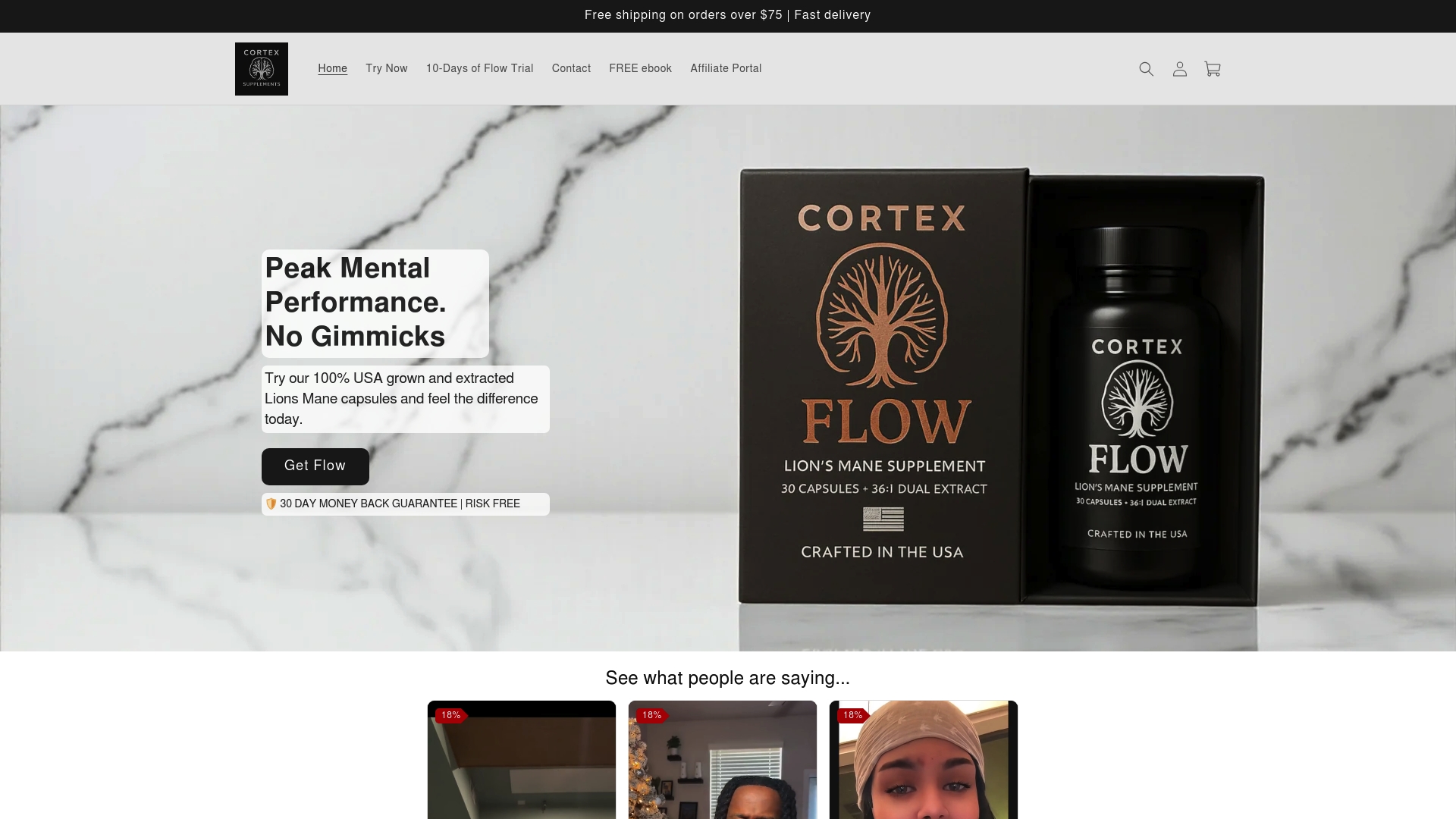
Cortex Flow is our flagship product, a freeze-dried extract of 100% Lion’s Mane fruiting bodies at a 36:1 concentration ratio. That means every capsule delivers a level of active compounds that most products on the market simply can’t match. If you want to go deeper on what to look for before you buy, our Lion’s Mane supplement guide breaks down extraction methods, sourcing standards, and how to read a COA. Start there, then decide.
Frequently asked questions
Are natural supplements safer than synthetic ones?
Natural supplements are generally perceived as safer, but safety depends on quality, purity, and potential interactions with medications. Always evaluate the evidence and source, not just the label.
How long does it take to notice cognitive benefits from Lion’s Mane?
MMSE improvements in MCI were observed after 16 weeks of supplementation. Healthy adults may notice subtler effects and should commit to at least 12 weeks at a proper dose before evaluating results.
What should I look for when choosing a natural brain supplement?
Prioritize clinical evidence, transparent ingredient sourcing, appropriate dosing, and third-party purity testing. Supplement evidence is often mixed, so product quality becomes even more critical.
Can I take Lion’s Mane with other supplements or medications?
Lion’s Mane is generally well-tolerated, but you should always consult your healthcare provider before combining it with other supplements or prescription medications, especially blood thinners or immunosuppressants.
Is there strong scientific evidence supporting natural supplements for brain health?
Some natural supplements have genuinely promising data, but many studies are low-quality or underpowered. Lion’s Mane has some of the stronger evidence in the mushroom category, particularly for populations with mild cognitive impairment.
